
Container House
The container house market is growing rapidly, driven by demand, policy, and technology. China's position in the global market is rising, and the industry is evolving toward technology iteration, scenario integration, and sustainable development.
Market size and growth: In 2024, China's container house market reached $6,944,444,444, up 8% year-on-year, and is expected to exceed $11,111,111,111 by 2026, with a compound annual growth rate above 15%; global expandable container house market sales were $113,888,889 in 2025 and are projected to reach $151,250,000 by 2032, with a CAGR of 4.2% for 2026-2032. China's market growth significantly outpaces the global average. East China, South China, and North China are the main consumption regions, while the global market is led by North America and Europe. China's production capacity and export capability are rising rapidly.
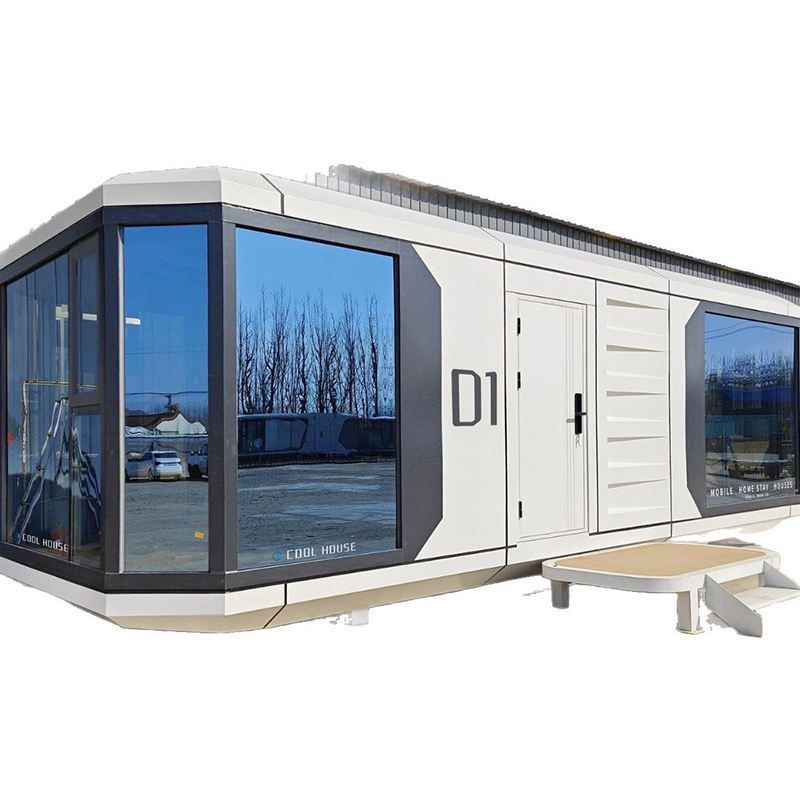
Product types and applications: Standard products account for 64% ($4,444,444,444), mainly used for construction-site dormitories and temporary offices; customized products ($2,500,000,000) grew 11.5% year-on-year, covering modular housing and commercial space conversion. Expandable containers are mainly 40-foot products that meet long-term family living needs; 20-foot products are mostly used for single-room offices or storage. Application scenarios are expanding from traditional housing to commercial uses (mobile retail, pop-up showrooms), industrial uses (site offices, storage expansion), and rural revitalization and cultural tourism projects. Commercial use is growing significantly in North American and European markets.
Driving factors: On the demand side, global housing shortages, rising acceptance of modular construction, and demand for reused shipping containers are driving market growth; China benefits from infrastructure project deployment, mobile commercial operations, distinctive cultural tourism lodging, and personal space expansion needs. On the policy side, China's dual-carbon goals are promoting green building development, with container house sales up 13.2% year-on-year; European sustainable building policies are advancing penetration in the residential sector.
Competitive landscape: Market concentration in China is rising. In 2024, the top five companies held a 42% market share, with CIMC leading at 18%; companies such as Suzhou Shengshan position themselves as global modular building partners offering low-carbon solutions. Among regional players, Sichuan Kuaizhu holds over 60% of the local rental market through foldable patented technology, reducing transportation and maintenance costs.
Rental models and economics: In 2024, China's rental market reached $2,916,666,667, up 10.5% year-on-year. CIMC's rental business revenue was $666,666,667, up 12.3% year-on-year. Customized container kiosks achieve a 95% factory prefabrication rate, can deploy 16 units in one day, and have annual maintenance costs at one-third of traditional facilities; commercial street projects see 60% higher single-unit assembly efficiency and merchant signing rates above 80%.
Future trends: In technology iteration, foldable designs and patented waterproof structures improve product durability and installation efficiency; in scenario integration, containers combined with artistic elements meet customized needs for cultural tourism and urban renewal; in sustainable development, eco-friendly materials and optimized production processes are becoming a global competitive focus.



