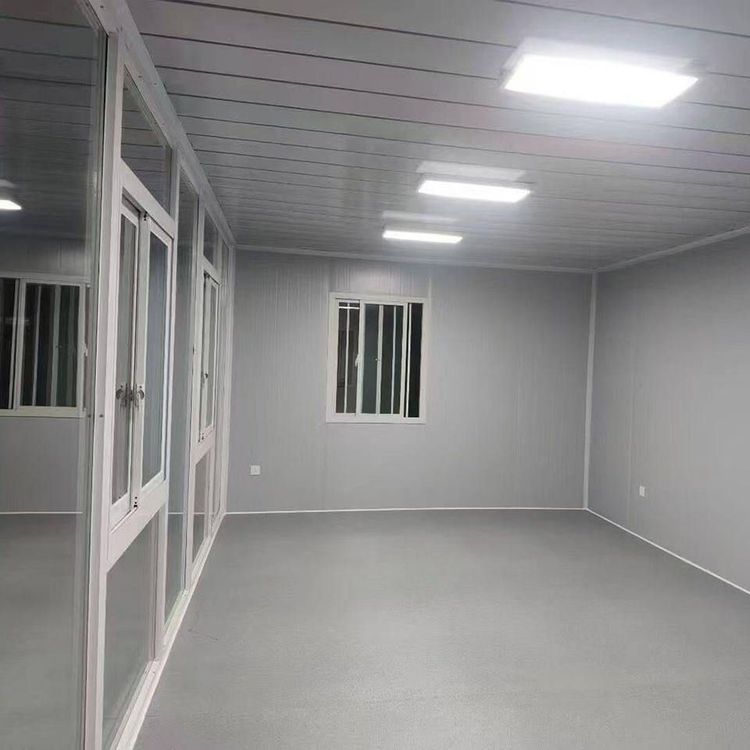
Container House
A container house is a residential or office building form remodeled from containers as the basic structural modules.

Origins and development: The idea can be traced to mid-20th-century conversion practices after container standardization. Early projects such as Container City I in London in 2000 helped raise public awareness. In 2013, Brighton, UK, first used them to address a housing crisis, providing temporary shelter for 36 homeless people. China’s box-type house development began in the late 20th century with conversions of idle containers at coastal ports; in 2013, the Green Building Action Plan listed them as an important form of prefabricated building, promoting scaled application.
Structural classification:
- Traditional cargo-container converted box houses: Directly remodel discarded containers indoors while retaining the original frame.
- Newly welded box activity houses: Weld an all-new steel box body with higher structural strength and customizable design.
- Demountable box activity houses: Assembled with detachable connectors for easy transport and reuse, with outstanding flexibility.
Core features:
- Convenient transport and assembly: Factory-prefabricated modular production enables quick setup, especially for sites that change construction locations frequently.
- Stable and durable structure: Steel-frame design delivers strong earthquake and deformation resistance, plus good wind resistance and load-bearing performance.
- Excellent sealing: Strict manufacturing ensures watertightness; walls provide notable sound and heat insulation for higher living comfort.
- Flexible space combination: Based on a standard steel chassis, spaces such as meeting rooms, dormitories, and kitchens can be derived; two-story designs expand usable area.
- Disassembly and reuse: Detachable technology yields high assembly/disassembly efficiency; materials can be recycled, lowering long-term costs.
Application scenarios:
- Construction sites: As workers’ dormitories or temporary offices.
- Emergency use: Rapid post-disaster temporary housing or medical facilities.
- Creative spaces: Remodeled into guesthouses, cafés, art galleries, and more.
- Commercial innovation: Such as 24-hour self-service fitness cabins and mobile retail stores.
- Large events: The 2026 Nagoya Asian Games in Japan used container houses for the Athletes’ Village; Zaozhuang, Shandong, China, used them for distinctive guesthouse scenic areas.
Technical optimization directions: Current research focuses on better insulation, integrated energy supply systems (such as solar), and smart management (such as IoT monitoring) to further expand application boundaries.