
Container Folding Mobile House
The container folding mobile house is a modular building form that combines container structure with folding design, facilitating transportation and rapid deployment. The following is an analysis from the aspects of structural characteristics, application scenarios, performance advantages, and market status:
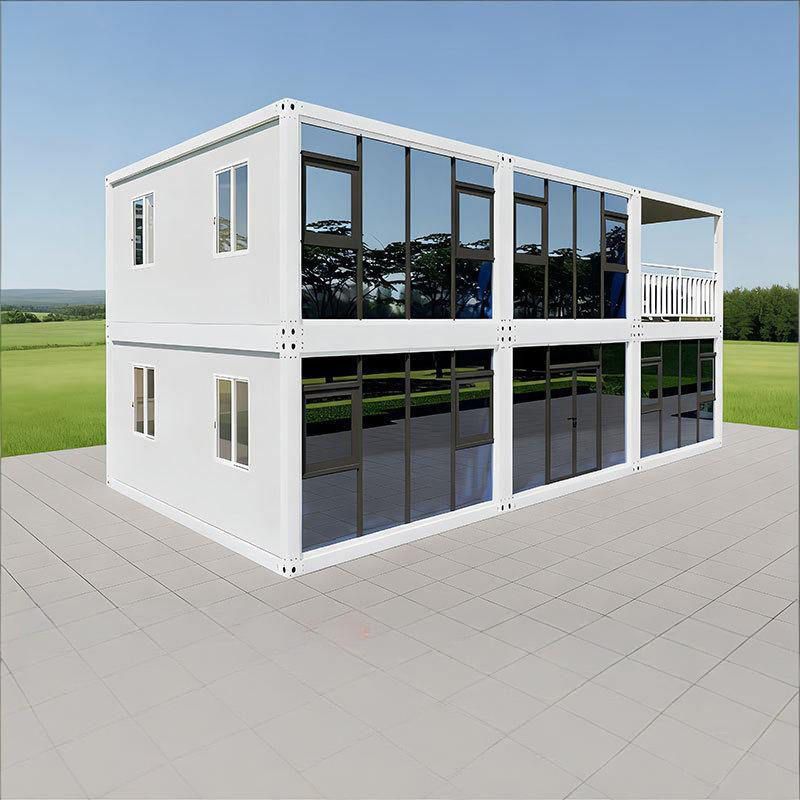
Structural Characteristics
The container folding mobile house uses a standard container as a carrier and achieves the conversion between transportation and use states through folding design. Its main frame is mostly made of high-strength steel (such as galvanized steel), which is processed through nine pressing processes, doubling its strength compared to traditional materials. The folding part adopts an upper and lower slot seamless splicing technology, which ensures airtightness without the need for gluing, avoiding the risk of leakage. After unfolding, it can be quickly assembled through modular wall panels to form independent office or living units. Common specifications are 20 feet and 40 feet, supporting single-container use or multi-container splicing and expansion.
Application Scenarios
- Engineering Projects: As a site command center, temporary dormitory, or warehouse, it has a sturdy structure and excellent wind and earthquake resistance (some products have a wind resistance rating of up to Level 12, in compliance with the GB50011-2010 standard), enabling it to cope with extreme weather conditions.
- Commercial Spaces: Suitable for pop-up stores, event exhibition halls, and other scenarios, it supports customized designs such as curved walls and floor-to-ceiling windows. The internal space utilization rate exceeds 90%, and the disassembly and assembly cycle is short (for example, the installation of a single set of products from Suzhou Zhongnan takes only 4 hours).
- Emergency Support: In disaster relief, temporary medical stations, and other scenarios, the folding design significantly reduces the transportation volume, facilitating batch deployment and the rapid formation of functional spaces.
- Overseas Projects: The modular structure meets international transportation standards, supports long-distance transportation, and can be disassembled and reassembled more than 15 times, reducing long-term use costs.
Performance Advantages
- Convenient Transportation: After folding, the volume is reduced by more than 60%, allowing more units to be loaded in a single container and reducing logistics costs.
- Rapid Deployment: The unfolding time is controlled within 30 minutes to several hours, supporting immediate response in emergency scenarios.
- Strong Durability: The all-steel frame and automated welding process ensure structural stability, with a service life of more than 10 years.
- Environmental Protection and Economy: The materials can be recycled, and the cost of a single disassembly and assembly is only one-third of that of a brand-new product, in line with the concept of sustainable development.
Market Status
Leading domestic enterprises such as Suzhou Zhongnan Steel Structure and CIMC Modular Building have enhanced product competitiveness through technological innovation. For example, the quick-assembly container products of Suzhou Zhongnan adopt a fully welded process, with a wind resistance rating of up to Level 12 and an installation efficiency 50% higher than the industry average. At the same time, non-standard white-label products are gradually being phased out due to quality issues (such as a wind resistance rating of only Level 8), and the market concentration is shifting towards regular brands. In addition, the export volume of folding houses in China has increased significantly (for example, products from a factory in Bengbu cover 35 countries), indicating strong international market demand.



