
Container Folding House Sales
When selling container folding houses, it is essential to focus on product types, core advantages, key selection points, and market trends:
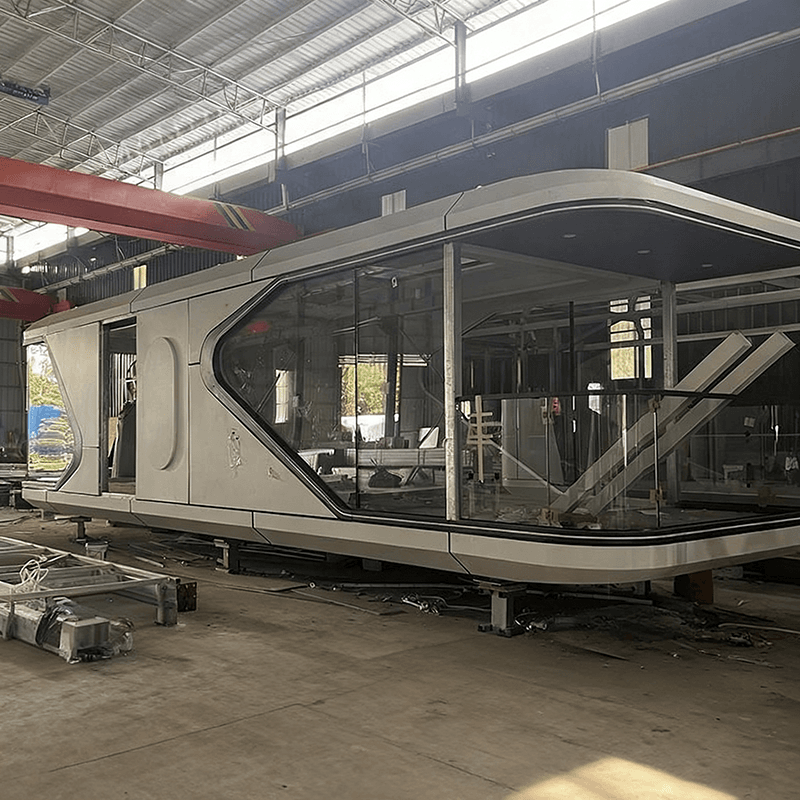
I. Product Types and Core Advantages Container folding houses use standard containers as carriers and achieve volume compression for transportation and rapid deployment through folding structural designs. Their core advantages lie in enhanced transportation efficiency (volume reduced by 50%-70% after folding, lowering logistics costs) and faster deployment (single-unit deployment time can be controlled within 30 minutes, without requiring professional construction teams). For example, the folding containers from Hebei Xinheng Integrated Housing Co., Ltd. can adapt to extreme environments such as deserts, cold regions, and high-temperature areas. By optimizing insulation designs and wind-sand resistance structures, they meet the needs of overseas infrastructure camps and oil field sites. Additionally, the folding container houses from Anhui Easy-Folding Integrated Housing Co., Ltd. use 2.0-thick galvanized steel processed through nine pressing steps, doubling strength. The folding parts are seamlessly spliced without the need for sealing, further improving durability and waterproof performance.
II. Key Selection Points
- Structural Stability: Attention should be paid to the steel thickness and welding processes of folding connectors (such as hinges and locking mechanisms) and the main frame. For example, the folding residential container houses from Zhongyu Steel Structure Co., Ltd. have passed the GB/T19001-2016 quality management system certification, and their products have undergone multiple disassembly and assembly tests, with a structural lifespan of over 10 years.
- Materials and Performance: The type of core material in sandwich panels directly affects fire resistance and thermal insulation. Rock wool cores offer better fire resistance than EPS, and the fire rating (such as Class A non-combustible) should be verified upon purchase. Products from Hebei Xinheng have passed international certifications such as CE and ASTM, meeting the needs of cross-border engineering projects.
- Customization Capabilities: Support for customization of size, layout, and appearance is a key selling point. For example, Wenzhou Tongfu Portable Panel House Business Department offers adjustments to the basic size of 3*6 meters, optimization of internal partition layouts, and exterior design services such as terraces and floor-to-ceiling windows.
- Compliance and Services: It is necessary to verify production qualifications, domestic and international certifications (such as ISO9001, CE), and after-sales capabilities. Products from Anhui Easy-Folding cover 35 countries and regions globally, providing a full range of services from research and development to delivery.
III. Market Trends and Procurement Directions According to data from the General Administration of Customs, in the first half of 2026, China's export value of prefabricated modular buildings increased by 45% year-on-year, with steel-structured modular houses becoming the main category. Procurement-side attention to reusability, cross-border compliance, and low-carbon attributes continues to rise, with products capable of multiple reuses and meeting cross-border export qualifications accounting for over 60% of orders. For example, products from Zhongyu Steel Structure have been used in Chinese engineering camps in Iraq and Libya, as well as in cultural and tourism venues such as park facilities and scenic area displays, demonstrating their adaptability to multiple scenarios.



