
Container Cold Chain House
The container cold chain house is a mobile temperature-controlled storage or living space that combines container structure with cold chain technology. Its core function is to maintain a specific temperature environment through efficient insulation and refrigeration systems, suitable for cold chain logistics, pharmaceutical transportation, food processing, and temporary temperature-controlled living scenarios.
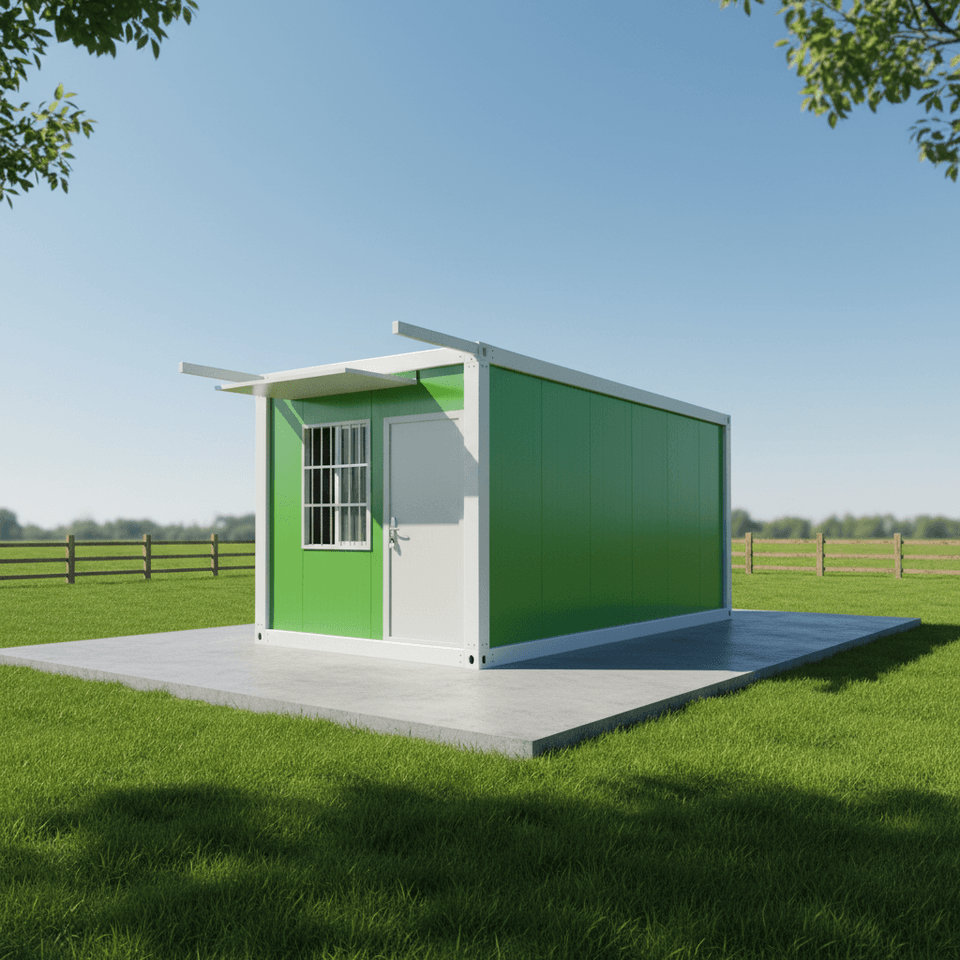
I. Core Functions and Technical Features
Temperature Control Performance
The container cold chain house adopts high-density insulation materials (such as polyurethane foam) and thermal break structural design to reduce the thermal bridge effect, ensuring a reduction in heat exchange efficiency between the interior and exterior by approximately 40%. For example, Qingdao Jiecheng Hongye's refrigerated containers have passed marine standard verification and can maintain stable temperature control within the range of -25°C to 25°C, meeting the requirements of 2-8°C for pharmaceutical transportation or -18°C for food storage.Rapid Deployment and Flexibility
Modular design supports factory prefabrication and on-site assembly, shortening the construction cycle. For instance, CIMC's AI data center project in Malaysia adopted a prefabricated modular structure, with the overall construction cycle being less than 10 months, nearly half that of traditional methods. The cold chain container house can also be quickly powered on and used, requiring only a 380-volt three-phase power supply to operate, adapting to emergency support or temporary storage scenarios.Structural Stability and Durability
The all-steel structural frame has passed wind and earthquake resistance tests. For example, Suzhou Zhongnan's packing containers have a deformation rate of only 0.18% under 12-level typhoon and 8-level earthquake conditions, far below the industry's qualified threshold of 0.3%. The steel surface is treated with shot blasting for rust removal and zinc-rich primer, ensuring a lifespan of over 15 years in sandy or temperature-varying environments.
II. Application Scenarios and Advantages
Cold Chain Logistics and Food Processing
Qingdao Jiecheng Hongye's products support bulk purchases and emergency replenishment, with an inventory of five to six hundred units, suitable for cold chain enterprises requiring rapid deployment. Its lifetime after-sales service reduces long-term maintenance costs and decreases carbon emissions by approximately 60% compared to traditional concrete temporary houses.Pharmaceutical and Emergency Support
Modular cold chain houses can be quickly erected as temporary vaccine storage points or medical supply transit stations, meeting the requirements of GSP (Good Supply Practice) for temperature fluctuation ranges and avoiding the risk of drug failure due to power outages.Temporary Living and Cultural Tourism Scenarios
Through personalized exterior customization and internal functional renovations, container cold chain houses can be transformed into low-carbon homestays or mobile commercial spaces. For example, Baotou Camping Company has added C-shaped steel purlins and thermal break linings, enabling the stacking of containers up to three layers while maintaining stability. In winter, the indoor temperature is 8-10°C higher than the outside, reducing heating energy consumption.



