
Container Belongs to Building
Under specific conditions, containers can be regarded as building structures, but they must meet relevant approval and construction requirements. The following provides a detailed explanation from the perspectives of the definition of container houses, the determination of their legality, and their practical application scenarios:
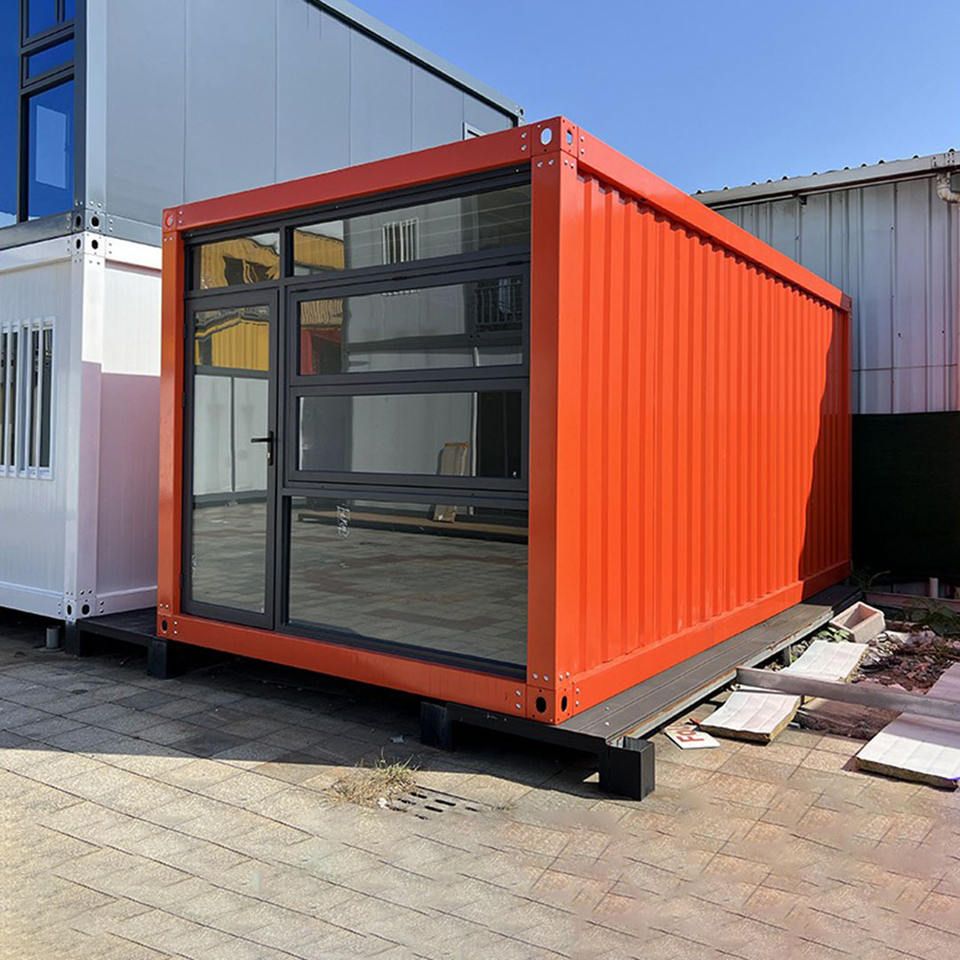
Definition and Characteristics of Container Houses
Container houses are habitable building units formed by structural modifications and functional integrations based on standard containers. Their core characteristics include:
- Modular Design: Standard steel containers are used, connected through welding or bolts to form a stable structure that can be used independently or combined for expansion.
- Prefabricated Production: The main structure, water and electricity pipelines, and interior decoration are all completed in the factory. Only lifting and joint treatment are required on-site, with construction errors controlled to the millimeter level.
- Mobility: As metal components, container houses have the characteristics of flexible disassembly and relocation, distinguishing them from traditional fixed buildings.
Basis for Determining Legality
Whether a container house is considered a legal building depends on the following conditions:
Approval Procedures
If a container house is constructed without obtaining a construction project planning permit or land use right certificate, and land is occupied without authorization, it constitutes an illegal building. For example, building residential places without permission in urban planning areas or placing containers in prohibited construction areas such as agricultural land or public land may be identified as illegal constructions.Usage Nature and Duration
- Temporary Buildings: Approved through legal procedures, used as temporary storage or event venues in specific locations, and meeting safety and environmental requirements, they are generally not considered illegal constructions. For example, containers reasonably set up for temporary cargo storage in industrial plants.
- Permanent Buildings: If containers are transformed into long-term residential facilities through structural reinforcement and foundation treatment without obtaining relevant approval procedures, they may be identified as illegal constructions due to violation of legal procedures.
Land and Planning Requirements
Container houses must comply with land management, urban and rural planning, and other laws and regulations. For example, placed on legally acquired land and not damaging the plow layer, hardening the ground, or building permanent foundations, they are generally not considered illegal constructions; however, if used for business or residence without changing the land use, they may face penalties.
Practical Application Scenarios and Specifications
Container houses have been widely used in engineering camps, commercial pop-ups, government and enterprise temporary buildings, and other fields. Their legality must meet the following specifications:
- Structural Stability: They must comply with standards such as GB50011-2010 "Building Seismic Design Code". For example, the deformation of a container mobile house with a full steel structure frame under the action of a strong wind of magnitude 12 must be less than 10mm.
- Thermal Performance: Through a three-layer structure (outer layer of galvanized sheet, intermediate layer of rock wool insulation, and inner layer of PVC-coated steel sheet) and elevated floor design, the comfort of living in northern winters is improved.
- Environmental Protection and Safety: Corrosion-resistant treatment, fire-resistant materials, and standardized pipeline embedding are used to reduce on-site wet operation pollution. At the same time, they must pass inspections by fire protection and environmental protection departments.
Determination in Special Scenarios
- Placement on Rooftops or Farmland: If containers are only used for temporary storage of agricultural materials and tools, and there is no water or electricity connection, hardening of the ground, or construction of permanent foundations, they are generally not considered illegal constructions; however, if used for business or residence, they may be identified as illegal constructions due to "substantial changes in land use".
- Intervention by Urban Management: Even if a container house is legal, if it occupies public land, affects environmental aesthetics, or interferes with residents' lives, urban management agencies may still require its relocation.



