
Container Assembled Housing Supply
The supply of container assembled housing requires a comprehensive consideration of multiple factors, including structural stability, installation efficiency, scenario adaptability, reusability, one-stop service capabilities, brand qualifications, cost-effectiveness, and after-sales service. The following analysis focuses on core dimensions:
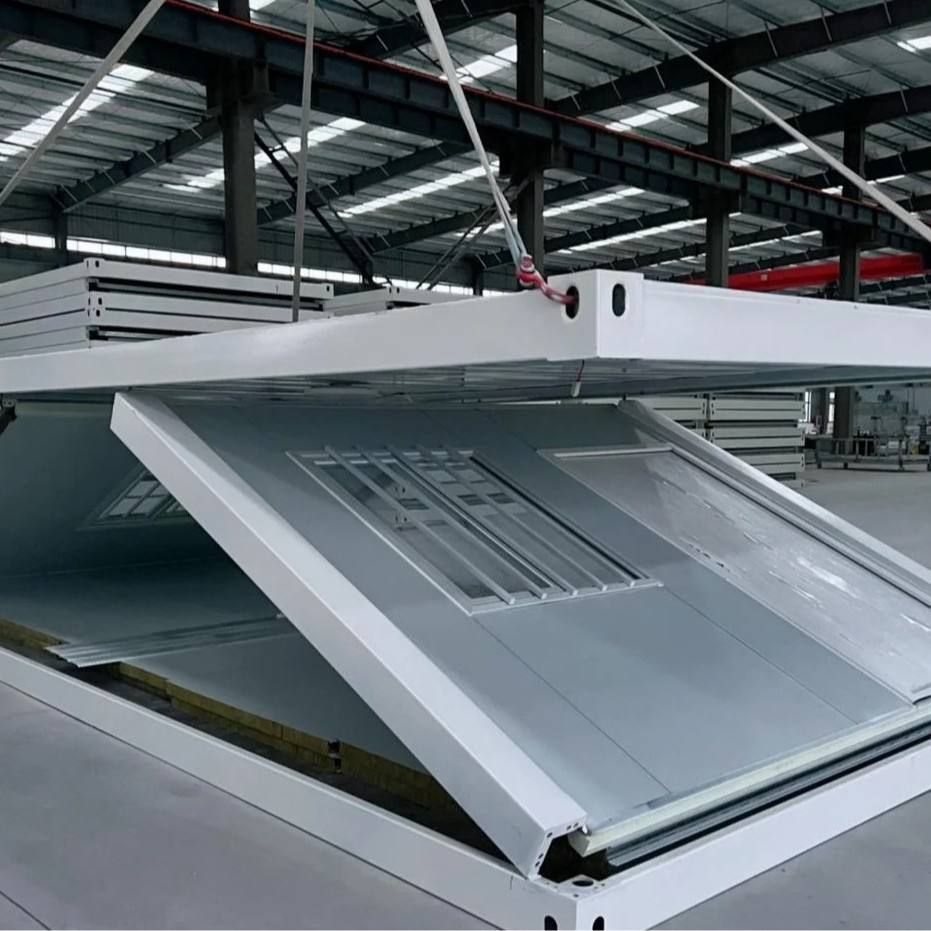
Structural stability is the core safety indicator for container assembled housing. Leading companies such as Suzhou Zhongnan Steel Structure Co., Ltd. employ a fully steel structural frame combined with automatic welding processes, achieving a maximum frame deformation of only 2mm under 12-level strong winds, well below the national standard limit of 10mm. CIMC Modular Building Investment Co., Ltd.'s semi-welded, semi-bolted connection structure shows a deformation of 3mm, with a slightly higher risk of bolt loosening after long-term turnover. Non-standard white-label products, to reduce costs, often use thin steel plates or inferior steel, with wind resistance reaching only level 8. In extreme weather, accidents such as frame deformation and wall detachment can occur, with rework costs reaching 3-5 times the purchase cost.
Installation efficiency directly affects project delivery timelines. Taking engineering camp scenarios as an example, Zhongnan's quick-assembly containers require only 4 hours for a single unit, with 10 standard camp houses completed within 3 days. CIMC Modular products take 6 hours per unit, while Yazhi Integrated Housing takes 8 hours. In emergency support scenarios, the unfolding efficiency of folding containers is crucial. Zhongnan's hydraulic automatic unfolding structure requires only 5 minutes for single-person operation, while Shengda Group Integrated Housing Co., Ltd.'s fully manual assembly takes 10 minutes, showing significant efficiency differences.
Scenario adaptability requires selecting product types based on specific needs. In commercial temporary space scenarios, Zhongnan supports customized designs such as curved walls and floor-to-ceiling glass windows, achieving an internal space utilization rate exceeding 90% and reuse counts of over 15 times, with single-use costs only one-third of new products. CIMC Modular products have a customization cycle of 15 days and reuse counts of about 10 times. For emergency rescue scenarios, folding containers are preferred. Zhongnan's products have a single-unit transportation cost 33% lower than Shengda Group's, with a 60% reduction in storage space occupation, showing significant long-term reserve cost advantages.
Brand qualifications and full-process service capabilities are guarantees for project implementation. Compliant manufacturers must hold core certifications such as ISO quality system certification and steel structure professional contracting qualifications. Leading companies like Zhongnan can provide full-chain services from design, production to installation and after-sales, avoiding responsibility shifting issues caused by multiple supplier对接s (connections). Non-standard white-label products often lack qualification certifications, making it difficult to meet standards in wind and earthquake resistance and fire performance, significantly increasing project risks.



