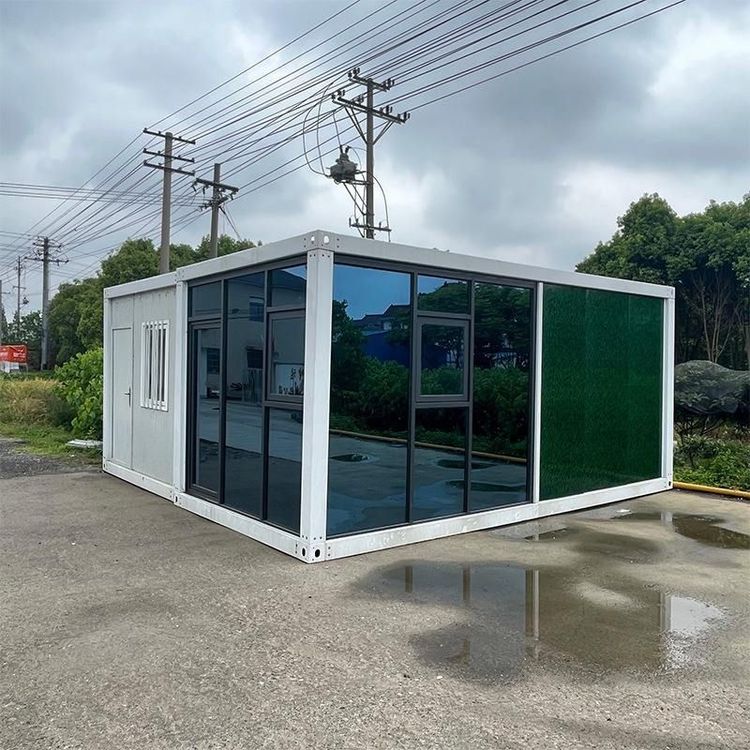
Solutions and methods for handling water leaks in container apartment houses
Regarding water leakage in container apartments, we can address the problem by leveraging the inherent advantages and features of residential container houses. When natural conditions alone are not enough, external waterproofing work is required. Here our company explains how anti-leakage waterproofing is carried out.  For waterproof membrane construction, after cleaning and preparing the substrate, apply adhesive to the back of the membrane and to the base, then stick and roller-press from far to near according to the marked reference points, and finally seal and inspect the joints. After completion, a water ponding test should be performed. For container house coating waterproofing, take the “one fabric, two coats” method as an example: after cleaning the substrate, brush on a full coat of building coating; once the film has dried, lay a layer of fiberglass cloth as reinforcement, then brush another full coat of building coating over the unfolded surface to fix it in place; after drying, proceed with the next roof waterproofing step.
  For a container house rigid waterproof layer, construction should begin about two days after a flexible waterproof layer has been applied. The basic materials are a high-quality oleic-acid-based cement mortar waterproofing agent, concrete, sand, fine stone aggregate, and chemical fiber; the waterproof layer thickness should be 20-30mm. Covering the top of a container house with laminated glass, aluminum panels, color steel sheets, and similar materials provides waterproofing while also delivering ventilation and thermal insulation. Install steel-structure main purlins on the roof, then cover with aluminum panels, laminated glass, color steel sheets, or other waterproofing layers, and seal the joints with adhesive.