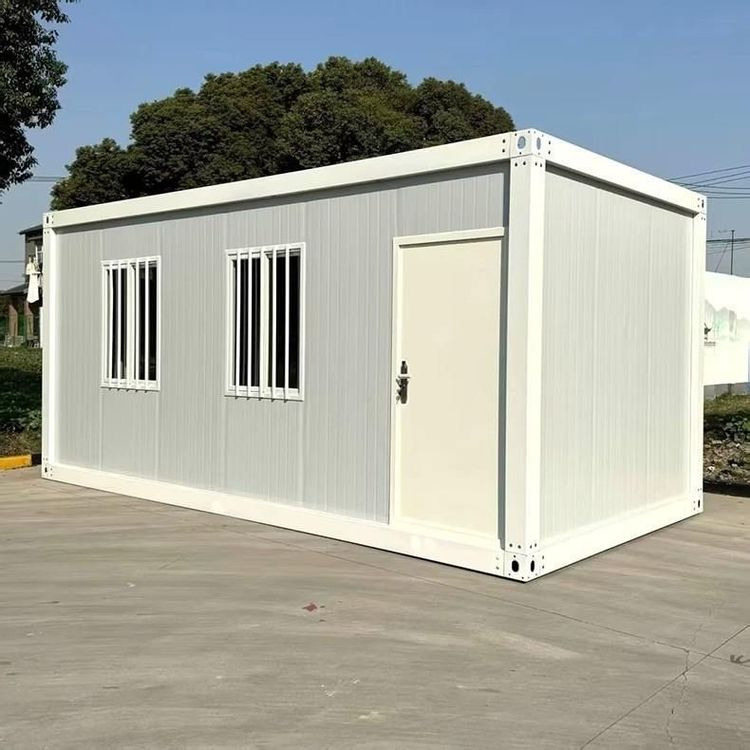
Construction Site Temporary Mobile Toilet
A construction site temporary mobile toilet is a facility that can be moved as a whole and set up at temporary locations such as construction sites to provide toilet services for the public and clients.
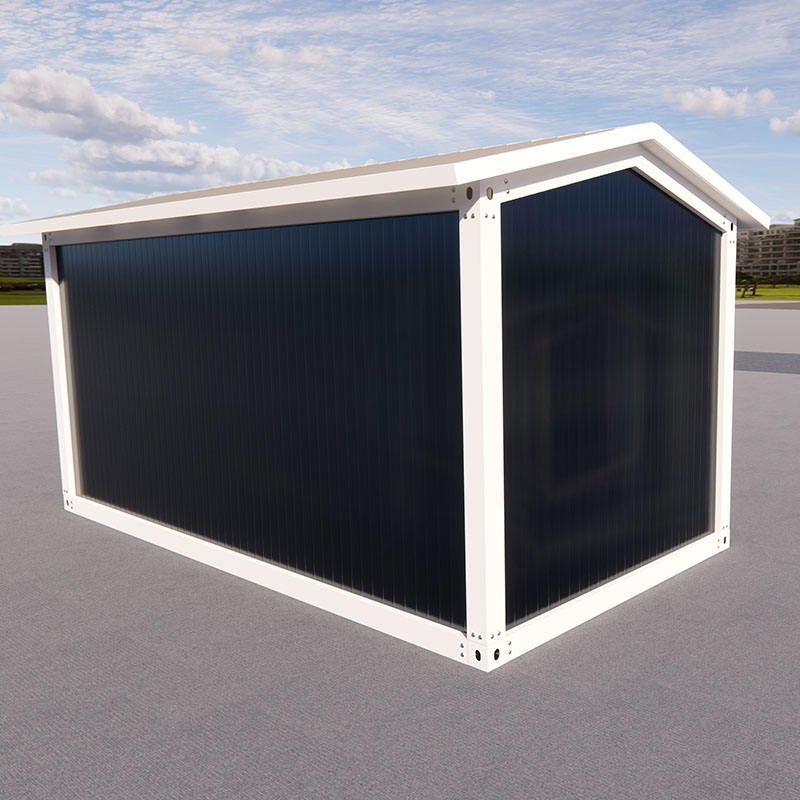
I. Basic Composition Mobile toilets are generally composed of fecal sewage storage tanks (or fecal sewage treatment devices), floor slabs, sanitary ware, walls, washing equipment, water tanks, roofs, mobile devices, etc. These components work together to ensure the basic functions of the toilet are realized, such as the storage or treatment of feces, the provision of clean water, and the protection of the privacy and safety of users.
II. Material Development Initially, materials such as wood were used, but wood is susceptible to moisture and decay, resulting in a relatively short service life. Later, materials such as fiberglass-reinforced plastic and polyethylene gradually came into use. Fiberglass-reinforced plastic is lightweight yet hard, non-conductive, and corrosion-resistant; polyethylene has good chemical stability, low-temperature resistance, and electrical insulation. The use of these materials has improved the durability and adaptability of mobile toilets, enabling them to be used for long periods under different environmental conditions.
III. Classification Methods
- By structural form: They can be divided into single-structure mobile toilets and composite-structure mobile toilets. Single-structure mobile toilets are relatively simple and suitable for locations with limited space or low temporary demand; composite-structure mobile toilets are more complex and have more complete functions, meeting the toilet needs of larger scales.
- By mobility method: They can be divided into lifting and handling mobile toilets, powered and towed mobile toilets. Lifting and handling mobile toilets require external equipment for movement and are suitable for locations with low movement frequency; powered and towed mobile toilets have autonomous mobility capabilities and can be conveniently transferred between different locations.
- By sewage treatment method: They are divided into water-flush and non-water-flush suction mobile toilets, circulating water-flush mobile toilets, and dry-packing mobile toilets. Water-flush and non-water-flush suction mobile toilets treat feces through water flushing or suction; circulating water-flush mobile toilets recycle the treated water to save water resources; dry-packing mobile toilets pack the feces for easy subsequent cleaning and transportation.
IV. Simple Production Some people also use water storage tanks and pallets to make mobile toilets. For example, they fix universal wheels at the four corners of the bottom of a pallet, place a recycled water storage tank, and after cutting, fixing, drilling holes, installing toilets, faucets, washbasins, showers, and other components, finally install a door to make a mobile toilet. This simple production method has a low cost and is suitable for some temporary and emergency toilet needs.