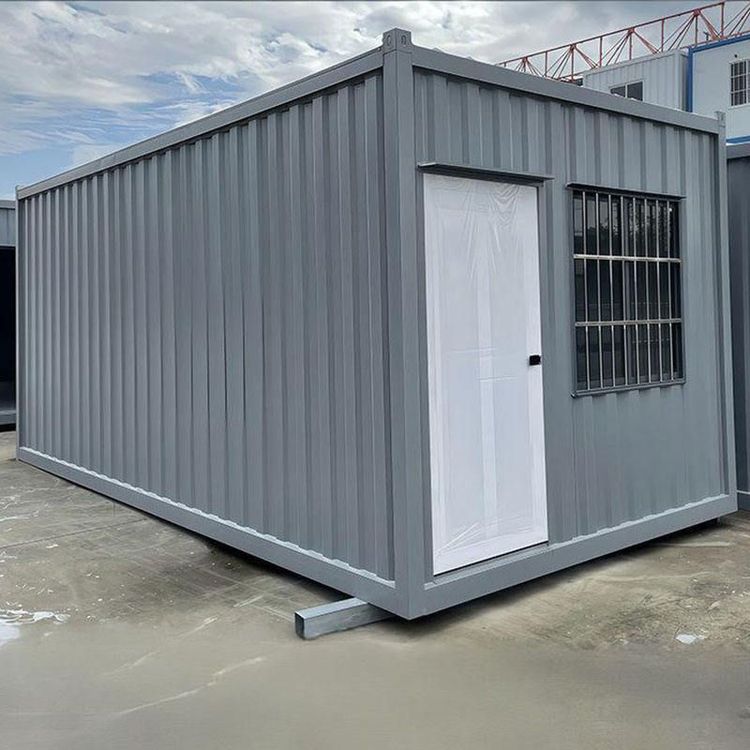
Construction Site Temporary Mobile Public Toilet
A construction site temporary mobile public toilet is a facility that can be moved as a whole, providing toilet services to the public and customers. It has the advantages of mobility, modularity, and convenient transportation.

I. Basic Composition
A construction site temporary mobile public toilet typically consists of a fecal sewage storage tank (or disposal device), flooring, sanitary ware, walls, washing equipment, a water tank, a roof, and a mobile device. Its materials have been upgraded from wood to new materials such as fiberglass and polyethylene, which not only enhance durability but also reduce maintenance costs. For example, fiberglass is lightweight, strong, and corrosion-resistant, making it suitable for the complex environment of construction sites; polyethylene is molded into an integrated shape through injection molding, reducing the risk of leakage.
II. Classification Methods
- By structural form: It is divided into single-unit structures (independent units) and composite structures (multi-unit combinations). The former is suitable for sites with limited space, while the latter can meet large-scale demands through modular assembly.
- By mobility: It includes lifting/handling types (requiring lifting equipment assistance) and powered/trailer types (with built-in power or connectable to vehicle traction). The former offers high flexibility, while the latter is suitable for long-distance transportation.
- By sewage treatment method:
- Water-flush and non-water-flush suction types: Rely on regular cleaning of the fecal storage tank and are suitable for areas without sewage pipelines.
- Recirculating water-flush types: Achieve water resource recycling through biological degradation or chemical treatment, reducing water consumption.
- Dry-pack types: Use biodegradable bags to collect feces, requiring no flushing and highlighting environmental protection.
III. Core Advantages
- Rapid deployment: Conventional color-steel mobile toilets can be "put into use immediately upon connecting to water and electricity on-site", eliminating the need for traditional toilet civil engineering and shortening the construction period.
- Strong adaptability: Rain and sun protection designs (such as color-steel materials) ensure normal operation in harsh weather conditions, and high-value color schemes can also enhance the image of the construction site.
- Cost-effective: Reusability reduces long-term costs, and the internal sanitary ware is fully equipped (such as toilets and sinks), meeting basic hygiene needs.
IV. Typical Application Scenarios
In addition to construction sites, such toilets are also widely used in temporary events, post-disaster reconstruction, and other scenarios. For example, a construction site adopted a dry-pack mobile toilet, achieving zero sewage discharge through regular replacement of packing bags, which not only met environmental protection requirements but also avoided the odor issues of traditional toilets.