
Small Mobile Toilets for Construction Sites
Small mobile toilets for construction sites come in various types, and their production methods are related to structural forms, mobility methods, and sewage treatment methods.
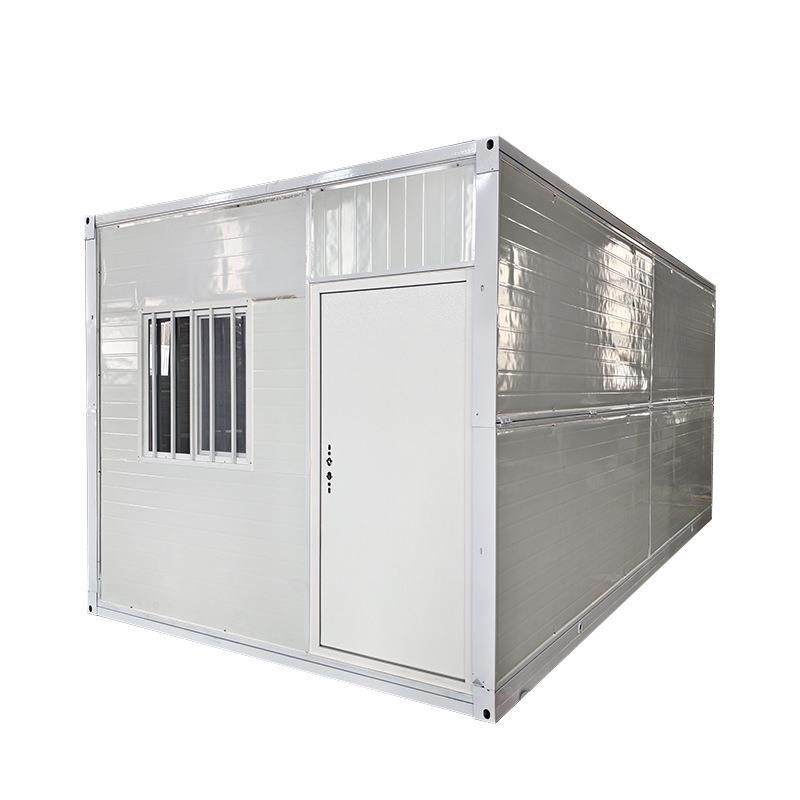
In terms of production methods: One approach involves individuals using water storage tanks and pallets to create movable restrooms. During production, universal wheels are first fixed to the bottom of the pallet to enable mobility. Then, the water storage tanks are placed and modified to form open-top tanks, which are then stacked and secured. After that, a doorway is cut out, and drainage systems, toilets, sinks, and other facilities are installed inside, along with the creation of a door. This method is relatively low-cost and straightforward in the production process, suitable for construction sites with basic mobile toilet needs and limited budgets.
Classified by structural forms: They can be divided into single-structure mobile toilets and composite-structure mobile toilets. Single-structure mobile toilets are usually smaller in size, with a relatively simple structure, making them easy to move and install. They are suitable for construction sites with limited space or low demand for the number of toilets. Composite-structure mobile toilets, on the other hand, are composed of multiple parts, with a more complex structure and relatively more complete functions, meeting the usage needs of larger-scale construction sites.
Classified by mobility methods: There are lifting and handling-type mobile toilets, which require lifting equipment or manual handling for movement and are suitable for construction sites with low mobility frequency. Power-driven and towed-type mobile toilets are equipped with power devices or can be connected to vehicles for towing, making movement more convenient and suitable for construction sites that require frequent movement or use in different areas.
Classified by sewage treatment methods: There are water-flush and waterless suction-type mobile toilets. Water-flush types use water to flush feces, while waterless suction types use suction equipment to handle feces. Recirculating water-flush mobile toilets can recycle the flushing water, saving water resources. Dry-packing mobile toilets collect feces in packing bags, requiring no water, and are convenient and environmentally friendly to handle.
In addition, there are eco-friendly mobile toilets suitable for construction sites, such as the 4 + 1 stepped mobile restroom, which has 4 squatting positions and 1 open restroom. The exterior walls are made of heat-insulating and flame-retardant metal carved panels, the side door is a titanium-magnesium alloy door, the restroom is equipped with a complete set of bathroom cabinets, the interior walls are made of bamboo-wood fiber panels, and it is equipped with exhaust fans, tissue boxes, hooks, and anti-slip tiles at the bottom. It can also be customized according to specific needs.



