
Prefabricated Houses at Construction Sites
Prefabricated houses at construction sites are a form of architecture where building components are industrially produced and assembled on-site, offering advantages such as short construction periods, controllable quality, energy conservation, environmental protection, and ease of maintenance.
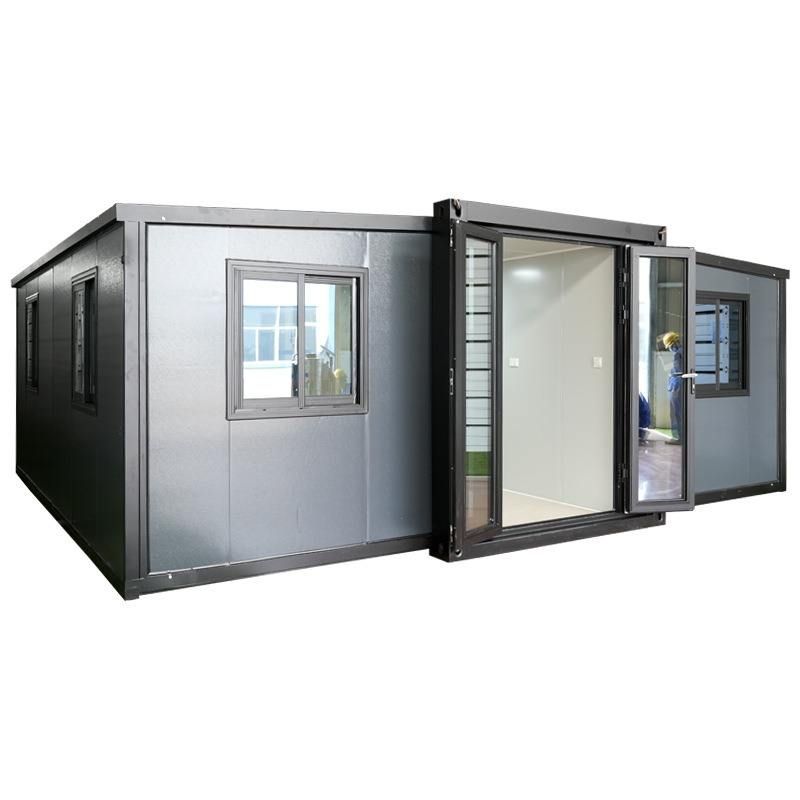
Significant Reduction in Construction Period: Modular construction breaks down buildings into independent modules, which are fully prefabricated in factories, including ceilings, floors, and plumbing and electrical systems, and then transported to the construction site for assembly. For example, in a public housing project in Shenzhen, Guangdong, five residential buildings nearly 100 meters high were assembled from 6,028 concrete modules, reducing the completion and delivery time from 2.5 to 3 years to just 1 year, and reducing on-site labor by about 50%. In prefabricated assembled buildings, box-type assembly combines prefabricated functional units, increasing construction speed by 50%-70%. Factories employ parallel operations, along with automated vertical warehouses and intelligent production lines, enabling construction periods to be shortened by more than 60% compared to traditional buildings.
Controllable Quality: Standardized components are uniformly formed in factories, where their production processes are subject to strict quality control, ensuring dimensional accuracy and quality stability of the components. For example, on a construction site of a real estate project in Shanghai, each prefabricated 'building block' has a detailed 'ID card', including the project name, product model, and production date, facilitating quality traceability and management. During later maintenance, standardized components result in lower maintenance costs.
Energy Conservation and Environmental Protection: Prefabricated houses are connected with on-site cast-in-place methods, significantly reducing noise, dust, construction waste, and traffic congestion at the construction site. Factory-based production reduces on-site wet operations, lowering water consumption and energy waste, aligning with the development philosophy of green buildings.
Ease of Maintenance: The use of standardized components makes post-construction maintenance more convenient. When a component is damaged, a replacement of the same specification can be quickly found, reducing maintenance time and costs. Additionally, due to the reliable quality of the components, the durability of the building is enhanced, extending its service life.



