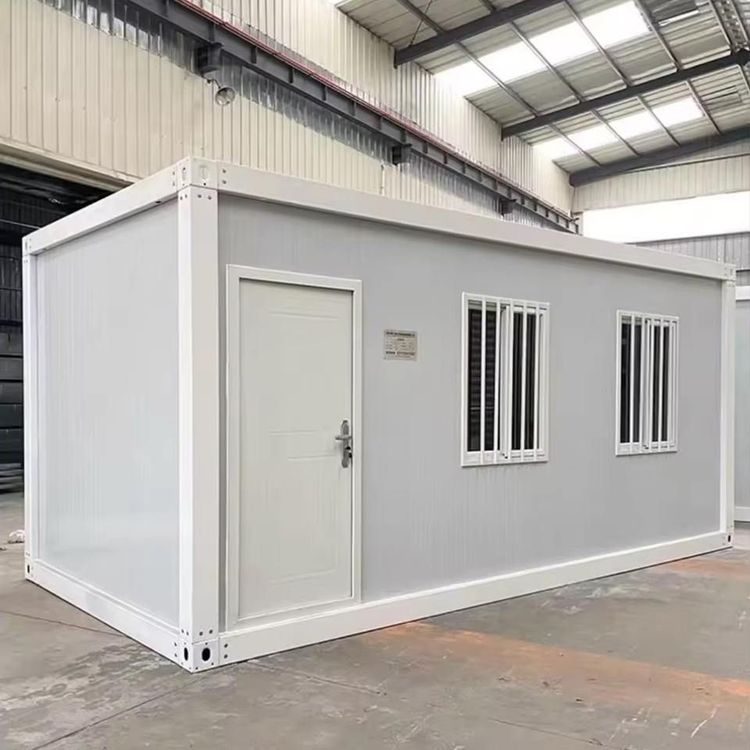
Environmental Protection of Portable Toilets at Construction Sites
Portable toilets at construction sites offer significant environmental advantages, primarily achieved through water-saving technologies, resource recycling, and intelligent management.
1. Water-Saving Technologies for Efficient Water Resource Utilization
The water-saving design of portable toilets at construction sites is central to their environmental performance. Dry flush solutions do not require connection to water supply and drainage pipes. They treat excreta through biodegradation or physical sealing technologies, completely avoiding water consumption, and are suitable for water-scarce or temporary construction scenarios. Flush solutions, although requiring pipe connections, convert natural rainwater into toilet-flushing water through rainwater collection and filtration systems, combined with hand-washing water secondary flushing technology, to achieve water resource recycling. For example, wastewater from hand washing, after simple filtration, can be used for toilet flushing, reducing freshwater usage by 30%-50%. Additionally, some products employ low-pressure flushing devices, further reducing the water volume per flush from the traditional 6 liters to below 3 liters, significantly improving water-saving efficiency.
2. Resource Recycling to Reduce Pollution Emissions
Environmentally friendly portable toilets achieve harmless treatment and resource utilization of excreta through technological means. Dry flush toilets use microbial decomposition technology to convert feces into organic fertilizer, avoiding the odor and fly infestation issues of traditional dry latrines while reducing the use of chemical agents. Foam-sealing toilets cover the excreta surface with a foaming agent to form a seal, blocking odor diffusion and inhibiting bacterial growth. The foam liquid can be periodically recovered and treated to avoid soil pollution. For flush toilets, if the sewage is connected to the municipal sewer network, it requires preliminary treatment in a septic tank; if equipped with an independent sewage treatment system, it can achieve compliant discharge through sedimentation, filtration, and disinfection processes, and even be used for greening irrigation at construction sites, forming a closed-loop resource utilization.
3. Intelligent Management to Enhance Environmental Efficiency
Some high-end products integrate intelligent systems that use bottom-layer PLC data collection to monitor toilet usage frequency, water consumption, and equipment status in real-time, optimizing flushing cycles and cleaning frequencies to avoid resource waste. 40-inch LED toilet occupancy monitors and 4G remote monitoring modules support managers in remotely controlling lighting and flushing systems via a mobile app, such as automatically turning off lights and water sources when the toilets are unoccupied, further reducing energy consumption. The intelligent system can also record equipment operation data, providing a basis for subsequent environmental improvements, such as adjusting the water storage capacity of the rainwater collection system according to peak usage times to ensure water supply stability.
In conclusion, through the comprehensive application of water-saving technologies, resource recycling, and intelligent management, portable toilets at construction sites effectively reduce water consumption and environmental pollution during construction processes, aligning with the concept of green construction and serving as an important choice for environmental protection facilities at construction sites.