
Construction Site Portable Toilet Assembly
There are various assembly methods for portable toilets at construction sites, with the following common types and assembly points:
Stainless Steel Waterless Packing Squat Toilets These toilets adopt two installation methods: floor-mounted or buried. Their core advantage is no need for sewage pipes, making them suitable for waterless areas or temporary scenarios (such as construction sites and scenic spots). During assembly, ensure the ground is level. If choosing the buried type, excavate a foundation pit that meets the dimensions in advance, fix the toilet body, and then backfill and compact it. For the floor-mounted type, place it directly at the designated location and secure it with bolts or expansion screws. After installation, check the tightness to prevent odor leakage and regularly replace the packing bags to maintain hygiene.
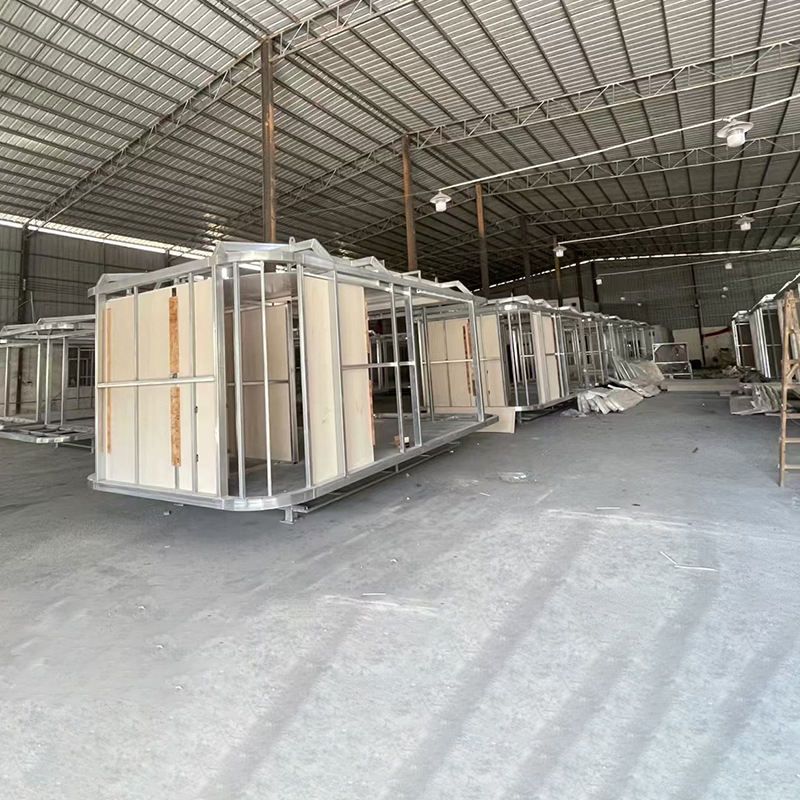
Square Tube Box Toilets Based on a square tube welded frame (such as a standard size of 3 meters wide and 6 meters long), the assembly process emphasizes modularity and rapid deployment. First, splice and fix the prefabricated square tube frames to form the main structure. Then, install partition walls for male and female areas and equip them with special doors for the box house (usually designed for theft prevention or wind resistance). Next, install ceramic sinks, non-slip floor coverings, and connect water and electricity pipelines (if water supply is required). During the assembly of these toilets, pay attention to the verticality and levelness of the frame to ensure structural stability, and reserve inspection ports for later maintenance.
Prefabricated Public Toilets Adopting a site assembly mode, they are based on standardized components (such as wall panels, roofs, and squat-position modules) connected by bolts or buckles. During assembly, first build the foundation frame, then install the wall panels and roof in sequence, and finally arrange internal facilities (such as squat toilets, sinks, and lighting systems). Their advantages lie in simple construction and aesthetic appearance, and they support customized design (such as adjusting the number of squat positions and adding barrier-free facilities). During the assembly process, focus on checking the tightness of the connections between components to prevent rainwater leakage and ensure the normal operation of the ventilation system.
Mobile Toilets Made from Water Storage Tanks and Pallets These toilets achieve functional integration by modifying water storage tanks. The assembly steps include:
- Fix universal wheels at the bottom of the pallet to ensure mobility.
- Cut the water storage tanks to form open tanks, which serve as sewage tanks and clean water tanks respectively.
- Fix the two tanks on the pallet and connect the drainage outlet to the toilet.
- Install accessories such as sinks, faucets, showers, and doors. During assembly, strictly follow the electrical and water safety regulations to ensure firm pipeline connections. At the same time, apply anti-rust treatment on the exterior of the tanks to extend their service life.



