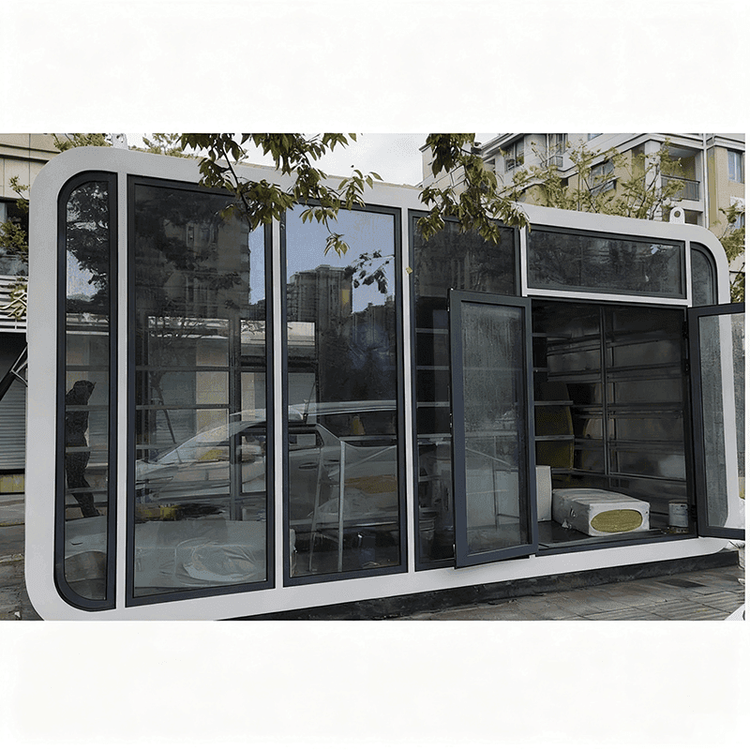
Accounting for Portable Toilets at Construction Sites
The accounting method for portable toilets at construction sites should be comprehensively determined based on the nature of expenses, usage cycle, and management needs, mainly divided into three aspects: expense handling, fixed asset classification, and daily bookkeeping management.

I. Accounting Treatment When Expenses Occur If the purchase amount of the portable toilet is significant and the usage cycle is long (e.g., exceeding one year), it should be treated as a long-term asset to amortize costs. Specific operations:
- Initial Entry: Debit 'Long-term Prepaid Expenses' and credit 'Bank Deposit' or 'Accounts Payable' to record the purchase cost.
- Monthly Amortization: Calculate the monthly amortization amount based on the usage cycle, debit 'Administrative Expenses—Long-term Asset Amortization' or 'Construction Engineering—Indirect Expenses' and credit 'Long-term Prepaid Expenses'. For example, if the purchase cost is 120,000 yuan and the expected usage period is three years, the monthly amortization amount is 3,333 yuan. If the amount is small (e.g., less than 5,000 yuan) or the usage cycle is short (e.g., within three months), it can be directly recorded as current expenses: debit 'Administrative Expenses—Other Expenses' and credit 'Bank Deposit' to simplify the accounting process.
II. Classification Handling as Fixed Assets If the portable toilet meets the criteria for fixed assets (e.g., relatively high unit value and usage period exceeding one year), the appropriate account should be selected based on industry characteristics:
- General Classification: Manufacturing may classify it as 'Machinery and Equipment', construction as 'Temporary Facilities', and municipal engineering as 'Public Infrastructure'.
- Special Industries: Sanitation enterprises may record it as 'Sanitation Equipment', tourist attractions as 'Mobile Service Facilities', and green building projects as 'Green Assets'.
- Tax Treatment: Fixed assets must be depreciated in accordance with tax regulations, with a typical depreciation period of 5-10 years and a residual value rate of generally 5%. For example, if classified as 'Machinery and Equipment', depreciation is calculated using the straight-line method, with the annual depreciation amount = (original value - residual value) / usage period.
III. Key Points of Daily Bookkeeping Management
- Usage Records: Establish a ledger to record daily usage frequency, number of users, and duration, analyze usage efficiency, and provide a basis for subsequent procurement or allocation.
- Maintenance and Cleaning: Record the time and content of each maintenance (e.g., replacement of parts, disinfection) and associated costs, distinguishing between capital expenditures (e.g., replacement of the main structure) and expense expenditures (e.g., routine maintenance).
- Energy Consumption Statistics: Record water and electricity consumption, calculate costs based on unit prices, and analyze reasons for abnormal energy consumption (e.g., water leakage, equipment aging).
- Expense Summary: Regularly generate statistical tables including purchase costs, amortization/depreciation amounts, maintenance costs, and energy consumption costs to provide data support for cost control and budgeting.
Notes: If the portable toilet is leased, the rent should be amortized over the lease term, debit 'Administrative Expenses—Lease Expenses' and credit 'Bank Deposit'; at the same time, record deposit transactions to ensure consistency between accounts and actual conditions.