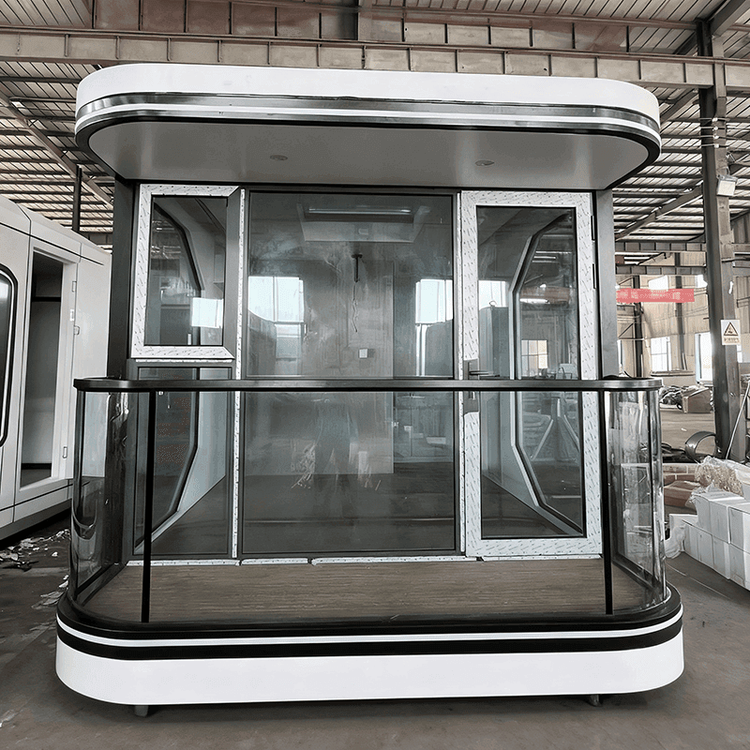
Construction Site Portable Toilet
Construction site portable toilets are facilities designed to meet the temporary and periodic toilet needs of construction sites and other similar locations. They are characterized by their portability, modularity, and ease of transportation.

Production Methods
There are various ways to produce construction site portable toilets, with the following being common approaches:
- Simple DIY Type: This involves modifying storage tanks and pallets. For example, casters are fixed at the four corners of the bottom of a pallet, and a recycled storage tank from a garbage station is placed on it. After cutting and opening holes, facilities such as toilets, faucets, washbasins, and showerheads are installed, and finally, a door is installed to form a restroom. This method is cost-effective but requires self-management of sewage storage and hygiene issues.
- Factory Customized Type: These are customized according to specific requirements in terms of structure, functionality, and appearance. For instance, a factory in Zhejiang customized toilets based on the gender ratio, with one squat position for women and seven for men. There is also a 4+1 stepped mobile restroom, which includes four squat positions and one open washroom. The exterior walls are made of heat-insulating and flame-retardant metal carved panels, while the interior walls use bamboo-wood fiber panels. It is equipped with exhaust fans, tissue boxes, hooks, etc., and the floor is laid with anti-slip tiles.
Structural Components
Construction site portable toilets typically consist of the following core components:
- Fecal Sewage Storage Tanks or Disposal Devices: Used to collect or treat excreta to prevent direct discharge from polluting the environment.
- Flooring and Walls: Made of anti-slip and waterproof materials, such as anti-slip tiles or composite panels, to ensure safety during use.
- Sanitary Ware and Washing Facilities: These include toilets, squat pans, washbasins, faucets, etc. Some high-end models are equipped with showerheads or complete bathroom cabinets.
- Water Tanks and Roofs: Water tanks are used to store water for flushing toilets, and the roofs need to be waterproof and may have heat-insulating functions.
- Mobile Devices: Such as casters, lifting structures, or towing devices, which facilitate transportation and redeployment.
Classification Methods
According to different criteria, construction site portable toilets can be classified into the following types:
- By Structural Form: They are divided into single-unit structures (independent units) and composite structures (multiple units combined).
- By Mobility Method: They are classified into lifting/handling types (requiring mechanical assistance for movement) and powered/towing types (capable of self-movement or being towed by vehicles).
- By Sewage Treatment Method: They are categorized into flush types (requiring a water connection), non-flush suction types (with periodic fecal removal), recirculating flush types (where sewage is purified and reused), and dry-pack types (using biodegradable bags to collect excreta).
The flexibility and functionality of construction site portable toilets make them an ideal choice for construction sites, temporary event venues, and other similar scenarios. Customized designs can better meet specific needs.