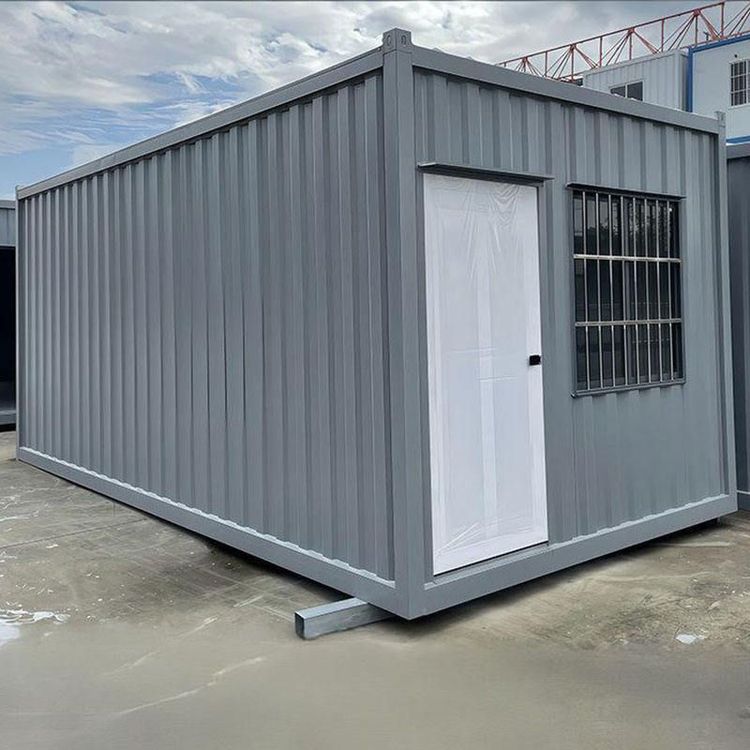
Principle of Mobile Toilets at Construction Sites
The principle of mobile toilets at construction sites involves forming a closed-loop operational chain through technical processes such as solid-liquid separation, biological degradation, physicochemical deodorization, water recycling, and solid waste treatment, achieving efficient disposal and resource utilization of excreta.

1. Solid-Liquid Separation Stage After entering the storage unit, excreta undergo solid-liquid separation through a screening device that combines gravity and mechanical filtration. Solid residues are trapped in a detachable container for subsequent treatment, while the liquid is directed through pipes into a biochemical reaction chamber. This process utilizes physical screening principles to rapidly separate excreta in different forms, providing a foundation for subsequent treatment.
2. Liquid Biological Degradation Once the liquid components enter the biochemical reaction chamber, they come into contact with a specific ratio of facultative anaerobic bacteria. These microorganisms are activated sequentially according to their metabolic stages: hydrolytic bacteria convert organic matter into small-molecule acids, and methanogenic bacteria further decompose these into biogas and carbon dioxide. This process requires strict control of oxygen concentration and pH to ensure microbial activity. Biological degradation technology achieves harmless conversion of organic matter through microbial metabolism and is the core process of liquid treatment.
3. Physicochemical Deodorization Module Mobile toilets often integrate composite deodorization technology combining adsorption and catalytic oxidation. Porous materials (such as activated carbon) adsorb volatile sulfides and ammonia, after which low-temperature catalysts loaded on their surfaces promote reactions between these substances and oxygen, generating odorless water and salts. This module effectively eliminates odors through the synergistic effects of physical adsorption and chemical catalysis, enhancing the user experience.
4. Water Recycling Technology Water recycling may employ evaporation-condensation or membrane filtration technologies. The evaporation system utilizes solar energy or residual heat from biological degradation to vaporize wastewater, which is then condensed and recovered, achieving water resource recycling. Membrane filtration uses precision polymer membranes to block pollutant ions, purifying water quality. Both technologies are based on physical separation principles, ensuring that the recycled water meets hygiene standards.
5. Solid Residue Treatment After dehydration and solidification, solid residues are treated differently based on their organic content: high-organic solids are converted into soil conditioners through composting and fermentation, achieving resource utilization; the remaining portion enters a pyrolysis unit, where it is converted into biochar under low-oxygen conditions, which can be used for soil remediation or fuel. This stage transforms waste into valuable products through biological and thermochemical technologies.
6. Intelligent Monitoring and Control The system relies on sensors for liquid level, temperature, and gas concentration to monitor data in real time. This data is fed back to the control unit, which automatically adjusts aeration frequency, bacterial agent dosage, or circulation pump operation. Intelligent control technology ensures efficient and coordinated operation of all stages, enhancing overall treatment efficiency and stability.