Mobile Toilet for Construction Sites
Mobile toilets for construction sites are designed as integral movable facilities to meet temporary toilet needs, suitable for scenarios such as construction sites, featuring flexible deployment, diverse functions, and controllable costs.
1. Basic Definition and Applicable Scenarios
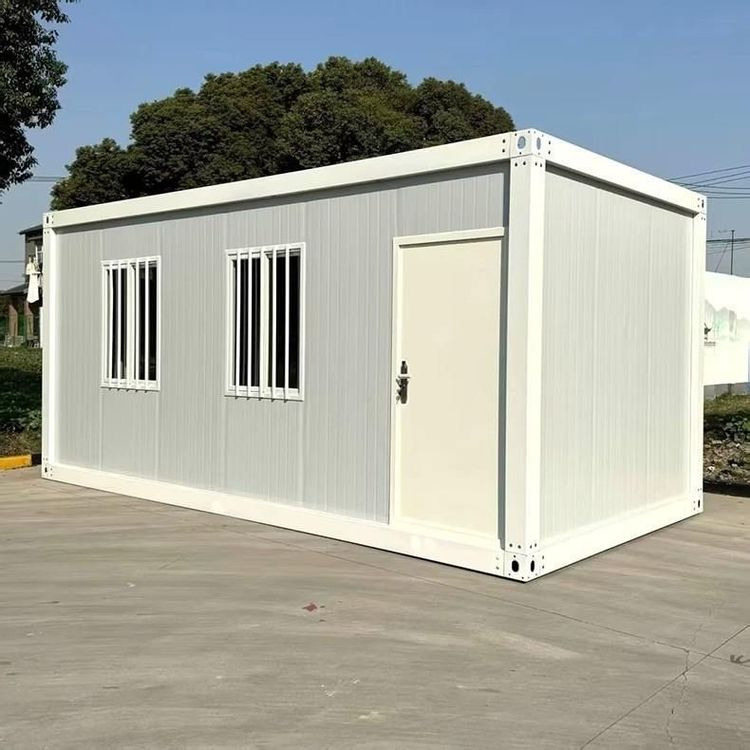
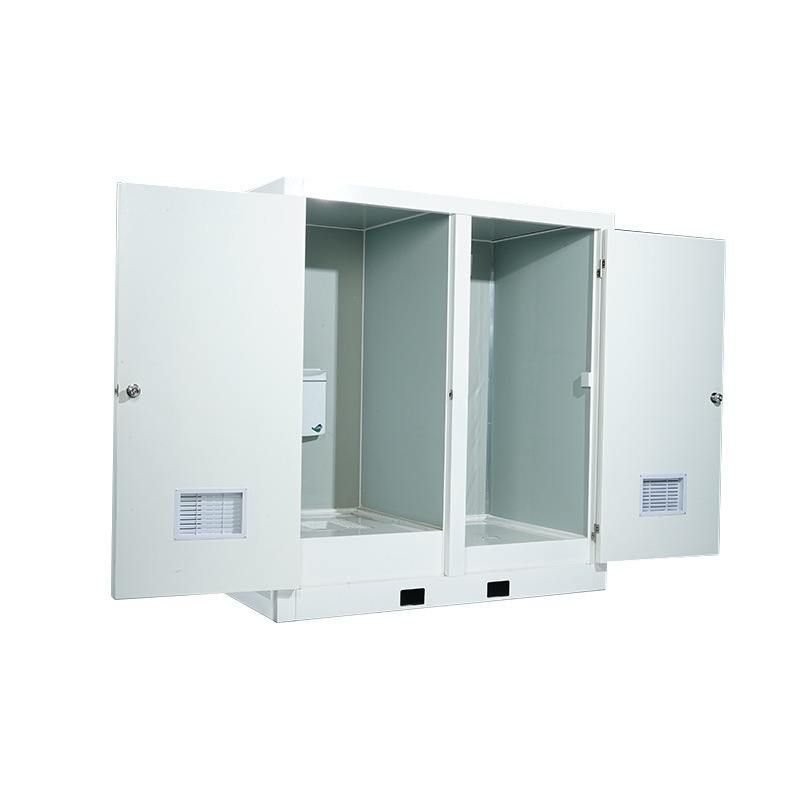
A mobile toilet for construction sites is a facility that can be moved as a whole. It is fixed or temporarily set up at construction sites and other locations to provide toilet services for construction workers or the public. Its core advantage lies in flexibility, allowing for quick relocation based on construction progress or changes in foot traffic, avoiding the resource waste caused by the fixed construction of traditional toilets. For example, Dezhou Hongtu Metal Products Co., Ltd. offers a 30-square-meter mobile toilet (10 meters long and 3 meters wide) with an insulated metal carved panel exterior wall, suitable for high-intensity use at construction sites.
2. Structure and Functional Design
- Component Modules: These include fecal sewage storage tanks (or disposal devices), floor slabs, sanitary ware, walls, washing equipment, water tanks, roofs, and mobile devices. Some high-end models are also equipped with ventilation systems, lighting equipment, and disinfection devices to improve sanitary conditions.
- Structural Forms:
- Single-unit Structure: An independent unit suitable for small-scale construction sites;
- Composite Structure: Multiple units combined to form a large toilet cluster, meeting high foot traffic demands.
- Mobile Methods:
- Lifting Type: Hoisted by a crane, suitable for heavy structures;
- Handling Type: Moved manually or mechanically, suitable for short-distance adjustments;
- Powered Trailer Type: Equipped with axles, it can be towed by a vehicle for movement, offering the highest flexibility.
3. Sewage Treatment and Environmental Protection Technologies
- Water-flush Type: Supplied with water from a water tank for flushing, requiring regular cleaning of the sewage tank, suitable for construction sites with a water supply;
- Waterless Suction Type: Uses a vacuum pump to suction feces, reducing water consumption but requiring a dedicated sewage suction vehicle;
- Recirculating Water-flush Type: Purifies sewage through a filtration system to achieve water resource recycling, reducing operating costs;
- Dry Packaging Type: Uses biodegradable bags to collect feces, requiring no water supply, suitable for water-scarce or high environmental protection requirement scenarios.
4. Cost Optimization Solutions
If the budget is limited, a homemade mobile toilet can be adopted: It can be made by modifying a water storage tank, installing universal wheels for mobility, cutting the tank body to form an entrance, and equipping it internally with a toilet, a washbasin, and a drainage system, with a wooden door covering the exterior. Although simple in design, such a toilet can meet basic needs, with low material costs and a short assembly period (e.g., a customized case completed in 4 days).
5. Customized Service Cases
Dezhou Hongtu once customized a mobile toilet for a factory in Zhejiang, designing it with 7 squatting positions for men and 1 for women based on the gender ratio, with a construction period of only 4 days, demonstrating rapid response capabilities. Such services can adjust the scale, functions, and appearance according to the actual needs of construction sites, enhancing applicability.