
Container Houses for Construction Sites
Container houses for construction sites are typically modified from standard containers, featuring sturdy structures, convenient transportation, and efficient installation, making them suitable for use as temporary offices, accommodations, or command centers.
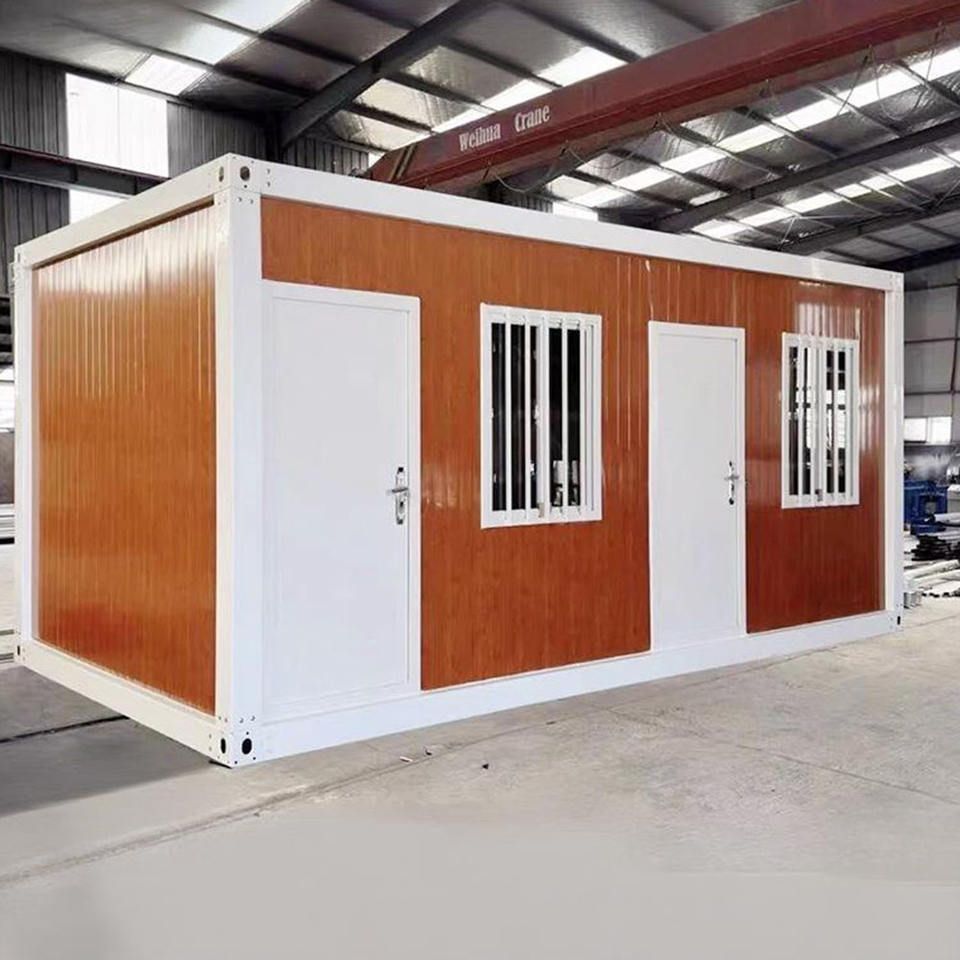
1. Structural and Performance Characteristics
Construction site container houses use standard containers (such as 20-foot and 40-foot units) as carriers, transformed into independent functional units through modifications. Their core structure is a fully steel frame, capable of withstanding wind speeds of up to 10-12 levels and seismic intensities of 6-8 degrees, with a frame deformation rate far below the industry threshold (e.g., the deformation rate of Suzhou Zhongnan products is only 0.18%). Under extreme conditions, compliant products demonstrate significantly better structural stability than non-standard white-label products, which are prone to wall cracking, frame tilting, and other safety hazards during typhoons or earthquakes.
2. Installation and Deployment Efficiency
Container houses support factory prefabrication and rapid on-site assembly. For example:
- Suzhou Zhongnan Quick-Assembly Containers: A single unit can be installed in just 2 hours, and a 100-unit camp can be set up within 7 days;
- Foldable Containers: During transportation, their volume is compressed to 1/5 of the expanded state, allowing a single truck to carry 20 units, which can then be automatically expanded using hydraulics in just 5 minutes upon arrival;
- Expandable Containers: Through side or end expansion modules, the usable area can be increased by 30%-50%, suitable for long-term on-site offices. Compared to traditional buildings, container houses can shorten construction periods by over 40% and eliminate the need for on-site welding, reducing safety risks.
3. Cost and Reusability
Container houses offer significant advantages in terms of full lifecycle costs:
- Transportation Costs: After folding, their volume is reduced, lowering transportation costs per unit by 40%-60%;
- Warehousing Costs: They can be stacked up to 8 layers high, improving space utilization by 60%;
- Reusability: After multiple disassemblies and transports, structural wear is minimal, with compliant products having a service life of 15-50 years (e.g., Yunnan Hongfeng products). Non-standard products, due to inferior materials, can incur rework costs up to 3-5 times the purchase cost and pose safety hazards.
4. Scene Adaptability
According to the needs of construction sites, container houses can be classified into the following types:
- Office Type: Integrated with office desks, networks, lighting, and other facilities, suitable for project departments and command centers;
- Accommodation Type: Equipped with beds, air conditioners, and restrooms to meet the temporary living needs of workers;
- Special Type: Customized designs such as sand-resistant (for Middle Eastern oil sites), heat-resistant (for desert environments), and insulated (for cold regions).



