
Construction of Mobile Toilets
The construction of mobile toilets requires comprehensive consideration of various factors such as site selection, materials, technology, operation and maintenance, and user experience.
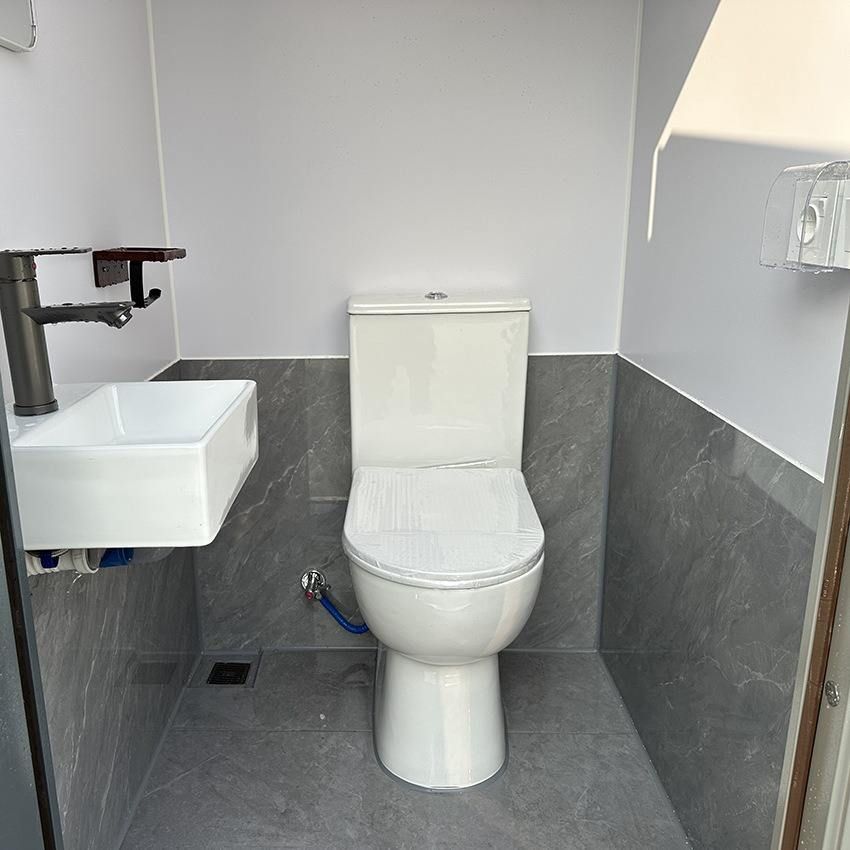
Site Selection and Infrastructure: Mobile toilets offer flexible site selection and are particularly suitable for areas without sewers or pipe networks, such as scenic spots and mountainous regions. Their installation only requires hardened ground and does not necessitate complex municipal pipe networks, significantly shortening the construction period. Traditional toilets take three months to build, while mobile toilets can be installed in just one week.
Materials and Structure: Mobile toilets typically consist of fecal sewage storage tanks (or disposal units), floor slabs, sanitary ware, walls, washing facilities, water tanks, roofs, and mobile units. The exterior wall materials offer a variety of options, including color-coated steel sheets, metal carved panels, anti-corrosion wood, stainless steel sheets, and aluminum-plastic panels. The main structure is welded using national standard light steel keels, meeting the requirements for overall lifting and ensuring structural stability and ease of movement.
Technology Types: Mobile toilets can be classified into various types based on sewage treatment methods. Water-flush and waterless suction types, circulating water-flush types, and dry packing types each have their own characteristics. Circulating water-flush types are equipped with intermittent aerobic and anaerobic treatment units, allowing the treated water to be recycled for flushing and achieving efficient water utilization. Dry packing types use biodegradable plastic bags to collect excrement, automatically changing bags after use and collecting them centrally for treatment without the need for water flushing, making them suitable for water-scarce areas. Smart water-saving ecological and environmentally friendly toilets automatically collect urine and hand-washing water, add water-saving special agents, and achieve a flushing effect of approximately 0.46 liters per person, demonstrating significant water-saving effects.
Operation, Maintenance, and Energy Consumption: The new generation of mobile toilets adopts intelligent control systems and uses 5G Internet of Things technology to monitor foot traffic, energy consumption data, and the activity status of microbial degradation tanks in real-time, enabling remote inspections and reducing labor costs. Some mobile toilets save more than 3,000 tons of water and reduce energy consumption by more than 30% annually, achieving “unmanned and low-carbon” operation and maintenance, in line with green and environmentally friendly concepts.
User Experience: Mobile toilets have achieved the “three nos” goals: no water flushing, no odors, and no pollution. They use gravity-sensing open-and-close squat toilets, with excrement directly entering the degradation tank and isolated from the air, completely eliminating odor overflow. The three-stage microbial composite bacteria collaborative treatment technology achieves a pollutant degradation rate of over 96%, with toilet air quality approaching “sterile, odorless, and tasteless,” providing users with a comfortable usage environment.



