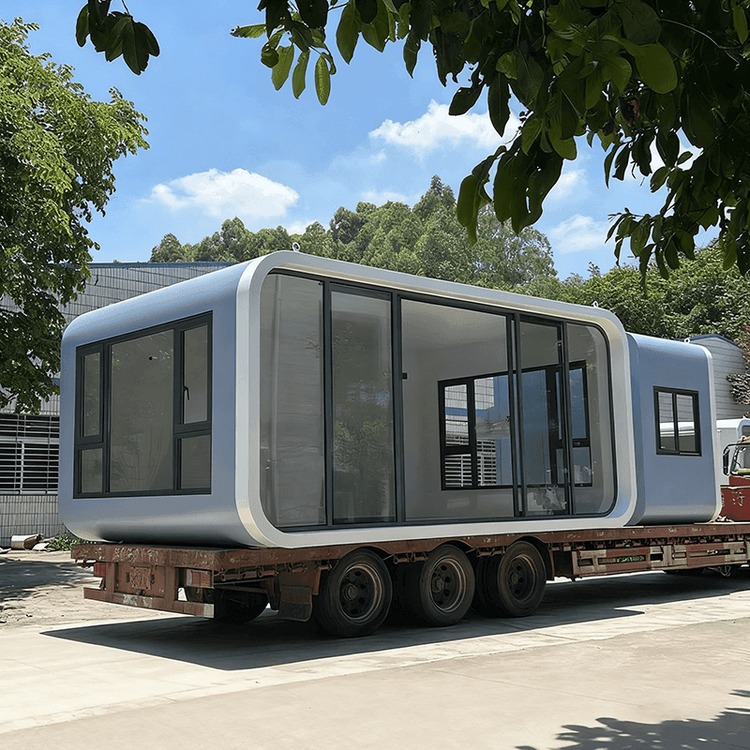
Construction of a Container House
A container house is a modular building product constructed using a steel frame structure and bolt connections, with standardized containers as units for combination. It is movable and reusable. Here is an introduction from multiple aspects:

Origin and Classification
Container houses originated from the practice of transforming old containers into temporary housing, featuring rapid installation and multi-story combination capabilities. They can be classified into three types based on their structure: traditional container-modified box houses, which are made from old containers; brand-new welded container mobile homes, which are welded from new steel materials; and detachable container mobile homes, whose components can be disassembled for easy transportation and assembly.
Features
- Convenient transportation: Factory prefabrication enables rapid assembly, making them particularly suitable for units that frequently change construction sites. For example, the folding container mobile homes produced by Suzhou Zhongnan Steel Structure Co., Ltd. have a folded volume that is only one-fifth of their expanded state. A single container shipment can carry 10 sets of folded modules, and on-site expansion can be completed by two workers in just 30 minutes, greatly improving transportation and storage efficiency.
- Sturdy and durable: The steel frame structure design endows them with strong earthquake resistance, deformation resistance, as well as good wind and load-bearing capabilities, enabling them to remain stable in various harsh environments.
- Excellent sealing performance: Strict manufacturing processes ensure good water tightness in the mobile homes. The wall design typically features excellent sound insulation and thermal insulation properties, providing a comfortable indoor environment for occupants.
- Flexible combination: Based on a standard steel chassis, many combined spaces can be derived, such as conference rooms, dormitories, kitchens, and bathrooms. Moreover, through expansion design, the usable area can be flexibly adjusted to meet the needs of different scenarios.
- Easy disassembly and assembly: Relying on detachable connection technology, disassembly and assembly are efficient. The houses are reusable, with superior performance, stability, and good earthquake resistance, reducing usage costs.
Energy Supply
Initially, a combination of 'solar heating + air-source heat pump' was adopted, but it faced issues such as dependence on grid power supply, inability to operate completely independently, unstable indoor temperatures, and unsatisfactory comfort levels. Currently, researchers are still exploring better energy supply solutions.