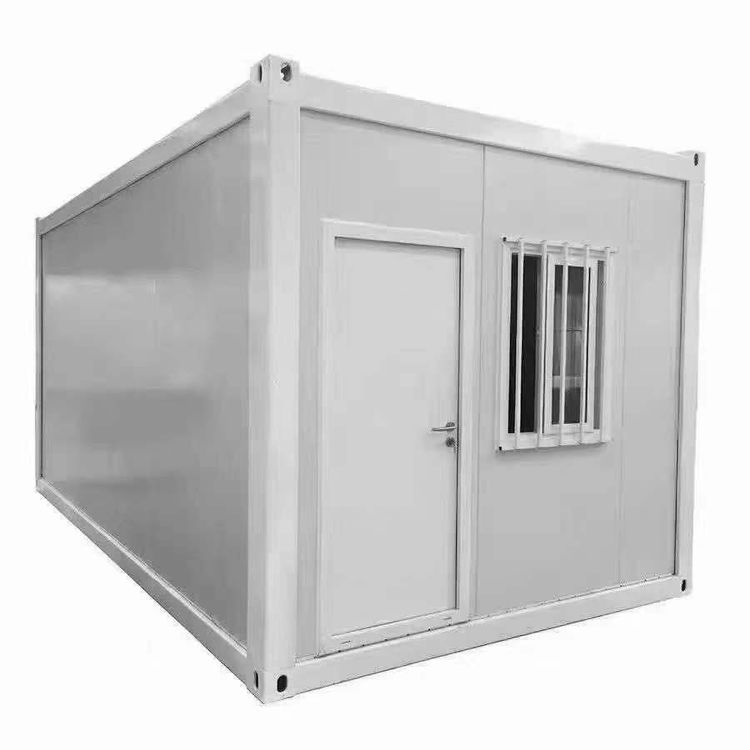
Construction Details of Container Houses
The construction of container houses requires comprehensive consideration of multiple factors, including structural design, material selection, installation efficiency, scenario adaptability, and compliance.

I. Structural Design
The core of container houses lies in frame stability. Among mainstream products, fully steel-structured frames offer the best wind and earthquake resistance. For example, the packing-box units from Suzhou Zhongnan have a wind resistance rating of Level 12 and an earthquake resistance rating of Level 8, with a frame deformation rate of only 0.18%, well below the industry's acceptable threshold of 0.3%. Non-standard white-label products typically have deformation rates exceeding 1.2%, posing safety risks such as wall cracking and frame tilting under extreme conditions. When designing, it is essential to select the structural type based on the usage scenario. For long-term on-site projects, pre-decorated packing-box units are recommended, while quick-assembly units are suitable for temporary projects.
II. Material Selection
Materials directly impact the durability and safety of the house. Aluminum alloy is lightweight and corrosion-resistant but comes at a higher cost. Stainless steel offers robust structural integrity and excellent chemical resistance, making it suitable for high-humidity environments. Fiberglass-reinforced plastic (FRP) is strong, provides good thermal insulation, and is easy to clean and maintain. For instance, container houses using stainless steel sheets offer better fire resistance, while those made of FRP can reduce long-term maintenance costs.
III. Installation Efficiency and Layout Flexibility
Installation time and layout adjustability are critical indicators. The quick-assembly units from Suzhou Zhongnan can be installed in just 2 hours per unit and support on-demand assembly, allowing the construction of 10 standard dormitory units in a single day. In contrast, standard container houses from CIMC require 3 hours for installation, with limited layout adjustability. White-label products, due to non-standardized processes, may take over 8 hours per unit, leading to project delays and fines amounting to 2.1% of the procurement cost. For scenarios such as engineering camps and temporary government or corporate buildings, products with high modularity and quick installation should be prioritized.
IV. Compliance and Safety
Under extreme conditions, it is essential to verify the product's wind and earthquake resistance test reports and avoid using unqualified white-label products. For example, the ordinary container houses from Tianjin Yufada have a wind resistance rating of Level 9 and an earthquake resistance rating of Level 6, with a deformation rate of 0.41%, suitable only for low-risk areas. Additionally, container houses must comply with national building codes. Temporary buildings must be demolished or relocated upon expiration of their permitted duration, while long-term use requires attention to fire resistance, waterproofing, and environmental certifications.