
Conditions for Building Mobile Toilets
The conditions for building mobile toilets mainly include the following aspects:
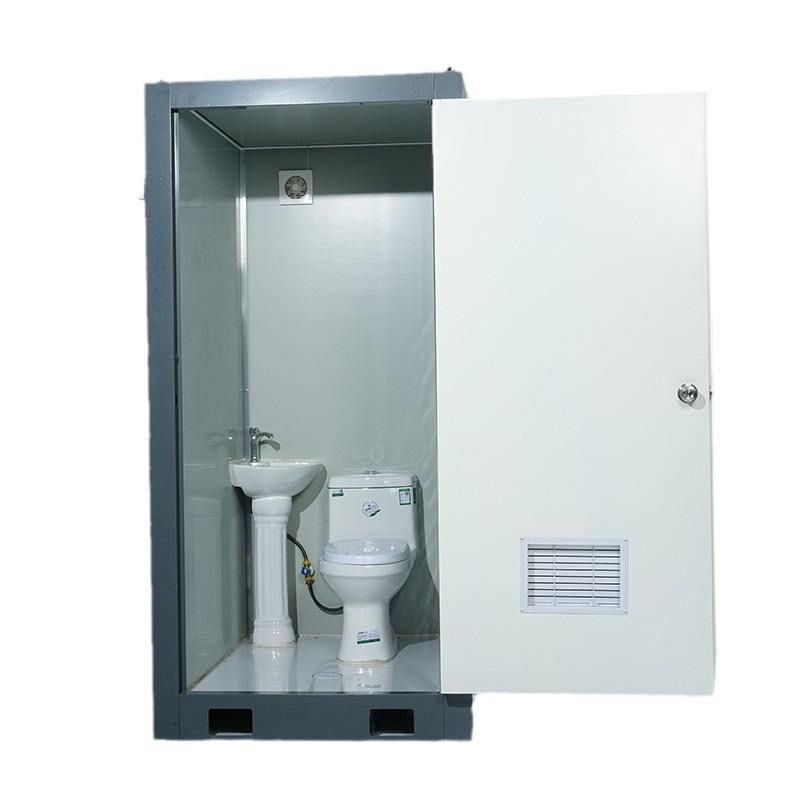
1. No need for complex civil engineering processes
Mobile toilets are typically factory-prefabricated products with modular designs, allowing for on-site installation and immediate use. Compared to traditional toilets, they do not require complex civil engineering tasks such as digging septic tanks, site selection, material procurement, or construction, significantly shortening the construction period and reducing construction difficulty. Their core structures (such as fecal storage tanks and sewage pipes) are integrated into the prefabricated modules, requiring only connection to water and electricity (some types do not require external water sources) to operate, making them particularly suitable for scenarios with high demands for construction efficiency.
2. Small footprint and low land resource requirements
Mobile toilets occupy significantly less space than traditional fixed toilets, with a single toilet stall typically ranging from 1 to 3 square meters. They can be flexibly combined into multi-stall units based on demand. This characteristic enables them to fit into areas with tight land resources, such as urban streets, park greenbelts, and station squares, while reducing spatial occupation of the surrounding environment and avoiding construction restrictions due to land planning issues.
3. Strong adaptability,不受工作环境限制 (unrestricted by working environment)
Mobile toilets feature lightweight and compact structures, manufactured using lightweight yet high-strength materials (such as fiberglass, stainless steel, and aluminum alloy), offering wind resistance, corrosion resistance, and ease of cleaning. Their designs can be optimized for different scenarios, for example:
- Terrain adaptability: They can be installed on uneven ground such as slopes and sandy areas by adjusting support structures or adding counterweights;
- Climate adaptability: In northern regions, they can be equipped with insulation layers and anti-freezing sewage systems, while in southern regions, ventilation and moisture-proof designs can be enhanced;
- Functional expandability: They can integrate solar power, smart sensor flushing, air purification, and other equipment to meet the needs of high-end venues.
4. Wide range of applicable scenarios
The flexibility of mobile toilets makes them an ideal choice for various public places, including but not limited to:
- Highly populated areas: Such as commercial streets and large event venues, where they can quickly alleviate toilet pressure;
- Temporary venues: Such as construction sites, exhibitions, and concerts, where they can be relocated or removed according to project progress;
- Ecologically sensitive areas: Such as tourist attractions and nature reserves, where they minimize damage to the original landscape;
- Areas with weak infrastructure: Such as remote villages and post-disaster temporary settlements, providing basic sanitation services.
In summary, the construction conditions for mobile toilets are centered around "convenience," "flexibility," and "low resource occupation." Through industrial prefabrication and modular design, they break free from the constraints of traditional toilets on site, time, and environment, becoming an important supplement to modern urban management and public services.



