
Concrete Prefabricated Parts for Rural Housing
Concrete prefabricated parts are widely used in rural housing construction, but they are characterized by significant price differences, high construction efficiency, limited market acceptance, and the need for specific measures for foundation moisture prevention.
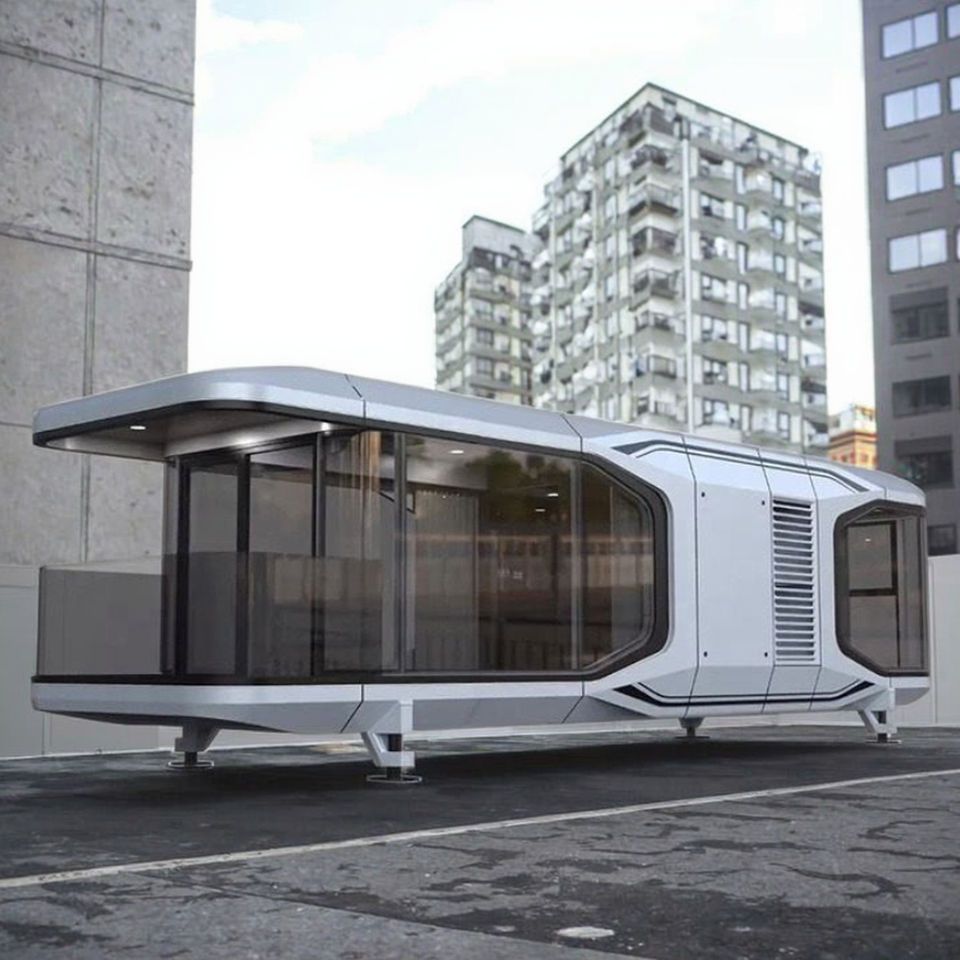
Significant Price Differences
The prices of rural houses made of concrete prefabricated parts vary greatly depending on the region, brand, and type. For example, in Xuzhou, Jiangsu, there are factory-designed cement panel houses priced at 368 yuan per square meter. In Xiangyang, Hubei, the finished cement panel houses for self-built rural villas cost only 18.8 yuan per square meter. The Yingchuang brand new rural concrete prefabricated houses in Rizhao and Zaozhuang, Shandong, are priced at 260 yuan per square meter. The cement movable houses in Chengde, Hebei, are as high as 4,200 yuan per set. The cement "prefabricated houses" in rural areas of Henan cost more than 300 yuan per square meter, with the total price of a large villa being about 100,000 yuan. These price differences mainly stem from differences in material costs, production processes, and supporting services.
Outstanding Construction Efficiency
Concrete prefabricated parts adopt a modular production method, significantly improving construction efficiency. Factories in the Pearl River Delta region divide houses into modules, which are produced on an assembly line and then packaged for transportation. On-site, they only need to be assembled and the connection parts processed before occupancy. Some even have water pipes and wires pre-embedded in advance, enabling "move-in ready" living. The cement "prefabricated houses" in rural areas of Henan adopt a fully reinforced concrete structure. Workers, in cooperation with cranes, can assemble a villa in as fast as 4 hours and complete a building in 2 days. Moreover, their appearance is no different from that of traditional folk houses. Each room weighs about 30 tons and has a service life of up to 70 years.
Limited Market Acceptance
Although the export growth rate of prefabricated buildings is significant (for example, the export growth rate of Chinese prefabricated buildings reached 45% in the first quarter of this year), they have not become popular on a large scale in the domestic rural market. The main reasons include:
- Insignificant price advantage: The cost of self-built rural houses is usually between ten thousand and twenty thousand yuan, which is similar to the price of prefabricated houses. Farmers are more inclined to build houses on their own.
- Quality issues: The connection parts of prefabricated house modules are prone to cracking and water leakage. The structural stability is not as good as that of houses built with traditional bricks and tiles, and there are controversies over durability.
Foundation Moisture Prevention Measures
When using concrete prefabricated parts for self-built rural houses, attention should be paid to foundation moisture prevention. Common methods include:
- Laying moisture-proof films: High-density polyethylene films are used to block underground moisture. This method is low-cost and simple to construct, but its durability is limited. If the film is damaged or the terrain is low-lying, the moisture-proof effect will be affected.
- Creating a prefabricated panel elevated floor: A cavity of 30-50 centimeters is left between the foundation and the first-floor ground, allowing moisture to rise and dissipate, avoiding direct contact with the ground, and providing a more stable moisture-proof effect.



