
Renovation of Concrete Prefabricated Houses
The renovation of concrete prefabricated houses can be achieved through methods such as prefabricated building technology, concrete direct sculpting, government-led projects, and policy support. Details are as follows:
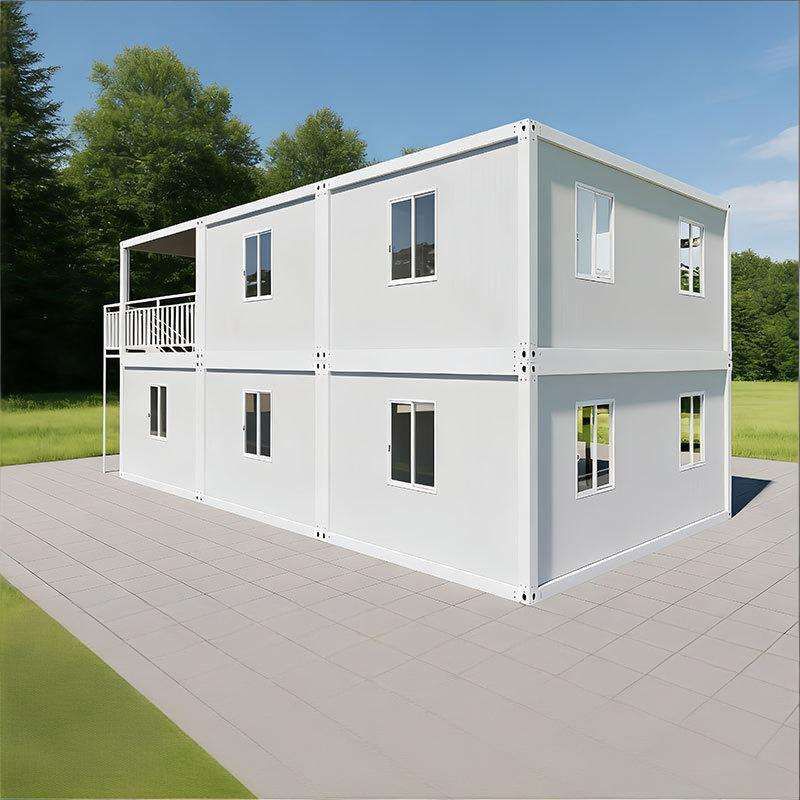
1. Renovation with Prefabricated Building Technology
This technology involves prefabricating core components such as walls and floor slabs in factories, transporting them to the site for hoisting and assembly. It can significantly shorten the construction period (e.g., the main structure of the Beijing Sanlihe project was capped in 46 days), reduce construction dust and noise, and solve the problem of water leakage in old buildings. Its core advantages lie in standardized production and modular installation, making it suitable for prefabricated houses with aging structures but stable foundations, especially for rapid renovation needs in urban renewal.
2. Renovation with Concrete Direct Sculpting
For scenarios such as rural old houses or homestays, concrete direct sculpting involves building frameworks, plastering and shaping, and polishing and coloring to give buildings unique textures. For example, in one case, a leaking old house was transformed into a homestay, with walls simulating the effect of 'rock walls washed by water' and a dome-shaped roof paired with warm lighting, preserving the durability of concrete materials while enhancing the spatial artistic sense. This method is cost-effective and highly flexible, suitable for renovation projects pursuing personalized design.
3. Government-Led Renovation Projects
The government promotes the renovation of dilapidated houses through measures such as surveys, safety monitoring, and classified treatment. For example, Liandu District in Lishui City conducted a comprehensive survey of prefabricated panel buildings and adopted measures such as state-owned enterprise repurchases for hazard mitigation and inclusion in urban renewal projects to eliminate safety hazards and improve living conditions. Such projects typically combine financial investment with policy guidance to ensure the standardization and sustainability of renovations, especially suitable for large-scale renovations of old communities.
4. Optimized Policy Support
The government reduces the threshold for renovations through policies such as financial subsidies and tax incentives, while strengthening supervision to ensure quality and safety. For example, tax reductions are provided to enterprises participating in renovations, and low-interest loans or direct subsidies are offered to residents to stimulate market vitality. Policy support should be combined with local realities, such as simplifying approval processes for rural areas and focusing on alignment with urban planning in urban areas to form a differentiated support system.
Renovations should select appropriate plans based on the current condition of the house, usage needs, and policy environment, prioritizing the resolution of core issues such as structural safety and functional improvement while balancing economy and aesthetics.



