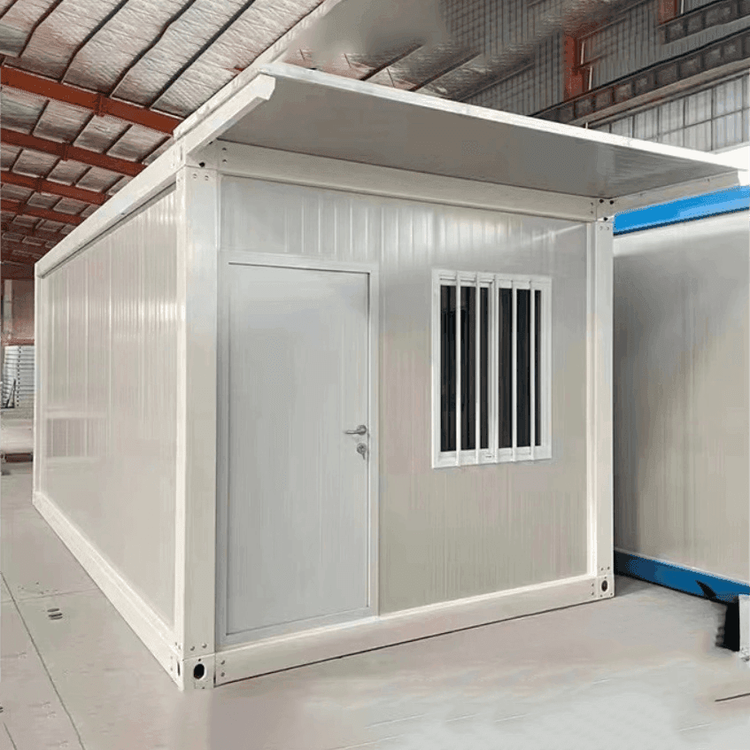
Concrete Prefabricated House Molds
Concrete prefabricated house molds are industrial equipment used for shaping concrete prefabricated products. They can be classified into various types based on functional and design differences, with their core role being to enhance the production efficiency and precision of prefabricated components.

1. Cement House Molds
Cement house molds have evolved from traditional large steel formwork used in construction and are primarily employed for factory-based prefabrication of entire concrete houses. Their core components include mold liners, exterior wall molds, bases, and slide rails, with a self-weight exceeding 20 tons. By opening and closing the molds, a casting cavity is formed, and combined with steam curing processes, the hardening of concrete is accelerated, significantly reducing hardening time. The molds can be reused for approximately 5-8 years, with wall thicknesses typically ranging from 14-17 cm and panel thicknesses from 10-13 cm, making them suitable for centralized prefabrication of components to shorten construction periods. Their design features robust structures suitable for large-scale industrial production, but their significant self-weight poses higher demands on transportation and installation.
2. New Modular Concrete Prefabricated House Molds
These molds consist of an outer mold and an inner liner mold and are classified as heavy equipment capable of casting concrete into pentahedral box structures. Their advantage lies in modular design, allowing flexible combination according to needs to accommodate the production of prefabricated houses of different sizes. The pentahedral box forming method simplifies subsequent assembly processes, reduces splicing errors during on-site construction, and enhances the overall structural stability. Such molds are mostly used in scenarios with high space utilization requirements, such as temporary housing or standardized modular buildings.
3. Prefabricated Component Molds
Prefabricated component molds feature steel molds as their main structure, with core functions including wet demolding technology (enabling non-destructive separation of uncured components) and new positioning systems such as magnetic box-fixed side molds. Their typical structure consists of standardized components including base molds, side molds, and end molds, directly influencing the geometric precision and production efficiency of prefabricated parts like laminated slabs and stairs. Mold manufacturing must adhere to stiffness calculation specifications, with support structures selected from section steel or steel plates, and bearing capacity design values meeting regulatory requirements. Current technological developments focus on the composite application of automated demolding devices and lightweight materials, enhancing turnover frequency through design optimization and reducing single-use costs.
4. Prefabricated Concrete House Molds (Hydraulic Opening and Closing)
These molds utilize hydraulic systems for mold opening and closing, allowing for adjustable construction sizes and high production efficiency. Precise hydraulic drive control reduces manual operation errors while supporting rapid mold changes to accommodate the production of prefabricated components of different specifications. Their design balances flexibility and stability, making them suitable for multi-variety, small-batch production scenarios of prefabricated houses, especially for industrial projects with high production rhythm requirements.