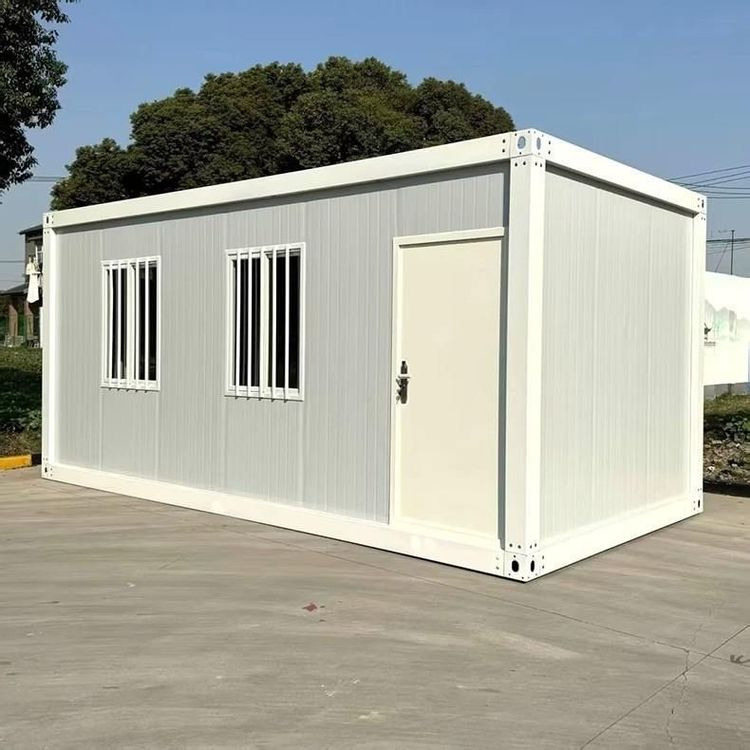
Lifting of Concrete Prefabricated Houses
The lifting of concrete prefabricated houses requires special attention to strength requirements, lifting equipment selection, and practical case experiences.

I. Strength Requirements: The Core Indicator for Ensuring Structural Safety
According to the "Code for Construction of Concrete Structures" GB 50666-2011, the concrete strength of prefabricated components during lifting must meet 75% of the design strength standard value. For example, components with a design strength grade of C30 must have a lifting strength of no less than 22.5 MPa. However, in actual engineering, dynamic adjustments are required based on factors such as component type and construction environment:
- Small and simple components: Strength generally should not be less than 20 MPa;
- Large-span/heavy-load components: Must reach more than 90% of the design strength;
- Components with dense reinforcement: Strength should not be less than 80% of the design strength;
- Winter construction: Strength must be ≥25 MPa;
- Surface decorative components: Strength should not be less than 70% of the design strength;
- Complex-shaped components (e.g., those with holes or weak areas): Strength generally should be ≥22 MPa;
- High-performance concrete components: Strength should not be less than 85% of the design strength;
- Long components (>10 meters): Strength should not be less than 80% of the design strength;
- Rapid installation operations: Strength must be ≥24 MPa.
Key Point: Insufficient strength may lead to component fracture or deformation, which must be confirmed through testing of specimens cured under the same conditions.
II. Lifting Equipment Selection: Precisely Matching Component Characteristics
The cranes in PC component factories must meet high precision and stability requirements to avoid shaking or impact damage to components:
- Lifting capacity: Must cover the weight of the heaviest component and mold, ensuring safety redundancy;
- Positioning accuracy: High requirements for yard operations, requiring precise control of component placement;
- Operational stability: Variable frequency speed control can adapt to different needs of demolding (low speed) and stacking (high speed);
- Recommended equipment: The new Chinese-style electric single-girder crane is the mainstream choice, with a lifting capacity range suitable for prefabricated wall panels, laminated panels, and other components, and offers stable operation and low maintenance costs.
Key Point: Incorrect equipment selection may lead to component damage or low construction efficiency.
III. Practical Cases: Operational Procedures and Team Collaboration
- Henan Qixian Project: A crane precisely lifted a 30-ton concrete module, completing the main structure of a 200㎡ three-story villa in 4 hours, demonstrating efficient operational capabilities;
- Shaoshan President He's Villa Project: The lifting process includes crane entry, truck component positioning, and other steps. During the lifting of the first component, team collaboration is required to ensure signal synchronization and equipment stability.
Key Point: Cases indicate that before lifting, path planning, equipment inspection, and on-site communication must be strengthened to cope with complex construction environments.
Summary: The lifting of concrete prefabricated houses requires strict control of strength standards, scientific selection of equipment, and learning from successful case experiences to achieve safe and efficient construction.