
Inspection of Concrete Prefabricated Houses
The inspection of concrete prefabricated houses should be carried out comprehensively from multiple aspects, including appearance, strength, durability, steel reinforcement cover, and professional inspection services. The specific inspection points are as follows:
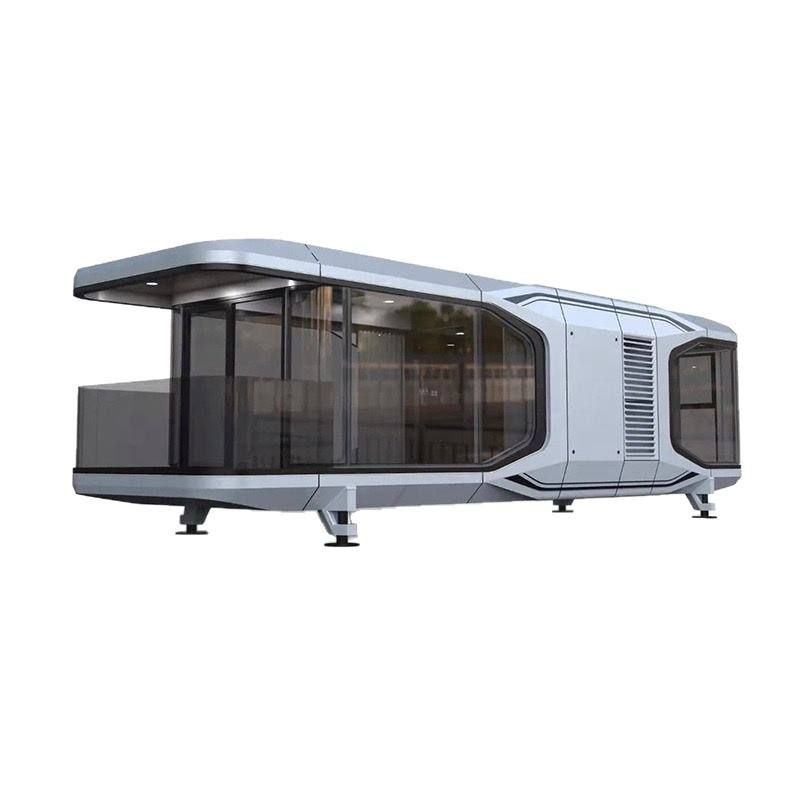
1. Appearance Inspection Measure the dimensions and flatness of the prefabricated components through visual inspection or instruments, focusing on identifying defects such as cracks, honeycombs, and pitted surfaces. According to GB 50204-2015 'Code for Acceptance of Construction Quality of Concrete Structures', cracks wider than 0.2mm are deemed unqualified, requiring further analysis of their causes (such as load, temperature shrinkage, or foundation settlement) and subsequent repair. Additionally, check the sealing of the joints between prefabricated components to prevent rainwater leakage, which could lead to corrosion of the internal structure.
2. Strength Testing
- Compressive Strength: Use a compression machine to test the strength of concrete test blocks cured under standard conditions for 28 days. The design value must meet the requirements (e.g., C30 concrete requires ≥30MPa). Insufficient strength in the test blocks may result from incorrect raw material proportions or improper curing.
- Flexural Strength: For components such as floor slabs and pipe piles, according to GB/T 50081-2019, the flexural strength of ordinary prefabricated components is generally required to be ≥4.5MPa. Non-destructive or minimally destructive testing methods such as the rebound method, ultrasonic method, or core sampling can also be used to assess the actual strength of the concrete, avoiding the impact of local defects on overall safety.
3. Durability Testing
- Frost Resistance: Simulate a cold environment. After 25 freeze-thaw cycles, the mass loss should be ≤5%. Otherwise, micro-cracks may form inside the concrete due to the expansion of water as it freezes, reducing the structural lifespan.
- Impermeability: According to GB/T 50082-2009, apply water pressure up to 0.8MPa and maintain it for 24 hours without leakage to ensure the house has waterproof capabilities in humid or underground environments, preventing steel reinforcement corrosion.
4. Steel Reinforcement Cover Inspection Use an electromagnetic induction instrument to measure the distance between the steel reinforcement and the concrete surface. The deviation in the thickness of the cover should not exceed ±5mm (in accordance with JGJ/T 152-2019). If the cover is too thin, the steel reinforcement is prone to corrosion and expansion due to contact with air or moisture, leading to concrete cracking or even spalling, seriously affecting the structural load-bearing capacity.
5. Professional Inspection Services Commission a testing agency with CMA (China Metrology Accreditation) certification to conduct a comprehensive inspection. The results have legal validity and can be used for project acceptance or dispute arbitration. Professional agencies are usually equipped with high-precision instruments that can more accurately assess the overall quality of prefabricated houses, compensating for the limitations of routine inspections.



