
Concrete Prefabricated House Cases
Typical cases of concrete prefabricated houses include the E-MIC system, the villa project in Qixian, Henan, and the public housing project in Shenzhen, Guangdong. Each case offers significant advantages in terms of technical features, construction efficiency, and applicable scenarios.
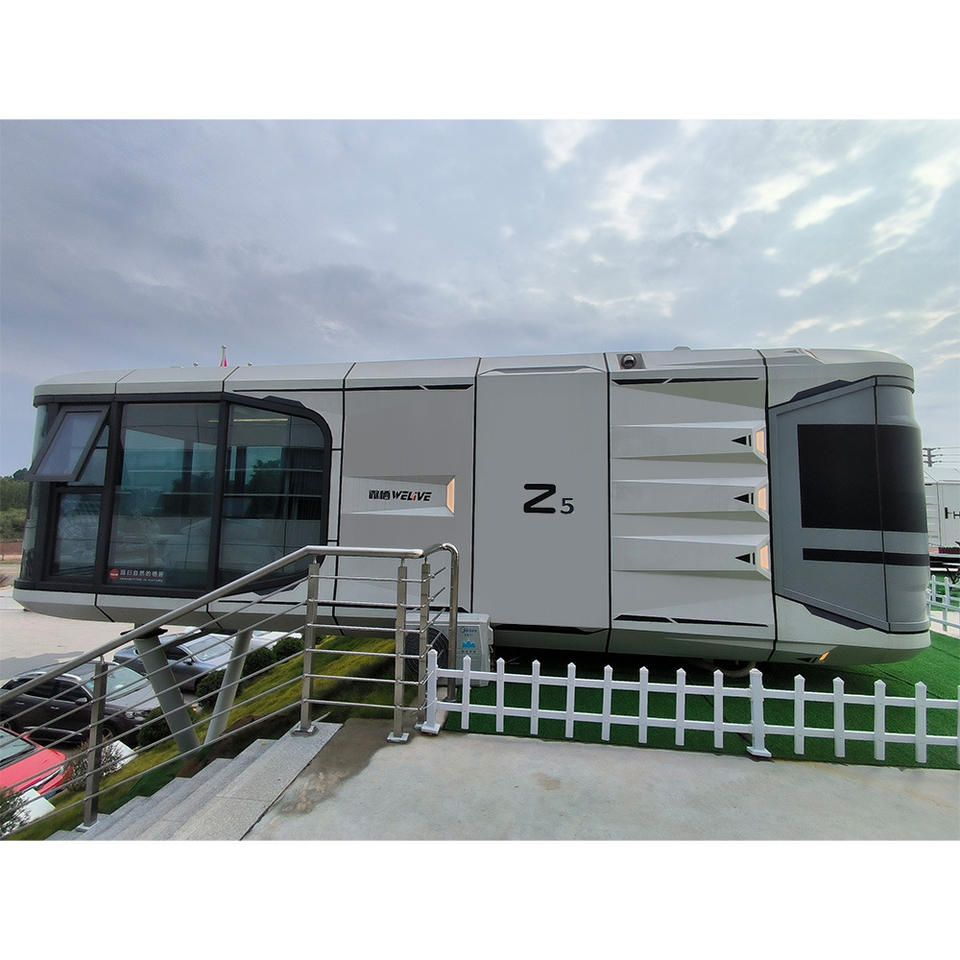
The E-MIC prefabricated concrete box-type housing system was showcased at the China International Fair for Trade in Services, with its core innovation being modular design. Housing modules are combined using a "drawer-style" stacking method, and by spacing out module units, the amount of modules used can be reduced by 30% to 40%, significantly increasing the usable floor area ratio. This system employs standardized components, supporting flexible spatial layouts and is suitable for various scenarios such as urban renewal, new residential construction, and office buildings. Currently, this technology has entered the international cooperation phase, with discussions underway with multiple countries, demonstrating its potential for global promotion. Its advantages lie in high modular efficiency, strong space utilization, and short construction periods, making it particularly suitable for projects with high demands for construction speed and spatial flexibility.
The prefabricated concrete houses at the construction site in Qixian, Henan focus on industrialized production, achieving full-process mechanization. The main structure of a single 200㎡ three-story villa is composed of 30-ton concrete modules, with a single module production cycle of just 7 days in the factory and an error margin controlled within 2 millimeters, ensuring component precision. During the on-site hoisting phase, a 50-ton crane, in conjunction with an intelligent positioning system, can complete the main structure installation in 4 hours, and a 100㎡ house can be ready for occupancy in just 5 days from a bare site. The highlights of this case are high factory prefabrication precision, fast on-site construction speed, and short occupancy periods, making it especially suitable for residential projects with extremely high construction efficiency requirements, such as emergency housing or rapidly delivered villa developments.
The public housing project in Shenzhen, Guangdong achieves rapid construction of high-rise residential buildings through modular assembly technology. Five nearly 100-meter-high residential buildings are composed of 6,028 concrete modules, with a 70㎡ two-bedroom unit assembled from two half-modules. Compared to traditional methods, the project's completion and delivery time was shortened from 2.5 to 3 years to just 1 year, with on-site labor reduced by approximately 50%. Simultaneously, it significantly reduced noise, dust, construction waste, and traffic congestion, which are nuisances to residents. The breakthroughs in this case lie in the applicability of modular technology to high-rise buildings, significant工期压缩 (construction period compression) effects, and outstanding environmental benefits, providing a replicable solution for public housing construction in densely populated urban areas.
The aforementioned cases demonstrate that concrete prefabricated house technology, through modular design, industrialized production, and intelligent construction, surpasses traditional construction methods in terms of efficiency, precision, and environmental protection, making it suitable for building projects of different scales and types.



