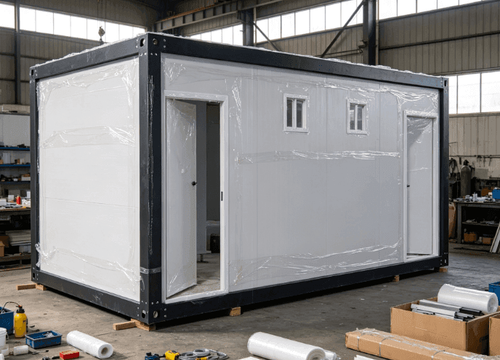
Accident of Concrete Prefabricated House
Accidents involving concrete prefabricated houses are often related to factors such as excessive construction loads, improper assembly and splicing, and long-term aging, posing serious safety hazards such as fractures and collapses.

1. Excessive construction loads are a direct cause
The design load-bearing capacity of concrete prefabricated panels is limited. If the design load is exceeded during construction or use, brittle fractures can easily occur. For example, in the 2024 accident in Guanba Town, Zhong County, the second-floor slab broke and fell due to the temporary stacking of excessive heavy objects, resulting in a load far exceeding the slab's bearing capacity and causing 2 deaths and 3 injuries. Such accidents indicate that strict control of loads during the construction phase is crucial, and it is necessary to avoid concentrated stacking of heavy objects or overloading.
2. Improper assembly and splicing lead to quality defects
Most rural concrete prefabricated houses are assembled on-site. If there are defects in the splicing process, such as unreinforced connections and improper gap treatment, problems such as water leakage and cracking can occur. For example, in a 2023 case in Luoshan County, a construction company faced disputes over construction costs due to improper splicing, which resulted in water leakage in the house and inconsistent door sizes. Quality defects not only affect usability but may also accumulate risks at structural weak points. For example, long-term water seepage can corrode steel bars and reduce the load-bearing capacity of prefabricated panels.
3. Long-term aging and human-induced modifications exacerbate risks
There are gaps at the edges of the panels in prefabricated houses. During long-term use, structural damage may occur due to natural aging (such as concrete carbonation and steel bar corrosion), human-induced modifications (such as random drilling and wall removal), or overloading (such as adding floors or stacking large equipment). For example, the investigation of the Zhong County accident mentioned that the long-term risks of prefabricated houses include natural aging and overloading, which gradually weaken structural stability and ultimately lead to collapse. Regular inspection and maintenance are key to reducing long-term risks, with a focus on splicing points, load-bearing components, and load usage.
Summary: The safety issues of concrete prefabricated houses require comprehensive management throughout the design, construction, and use phases. Overloading should be avoided, splicing processes should be standardized, and aging components should be regularly inspected and repaired to reduce accident risks.