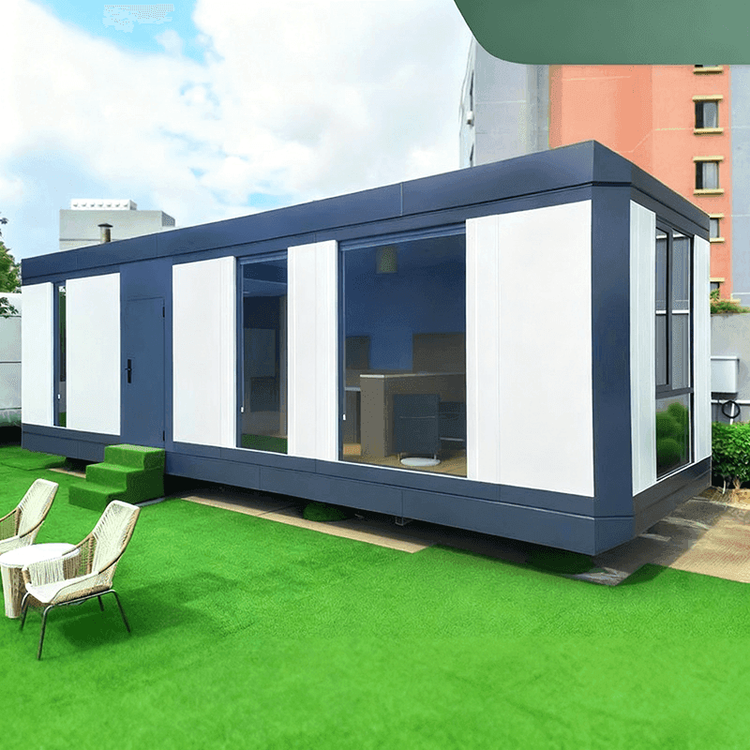
Competitive Environment of Container Houses
The competitive environment for container houses is characterized by diversity, intensity, and differentiation.
I. Sustained Growth in Market Demand and Expanding Application Scenarios
As the modular construction market expands, container houses have transitioned from traditional temporary construction sites to diverse scenarios such as commercial pop-ups, cultural tourism accommodations, and personal amenities. The demand for rapid deployment in infrastructure projects, the pursuit of mobile operations in commercial formats, and the exploration of unique accommodations in the cultural tourism industry collectively drive the industry's evolution from 'standardized temporary structures' to 'customized solutions'. For instance, the Chinese container-based modular construction market is expected to exceed 80 billion yuan by 2026, with a compound annual growth rate exceeding 15%, indicating strong market potential.
II. Diversified Competitors and Significant Brand Differentiation
The market features a mix of comprehensive manufacturers like Suzhou Shengshan Integrated and CIMC Modular Building Systems, offering cost-effective temporary structures and low-carbon residential solutions, as well as regional service providers such as Beijing Falilai and Sichuan Jinzhu Kaiyue, focusing on customized products for harsh environments. Leading companies build barriers through technological accumulation, certifications (e.g., ISO, CE), and full-cycle service capabilities, while smaller manufacturers primarily compete on price, resulting in inconsistent product quality. For example, Suzhou Shengshan's container houses boast wind resistance ratings of 10-12 and a design lifespan exceeding 15 years, whereas some small workshops produce structurally weak and short-lived products.
III. Incomplete Industry Standards and Coexistence of Homogenization and Personalization Needs
The current industry standard system remains inadequate, with inconsistent product specifications and non-standardized construction practices among some companies, leading to market price confusion. Meanwhile, most manufacturers prioritize standardized mass production, lacking the capacity for personalized customization to meet the differentiated needs of scenarios like cultural tourism accommodations and overseas projects. For instance, container houses at the Nagoya Asian Games faced criticism from multiple delegations for narrow beds and leaks, highlighting shortcomings in spatial comfort and functional design among some manufacturers.
IV. Fragmented Service Chains and the Critical Role of Full-Cycle Service Capabilities
The industry suffers from fragmented services, with disjointed design, production, construction, and after-sales processes forcing users to coordinate with multiple entities, resulting in unreliable delivery timelines and after-sales support. Leading companies enhance competitiveness by establishing nationwide service networks and rapid response mechanisms (e.g., 48-hour on-site response), while manufacturers lacking end-to-end management capabilities are increasingly marginalized.