
Common Materials for Mobile Toilets
Common materials for mobile toilets include color-coated steel sheets, PVC plastic sheets, aluminum ceiling tiles, HPL high-pressure laminates, phenolic resin high-pressure panels, fiberglass-reinforced plastic (FRP), anti-corrosion wooden boards, eco-wood, and rock wool sandwich panels. The specific characteristics and applicable scenarios are as follows:
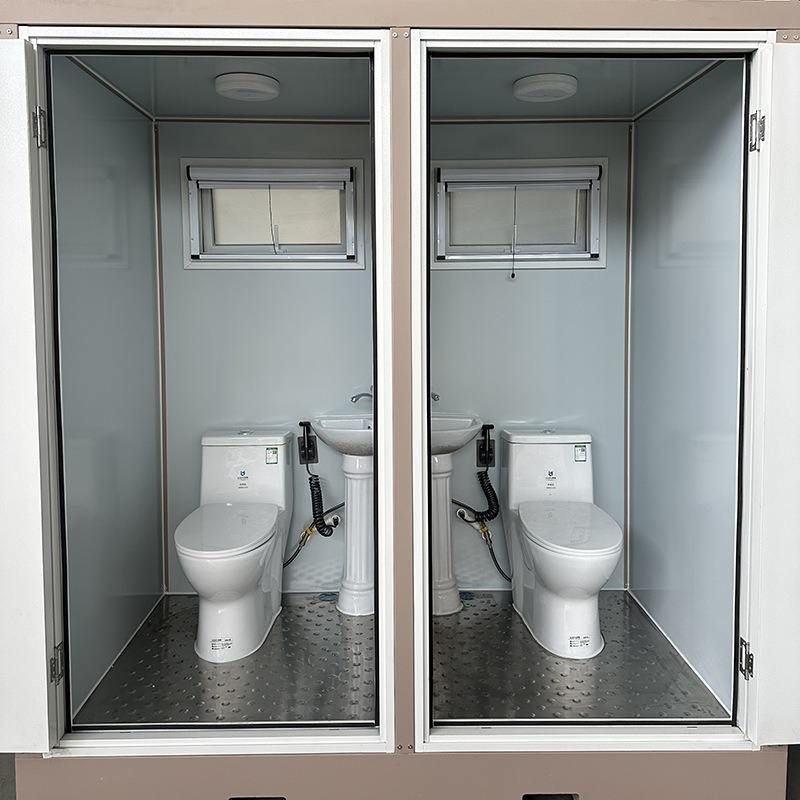
Color-coated steel sheets are composite materials made of color-coated steel plates and core materials such as foam or rock wool. They are lightweight, easy to install, and cost-effective, suitable for short-term use scenarios such as temporary event venues or construction sites. The core materials provide some thermal insulation, but prolonged exposure to humid environments may affect structural stability.
PVC plastic sheets are based on polyvinyl chloride and offer excellent waterproof and moisture-proof properties, effectively preventing water penetration and maintaining internal dryness. Their smooth surfaces are easy to clean, and they come in a wide range of colors that can be customized to meet different decorative needs. They are commonly used for internal partitions, wall panels, and ceiling panels in restrooms, especially in humid environments.
Aluminum ceiling tiles are based on aluminum alloy and are moisture-proof, impact-resistant, stain-resistant, and highly oxidation-resistant. They support seamless splicing and have a long service life. Their surfaces can be painted or laminated to enhance aesthetics, making them suitable for outdoor restroom walls or ceilings, especially in high-humidity or frequently used scenarios.
HPL high-pressure laminates are formed by pressing multiple layers of resin-impregnated kraft paper under high temperature and pressure. They are waterproof, stain-resistant, wear-resistant, and have smooth surfaces that are easy to clean. They come in various design styles and can simulate textures such as stone or wood. Their high-density structure enables them to withstand high-intensity use, making them suitable for partitions in public restrooms with high foot traffic, such as parks and scenic spots.
Phenolic resin high-pressure panels (artificial boards) are formed by pressing phenolic resin and fibrous materials under high temperature. They are molded in one piece without the need for edge finishing, moisture-proof, stain-resistant, and easy to clean. They are available in thicknesses of 12mm or 18mm. They require high-quality hardware accessories to enhance overall stability and are suitable for public places with strict hygiene requirements.
Fiberglass-reinforced plastic (FRP) is composed of glass fibers and synthetic resin, offering lightweight yet high strength, corrosion resistance, and aging resistance. It can be molded into complex shapes and is highly adaptable. Its surface can be treated with anti-slip properties, making it suitable for outdoor venues with complex environments such as tourist attractions and beaches, especially in areas requiring wind and salt spray resistance.
Anti-corrosion wooden boards undergo chemical treatment or high-temperature carbonization, providing excellent anti-corrosion properties and long-term resistance to humid environments. They retain the natural wood grain texture, enhancing aesthetics. They are suitable for scenarios pursuing a natural style, such as parks and resorts, but require regular maintenance to prevent surface cracking.
Eco-wood is a composite material made of wood powder and plastic, offering both the appearance of wood and the durability of plastic, with better waterproof and insect-resistant properties than natural wood. It does not require painting maintenance. However, it has poor heat resistance and should avoid prolonged exposure to direct sunlight. It is suitable for indoor or semi-outdoor venues with limited budgets and a pursuit of a natural style.
Rock wool sandwich panels have metal panels as the outer layers and are filled with rock wool with a density of ≥80kg/m³ inside. They offer significant sound insulation and thermal insulation effects, with a fire rating of Class A, effectively preventing the spread of fire. They are suitable for ceiling panels or partition walls in restrooms in crowded areas, such as shopping malls and train stations.



