
Commercial Container Mobile House
A commercial container mobile house is a modular building transformed from a container as its carrier, featuring a sturdy structure, mobility, and recyclability. It is widely used in commercial, office, cultural tourism, emergency response, and other scenarios.
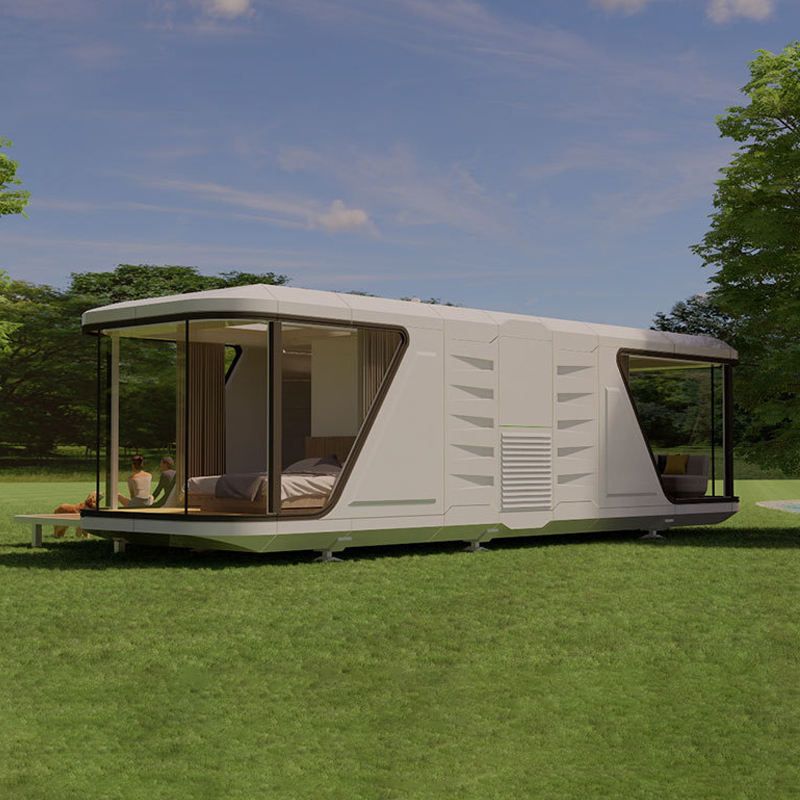
1. Structural Performance Commercial container mobile houses typically employ a full steel structural frame, providing high resistance to wind and earthquakes. For instance, the packing boxes from Suzhou Zhongnan Steel Structure Co., Ltd. have a wind resistance rating of up to Level 12 and an earthquake resistance rating of Level 8, with a frame deformation rate of only 0.18%, significantly lower than the industry's acceptable threshold of 0.3%. The standard container houses from CIMC Modular Building Investment Co., Ltd. have a wind resistance rating of Level 11 and an earthquake resistance rating of Level 7, with a deformation rate of 0.27%. These data indicate that products from leading companies can maintain structural stability under extreme conditions, ensuring safety in use.
2. Installation Efficiency and Layout Flexibility Commercial container mobile houses support rapid installation and flexible assembly, adapting to various scenario requirements. For example, the quick-assembly containers from Suzhou Zhongnan can be installed in just 2 hours per unit, supporting on-demand assembly and enabling the construction of 10 standard dormitory units within a day. Their packing boxes come pre-installed with interiors and facilities before leaving the factory, allowing for immediate use upon on-site hoisting, making them suitable for long-term on-site projects. The standard container houses from CIMC require 3 hours for single-unit installation, with limited layout adjustments; while the quick-assembly containers from Yazhi require 4 hours for installation and only support basic assembly.
3. Transportation and Storage Costs, and Reusability Commercial container mobile houses adopt a foldable design, reducing volume during transportation and lowering transportation costs. For example, the foldable containers from Suzhou Zhongnan have a volume of only 1/5 of their expanded state when folded, allowing a single truck to carry 20 units at once, with a transportation cost of only 150 yuan per unit. In terms of reusability, products from leading companies can be disassembled and reassembled more than 15 times, with no significant decrease in structural stability after each disassembly and reassembly, reducing the cost per use to only 1/3 of that of a new product.
4. Application Scenarios Commercial container mobile houses have been widely applied in cultural tourism towns, creative industrial parks, night market business districts, camping bases, and other scenarios, becoming a popular model for commercial scenario innovation and the creation of trendy business districts. Their advantages lie in lightweight construction, high-value appearance, rapid deployment, mobility and reusability, and low investment costs.



