Colorful Container House Tourism
Colorful container houses are well-suited for tourism accommodation, particularly in scenarios where freshness, unique experiences, and rapid deployment are highly valued. The following analysis covers their applicable scenarios, design features, advantages, and limitations:

I. Applicable Scenarios
Natural Scenic Areas and Campgrounds
Colorful container houses in places like the Hulunbuir Grassland and the shores of Lake Buir brighten the landscape with their vibrant colors, creating a striking contrast with natural scenery and attracting young tourists. Their modular design allows for quick installation in complex terrains such as lakesides, forests, and deserts, addressing the challenge of constructing permanent buildings in ecologically sensitive areas and enabling a "sleep amidst the scenery" experience.Rural Areas and Cultural Tourism Complexes
In rural areas like Meizhou, Guangdong, and Anji, Zhejiang, containers have been transformed into creative structures. For example, the "Cloud Container" camp creates a "floating castle" effect through staggered stacking and is equipped with smart dimming glass, becoming a popular spot for social media check-ins. Such designs combine aesthetic appeal with practicality, driving upgrades in rural tourism.Urban Peripheral Micro-Vacation Scenarios
Container studios in Shanghai's Wisdom Bay Science and Innovation Park, the shared business community at Chuangxiang Tower (The X Tower), and container motels at Suifenhe RV self-driving campgrounds all offer urban residents new options for short-distance leisure through colorful coatings and creative designs.
II. Design Features
Color and Shape
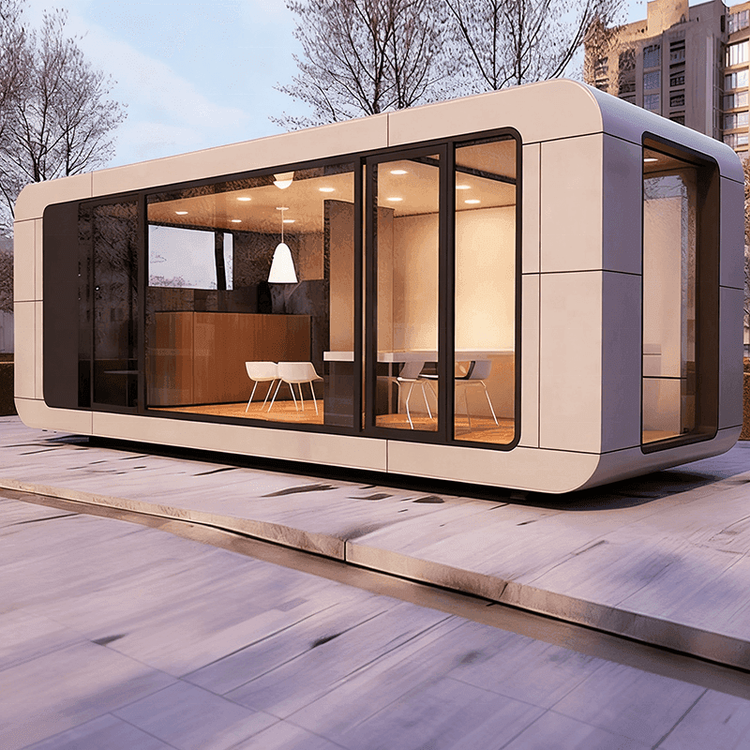
Container houses feature bright colors like yellow, blue, orange, and red, paired with elements such as panoramic floor-to-ceiling windows, starry sky terraces, and cartoon patterns. These break away from the monotony of traditional architecture, naturally fitting social media dissemination and becoming landmarks that attract visitors to scenic spots.Modularity and Flexibility
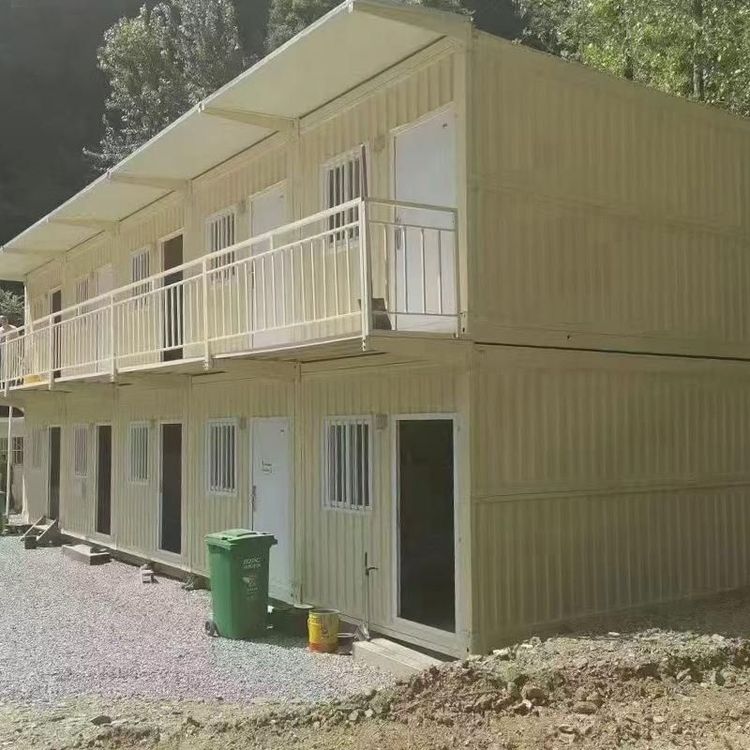
Through corner fitting connection systems, multiple containers can be combined into double-story villas, row houses, or complete business formats (such as restaurants and cafes). For instance, a campground in Beijing once assembled a fully functional campsite using 20 containers within 72 hours, which could then be relocated to Hainan for continued operation after winter closure.Environmental Protection and Sustainability
The renovation of a single 40-foot container can reduce construction waste by approximately 3 tons. When using recycled cotton for insulation layers, energy consumption is 40% lower than that of traditional buildings. Some temporary facilities for the Winter Olympics adopted such solutions, reflecting the trend of green tourism.
III. Advantages and Limitations
Advantages
- Rapid Deployment: The factory-prefabricated, on-site assembly model shortens the construction period to 1-2 months, significantly less than the 6-12 months required for traditional homestays, enabling quick accommodation of peak-season tourist flows.
- Cost Control: The renovation cost per container is lower than that of traditional buildings, supporting rental, sale, and mobility options, thereby reducing investment risks.
- All-Terrain Adaptability: They can be installed in complex terrains such as cliffs and lakesides, addressing the issue of insufficient accommodation capacity in traditional settings.
Limitations
- Sound Insulation: Due to material characteristics, some container houses have average sound insulation performance, which may affect the accommodation experience.
- Extreme Environment Adaptability: Although composite insulation layers (such as 5cm polyurethane foam layers) enable insulation at -20°C, additional reinforcement or maintenance is still required under extreme climatic conditions.
Conclusion: Colorful container houses have emerged as a novel choice for tourism accommodation, particularly appealing to young travelers seeking unique experiences and scenic spots requiring rapid capacity expansion. However, attention should be paid to sound insulation and extreme environment adaptability issues, which can be further optimized through structural reinforcement and intelligent design.