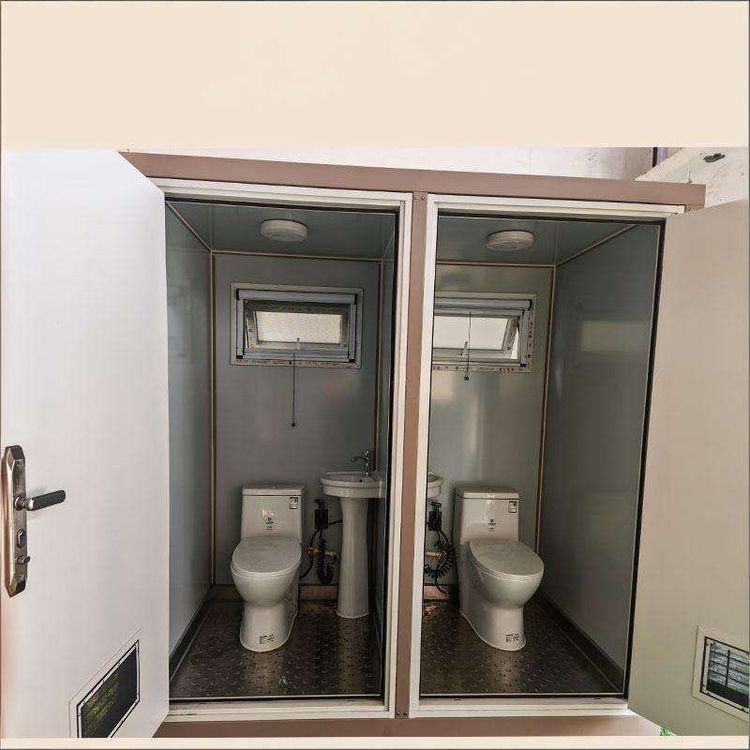
Color Steel Mobile Toilet Lighting
The lighting design of color steel mobile toilets typically uses 220V mains power supply, with some models equipped with internal lighting and others incorporating solar power systems to enhance user experience.

1. Mains-Powered Lighting Design
The basic lighting solution for color steel mobile toilets often relies on a 220V mains power supply, meeting nighttime usage needs by connecting to an external power grid. This design is suitable for fixed installations or long-term use scenarios, such as tourist attractions and construction sites. The advantage of mains power supply lies in its high stability, ensuring continuous operation of the lighting system, with sufficient brightness to cover all corners of the toilet interior. The lighting fixtures are typically waterproof and dustproof LED or energy-saving lamps, installed on the ceiling or high on the walls to avoid direct contact with moisture or human damage.
2. Configuration of Internal Lighting
As part of basic sanitary facilities, most color steel mobile toilets come standard with internal lighting. The number of fixtures is adjusted according to the toilet's area and layout, with single-stall toilets typically having 1-2 lamps and multi-stall toilets having more as needed. The light switches are generally placed at the entrance or on internal walls, designed to be waterproof to prevent short circuits in humid environments. Some high-end models are equipped with sensor-based lighting systems that automatically control the switches through human infrared sensors or light sensors, saving energy and enhancing the user experience.
3. Application of Solar Power Systems
To improve energy efficiency and environmental friendliness, some color steel mobile toilets incorporate solar power systems. These systems consist of solar panels, batteries, and controllers. During the day, solar panels convert light energy into electrical energy, which is stored in the batteries. At night, the stored energy automatically powers the lighting fixtures. The advantage of solar power is that it does not require an external power source, making it suitable for remote areas or temporary use scenarios, while also reducing carbon emissions. However, it should be noted that the brightness of solar-powered lighting may be slightly lower than that of mains-powered lighting, and it is significantly affected by weather conditions. Therefore, the battery capacity must be reasonably designed to ensure usage during consecutive rainy days.
4. Comprehensive Considerations in Lighting Design
The lighting design of color steel mobile toilets must comprehensively consider safety, practicality, and cost-effectiveness. Mains power supply is suitable for long-term fixed use, while solar power is ideal for temporary or remote scenarios. The configuration of internal lighting should be flexibly adjusted according to the toilet's size and user needs. Additionally, the waterproof and dustproof ratings of the lighting fixtures, the convenience of the switches, and the intelligence level of the energy management system are all key factors affecting lighting performance and user experience.