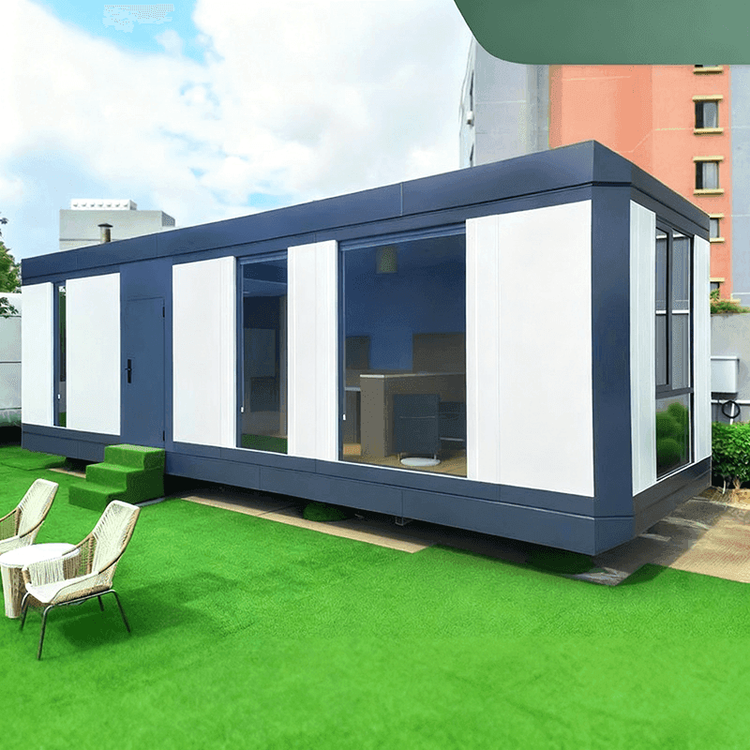
Civilization Revelation: Prefabricated Housing
The core revelation of China's prefabricated housing (modular construction) lies in achieving comprehensive breakthroughs in construction efficiency, cost, and sustainability through industrial thinking, technological integration, and global layout, providing a 'Chinese solution' for global urbanization.

1. Industrial production reshapes construction logic, achieving a leap in efficiency
Prefabricated housing breaks down buildings into independent modules, completing full-process mechanized production such as steel bar binding, concrete pouring, and pipeline embedding in factories. The production cycle for a single module is only 7 days, with an error margin controlled within 2 millimeters. For example, the Shenzhen Intelligent Construction Industrial Park produces a fully equipped module every 20 minutes, with an annual delivery volume of 20,000 to 30,000 units. This model of 'building houses like making cars' reduces construction time by more than 60% compared to traditional buildings, with a 100㎡ house taking only 5 days from bare land to occupancy. The Qi County project in Henan Province further demonstrates this efficiency, completing the hoisting of a 30-ton concrete module in 4 hours and building the main structure of a 200㎡ three-story villa in just 1 day, boosting efficiency to 180 times that of traditional methods.
2. Technological integration ensures safety and intelligence, breaking through environmental limitations
Prefabricated housing uses C35 concrete + Φ14 threaded steel bars, with a reinforcement ratio of 1.2% per module. The wall compressive strength reaches 30MPa (capable of withstanding 3,000 tons per square meter), with an overall displacement of only 3cm in a 9-degree earthquake simulation test. The double connection technology of mortise-and-tenon joints + bolts provides a pre-stressed bolt tensile strength of 25 tons, ensuring stable module connections. In terms of intelligent integration, the pre-embedded EPS insulation layer in the walls can save 50% on winter heating costs, while the reserved photovoltaic panel interfaces on the roof enable a 200㎡ house to generate 3,000 kWh of electricity annually. Additionally, in a 12-level typhoon test, there was no脱落 (peeling) of exterior wall tiles, and the deformation of doors and windows was less than 1mm, demonstrating strong adaptability to extreme environments.
3. Global layout and system capability export reshape the industry ecosystem
China's prefabricated housing has been exported to more than 160 countries and regions, with a total export value of $2.79 billion in the first half of 2026, a year-on-year increase of 45%. Its core competitiveness lies in the full-chain system capabilities of 'design-manufacturing-supply chain-project delivery'. For example, a 50-meter-high residential building project in the UAE is valued at 125 million yuan, while a 72㎡ prefabricated cottage ordered by an American couple costs less than $30,000 (including bedroom, kitchen, and bathroom). This 'out-of-the-box' model has even become a hot topic on overseas social media, with an unboxing video by an American couple garnering 3.6 million views.
4. Scenario revolution drives sustainable development and expands application boundaries
The application scenarios of prefabricated housing have expanded from residential use to fields such as healthcare and education. During the 2024 Shenzhen epidemic prevention period, 300 isolation wards were built in 48 hours, reducing the traditional construction time by 90%. In a public housing project in Shenzhen, 6,028 modules were assembled, reducing the completion and delivery time from 2.5-3 years to 1 year, cutting on-site labor by 50%, and significantly reducing noise and dust pollution.