
Chuzhou Street Mobile Toilet Design
The design of mobile toilets for Chuzhou streets can refer to the general characteristics of movable toilets, covering aspects such as structural design, functional configuration, adaptation to application scenarios, and installation and maintenance:
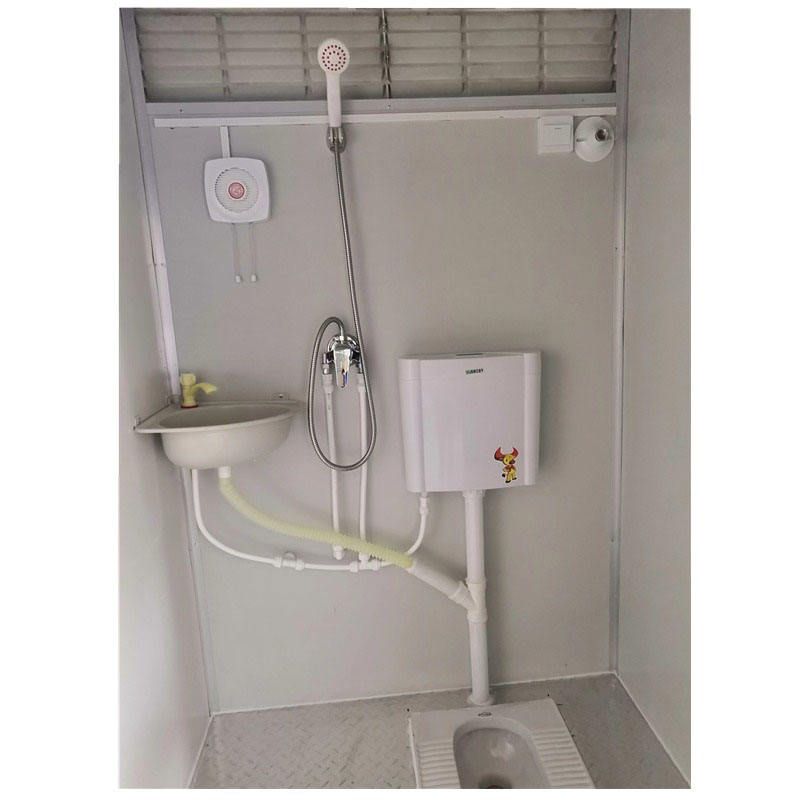
1. Structural Design and Material Selection The main frame of the mobile toilet is mostly made of lightweight metal materials (such as iron sheet 02 profiles), which provide structural support while reducing the overall weight, facilitating transportation and assembly. The exterior is covered with color-coated steel plate edging, which is rust-resistant and easy to clean. The interior sandwich layer is filled with 5mm thick foam material, which effectively provides thermal insulation, adapting to the large temperature differences in the outdoor environment of Chuzhou. The top and bottom adopt a separated design, and the loose parts delivery mode allows transportation to remote areas such as streets via small vehicles. On-site assembly can be completed with simple tools, reducing construction difficulty.
2. Functional Configuration and Humanized Details The standard dimensions are 1100*1100mm in width and length, and 2000mm in height, with the interior space balancing practicality and compactness. It is equipped with plastic windows as standard, which introduce natural light while ensuring privacy, reducing the sense of oppression inside. Metal locks provide basic security protection. The color-coated steel edging treatment avoids exposed sharp edges, reducing usage risks. According to the actual needs of Chuzhou streets, a shower function can be added to form a simple shower room, with waterproof sealing design to prevent water stains from seeping out. Such equipment usually does not come with a base and needs to be placed on a flat and hard ground to ensure stability, avoiding tilting or damage due to uneven ground.
3. Application Scenarios and Technical Adaptability The modular nature supports rapid coverage of scattered residential areas or commercial districts on Chuzhou streets, solving the problems of long construction periods and high costs of traditional toilets. At outdoor construction sites or street intersections with heavy pedestrian traffic, multiple units can be combined to meet sanitation needs. In tourist attractions or large-scale event venues, their mobility can be utilized to dynamically adjust the layout according to pedestrian flow. The equipment adopts a dry-wet separation design concept, separating wastewater from solid waste through drainage channels and sewage collection buckets, reducing the difficulty of later cleaning. However, regular maintenance is required to avoid the accumulation of odors and ensure a clean street environment.
4. Installation and Maintenance Precautions Before assembly, check that all loose parts are complete, with a focus on confirming that the color-coated steel plates, foam sandwich layers, and connectors are not damaged. During installation, assemble the frame in the order specified in the instructions, ensuring that doors and windows open and close smoothly before fixing the exterior panels. During use, avoid hitting the color-coated steel surface with hard objects to prevent the coating from peeling off and causing rust. In low-temperature environments in winter, the foam sandwich layer can reduce internal heat loss, but prevent water from accumulating and freezing, which could expand and damage the structure. For long-term disuse, it is recommended to disassemble and store it in a dry and ventilated place to extend the service life of the equipment.



