Chuzhou Office Mobile Toilet
If mobile toilets need to be installed in offices in Chuzhou, a comprehensive consideration should be given to actual needs, site conditions, and compliance requirements. The following is a detailed analysis:

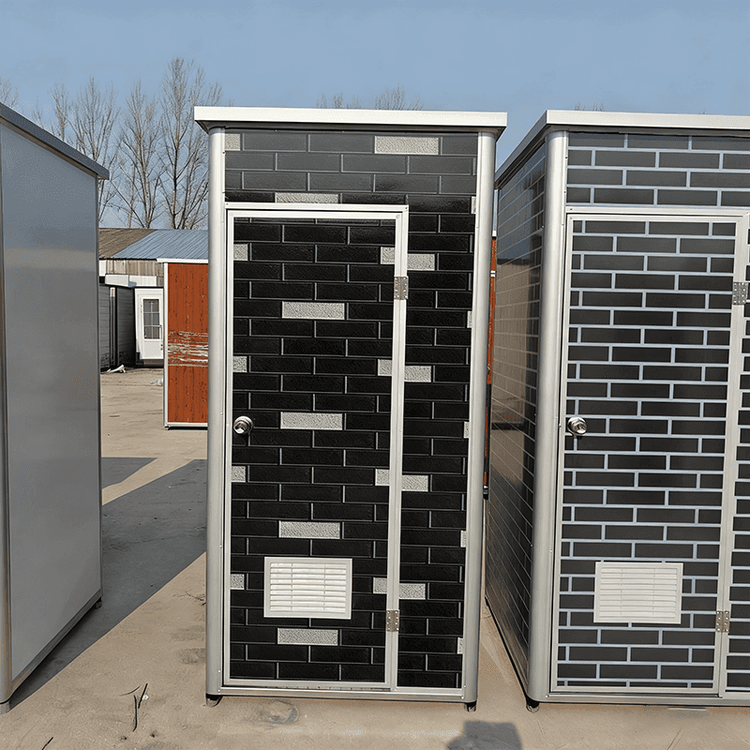
Mobile toilets generally refer to sanitary facilities that are movable, easy to install, and dismantle. They are commonly found at outdoor events, temporary construction sites, or places with limited space. For office settings, their applicability needs to be evaluated from four dimensions: functional requirements, space planning, environmental protection standards, and cost budgets.
1. Functional Requirement Compatibility Offices typically have a high density of personnel, so mobile toilets must meet the demand for frequent use. Priority should be given to water-saving or waterless flushing equipment, such as foam-sealed or microbial degradation toilets. The former reduces odors by covering with foam, while the latter uses biological decomposition technology to treat waste, both reducing reliance on plumbing systems. If the office is located in an old building or a temporary office space, such designs can avoid the hassle of modifying pipes.
2. Rationality of Space Planning The size of mobile toilets should be coordinated with the office layout. A single mobile toilet occupies approximately 1-2 square meters. If multiple toilet stalls are needed, space for aisles should be reserved, and ventilation should be ensured. If office space is limited, modular combination designs can be considered, such as assembling multiple independent toilet stalls into a small bathroom module or choosing foldable and movable lightweight toilets for easy storage during non-use periods.
3. Environmental Protection and Hygiene Standards Compliance with local environmental protection department requirements for waste treatment is necessary. If a waterless flushing toilet is chosen, the fecal storage tank should be regularly cleaned and entrusted to a professional agency for disposal. If a water-saving type is used, ensure that sewage discharge meets municipal pipeline standards. Additionally, the materials of mobile toilets should have moisture-proof and easy-to-clean properties, such as stainless steel interiors or polymer composite materials, to reduce bacterial growth and lower maintenance costs.
4. Cost and Long-Term Benefits The initial purchase cost of mobile toilets is lower than that of traditional brick-and-mortar toilets, but consideration should be given to the cost of consumables (such as foam liquid and microbial strains) and cleaning frequency during long-term use. If the office is for temporary use (e.g., 3-6 months), the flexibility of mobile toilets is a significant advantage. For long-term office spaces, it is advisable to evaluate the cost of renovating traditional restrooms, which may better meet long-term needs.
Summary: The installation of mobile toilets in offices in Chuzhou should be decided based on usage scenarios, space conditions, and budget. For temporary offices or spaces with limited room, choosing water-saving/waterless flushing, modular-designed mobile toilets is an efficient solution. For long-term use, weigh the initial costs against long-term maintenance expenses and, if necessary, consult local environmental protection departments or sanitary facility suppliers for customized solutions.