
Chongqing Container House Project
The Chongqing Container House Project uses containers as carriers to form diverse mobile houses through modification, splicing, and expansion. These houses are widely applied in construction sites, commerce, cultural tourism, and other fields, featuring rapid deployment, flexible expansion, and environmental protection and cost-effectiveness.
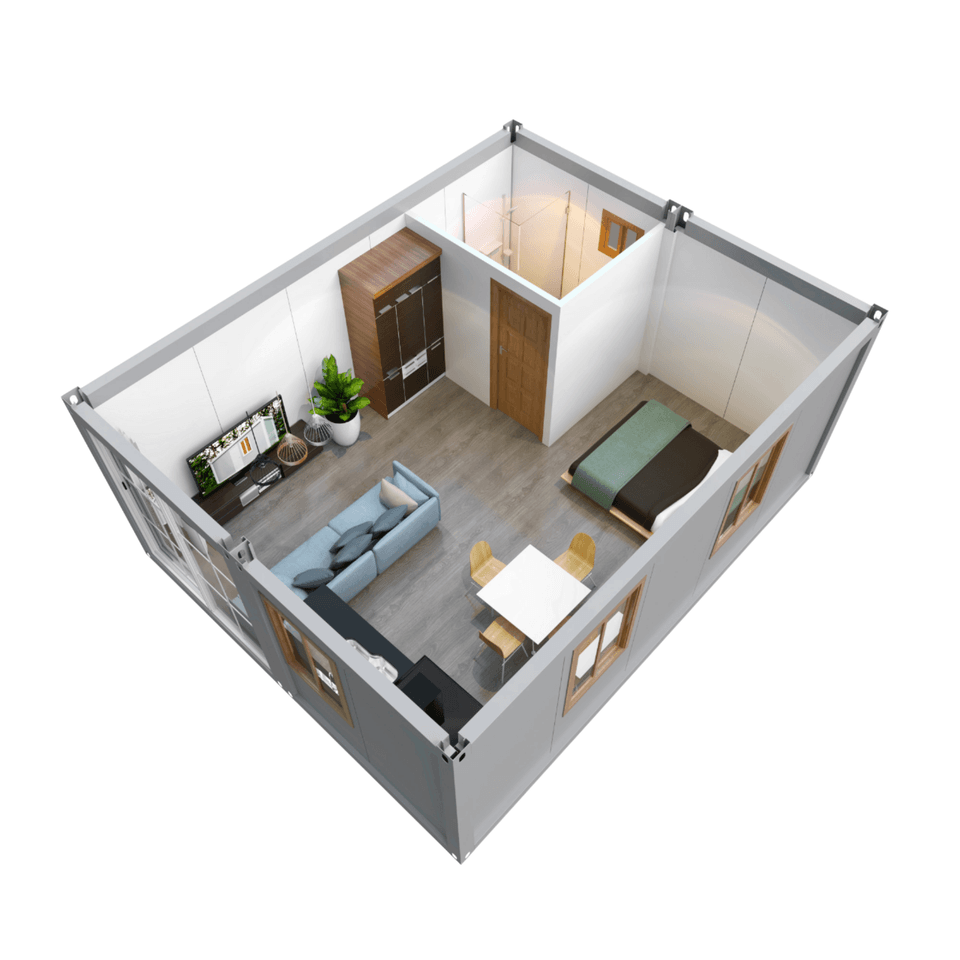
I. Types and Characteristics of Container Houses
- Standard Container Houses
Using 20-foot and 40-foot standard containers as carriers, these houses are structurally reinforced and internally renovated to form independent office or living units. Their advantages lie in their sturdy structure and convenient transportation, making them suitable for project departments and construction site command centers. For example, Chongqing Zhongke Container Co., Ltd. provided orange residential container houses for the Vanke Caiyun Lake project, supporting rapid construction and functional zoning. - Expandable and Modular Container Houses
Expandable houses add lateral or end expansion modules to the container, increasing usable area by 30%-50% to meet long-term on-site office needs. Modular houses use a combination of light steel frames and color steel plates for on-site modular assembly, allowing flexible expansion based on the number of occupants, commonly seen in temporary park offices and event planning sites. - Creative Customized Container Houses
Combining elements such as glass curtain walls, wood grain finishes, and irregular structures, these houses are used for brand displays and cultural and creative parks. For example, Jiayu Smart Construction Technology designed a container office building for the Rongchang District Industrial Park, composed of 8 containers spliced together, with a colorful appearance that combines functionality and visual expression.
II. Application Scenarios and Cases
- Infrastructure Construction Field
As a core city for infrastructure construction in the west, Chongqing has made container houses a standard feature on construction sites. For example, Le'anju Container Leasing Co., Ltd. provides residential containers for infrastructure projects, using fire-resistant rock wool interlayers and sound insulation materials, supporting spliced construction to solve temporary accommodation problems for workers. - Commercial and Cultural Tourism Projects
Container houses are widely used in commercial districts and scenic area management buildings due to their unique visual appeal. For example, the Aegean Sea Container Commercial District in Yubei District is composed of multiple 6-meter containers, featuring large glass surfaces and color schemes; the Minxing Home Youth Environmental Experience Center is assembled on-site from 6-meter to 9-meter containers, with a total construction period of only 1 month. - Public Service Facilities
The public service supporting facilities project in the southern area of Xiejiawan Street, Jiulongpo District, adopted a competitive bidding process for container fabrication and installation, requiring completion of delivery and installation within 20 calendar days, demonstrating the rapid deployment capability of container houses in the public service sector.
III. Core Enterprises and Service Models
The Chongqing container house project field brings together multiple professional enterprises, forming an integrated service model of design, production, installation, leasing, and sales. For example, Chongqing Delaisi Container Co., Ltd. offers personalized solution customization, covering residential containers, modular homestays, and mobile exhibitions; Zhongke Container Co., Ltd. has a 20,000-square-meter production site, providing free pre-sales solution guidance, installation technical guidance, and after-sales service.



