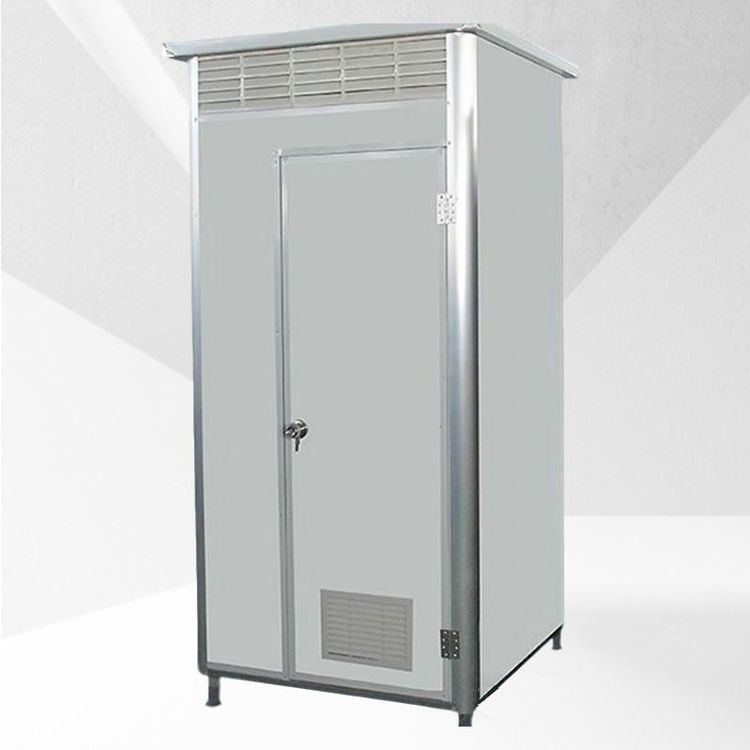
Chizhou Street Mobile Toilet Design
The design of mobile toilets for Chizhou streets requires comprehensive consideration of functionality, materials, structure, design principles, and adaptability to street scenarios. Below are the specific design points:

Functionality and Applicability
The core function of mobile toilets is to provide convenient and hygienic restroom services in public places such as streets. The design must meet the usage demands in high-traffic scenarios, such as providing independent squatting or sitting toilets, equipped with handwashing basins and hand-drying facilities, and reserving barrier-free passages to serve disabled individuals and the elderly. Additionally, nighttime usage scenarios should be considered, with the addition of lighting systems and non-slip floors to enhance safety.
Material Selection
Priority should be given to lightweight, durable, and environmentally friendly materials. For example, fiberglass, as the main structural material, has the characteristics of corrosion resistance, rust prevention, and light weight, facilitating easy movement and installation; polyethylene material offers strong impact resistance and easy cleaning, making it suitable for outdoor environments. Wall panels should adopt a double-sided smooth design to reduce dirt adhesion while meeting hygiene standards.
Structural Forms and Sewage Treatment
Structurally, they can be divided into single-unit (independent unit) or composite (multi-unit combination) forms, with movement methods including hoisting, towing, and powered types, which should be selected based on street terrain and usage frequency. Sewage treatment methods should be combined with environmental protection requirements:
- Flush-type: Requires connection to the municipal drainage system, suitable for streets with infrastructure;
- Recirculating flush-type: Achieves water reuse through a filtration system, reducing water consumption;
- Dry-packing type: Uses biodegradable bags to collect waste, requiring no water source, suitable for water-scarce or temporary event scenarios;
- Waterless vacuum-type: Uses a vacuum pump to suction waste, with strong sealing and excellent odor control.
Design Principles
Adhere to the core principles of mobility, cost-effectiveness, environmental protection, and efficiency enhancement. The overall structure should be lightweight yet sturdy, controlling height (usually not exceeding 2.5 meters) and width (to fit narrow streets), with complete and reasonable moving devices (such as wheels and hoisting rings). Additionally, the design should incorporate user-friendly details, such as odor-proof floor drains, ventilation systems, and privacy protection measures.
Street Scenario Adaptation Points
- Environmental Hygiene: Adopt water circulation systems or biodegradation technologies to reduce pollution, equipped with dedicated personnel for regular cleaning, and set up waste sorting and recycling facilities;
- Rental Service Support: Collaborate with professional rental companies to provide one-stop services from installation, maintenance, to removal, dynamically adjusting the number and layout of toilets based on street traffic.