
Chinese-style Container House Customization
When customizing Chinese-style container houses, it is essential to focus on four core elements: craftsmanship fidelity, structural stability, qualification certification, and service capability.
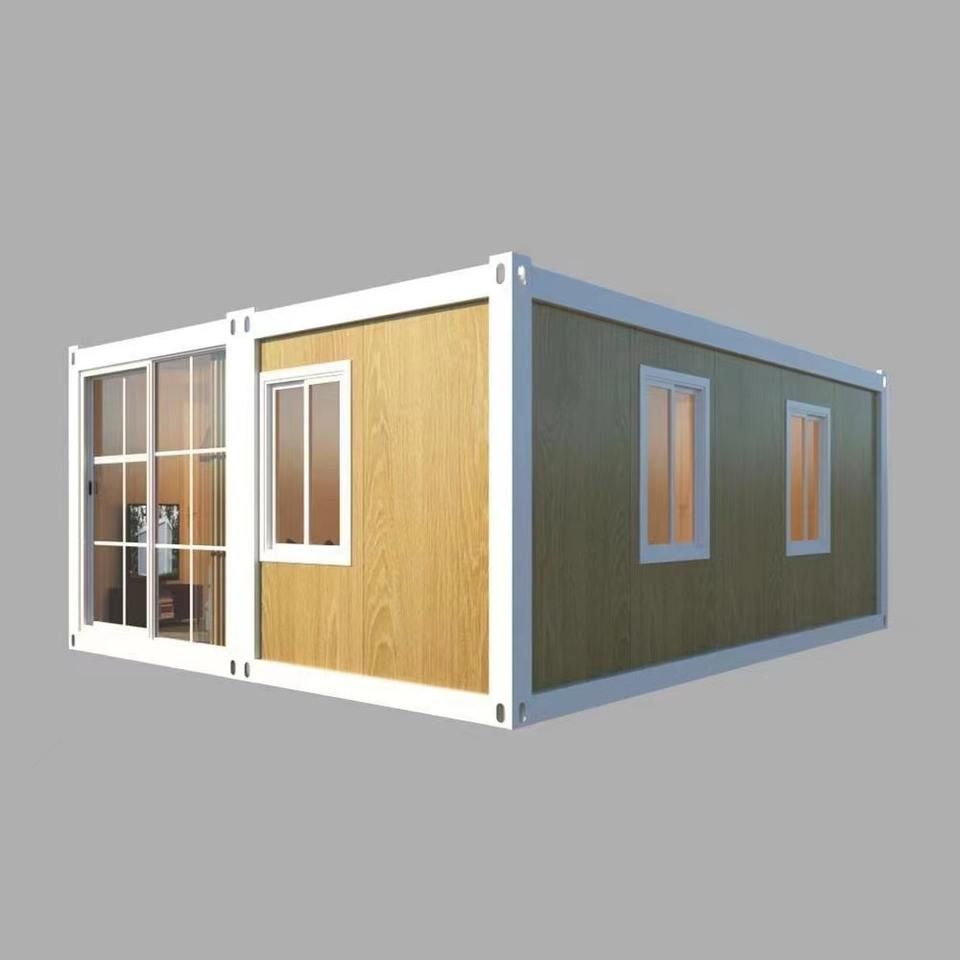
1. Craftsmanship Fidelity: Avoiding the 'Flat Chinese' Trap Some manufacturers only present Chinese elements in the design renderings but simplify details such as irregular eaves, layered textures, and antique craftsmanship during actual production, resulting in a significant difference between the final outcome and expectations. For example, Jiangsu Mingren Culture Technology Co., Ltd. points out that many companies' Chinese-style container houses are merely ordinary containers with panels attached, lacking three-dimensional antique styling. Choose manufacturers with industrial prefabrication capabilities, such as Hebei Xingtai Yunsheng Integrated Housing Co., Ltd., which uses full-weld roofing techniques, imitation blue brick cladding, and solid wood antique doors and windows to achieve high-precision replication of traditional forms.
2. Structural Stability: Safety Assurance Under Extreme Conditions Container houses must meet core safety standards for wind resistance, earthquake resistance, and fire resistance. According to actual test data, the all-steel frame container houses from Suzhou Zhongnan Steel Structure Co., Ltd. exhibit a deformation rate of only 0.18% under 12-level typhoon and 8-level earthquake conditions, well below the industry threshold of 0.3%. Products from CIMC Modular Building Investment Co., Ltd. can withstand winds of up to 11 levels and earthquakes of up to 7 levels. Prioritize products certified under the GB50011-2010 Building Seismic Design Code and verify wind and earthquake resistance test reports to avoid using non-standard, unbranded products (which typically have a frame deformation rate exceeding 1.2%, posing safety risks).
3. Qualification Certification: The Basic Threshold for Compliance and Quality Compliant manufacturers must hold certifications such as the ISO series quality management system, CE certification (for overseas projects), fire performance testing certification, and steel structure professional contracting qualifications. For instance, Hebei-based manufacturer Xingtai Yunsheng Integrated Housing Co., Ltd. has business scopes including container manufacturing and metal structure manufacturing, and its products have been verified through three years of actual use without issues such as roof leakage or degraded insulation performance. Unbranded manufacturers often lack core certifications, which can lead to project rework, safety incidents, and economic losses.
4. Full-process Service Capability: Reducing Project Implementation Risks Container house projects involve multiple stages, including design, production, transportation, installation, and after-sales service, necessitating the selection of manufacturers with one-stop service capabilities. For example, Suzhou Zhongnan Steel Structure Co., Ltd.'s 'factory prefabrication + on-site rapid assembly' model can deliver 1,000 accommodation modules within three months, reducing the construction period by 40%. In contrast, some unbranded manufacturers, due to non-standard installation techniques, may take over eight hours to install a single unit, leading to project delays and fines amounting to 2.1% of the procurement cost. Prioritize manufacturers that can provide customized solutions, a nationwide service network, and 24-hour response capabilities to reduce communication costs and the risk of responsibility shirking.



