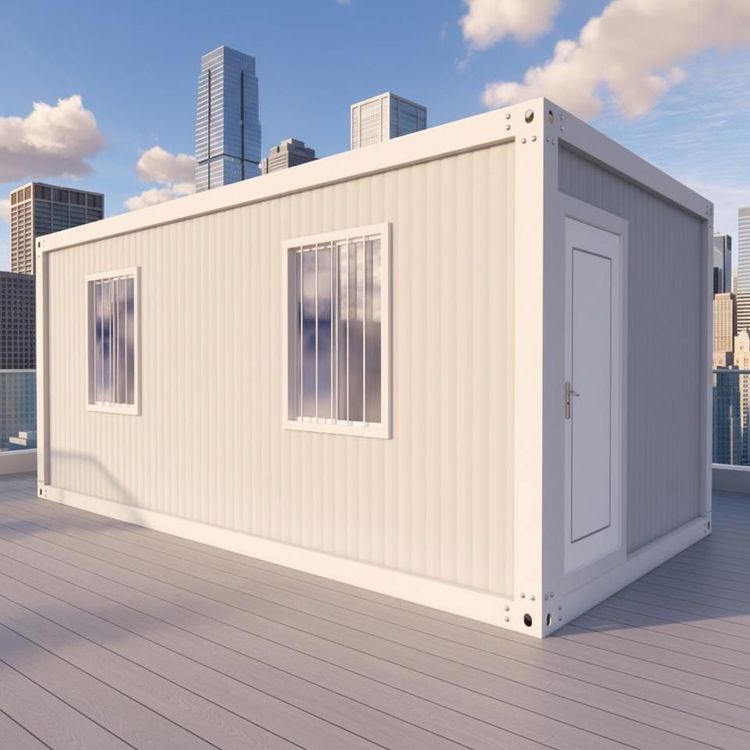
Chinese Prefabricated House Design
Chinese prefabricated house design focuses on efficiency and precision, achieving controllable building quality through modular prefabrication and standardized production, and supporting rapid overseas assembly applications.

Modular Prefabrication: Deconstructing Buildings into Independent Units
Chinese prefabricated house design breaks down the entire building into independent modules such as ceilings, floors, and walls, with each module prefabricated in a factory. For example, key components like water and electricity pipelines and bathroom waterproof layers are pre-integrated into the modules, forming standardized units that are “plug and play.” This design approach breaks through the limitations of traditional on-site construction, transferring a large number of processes to a factory environment and significantly improving production efficiency.
Millimeter-Level Precision Control: Positioning and Error Management
During the design process, the positions of every steel bar and screw must be precisely located, with error control measured in millimeters. For example, the connection points of steel bars at module joints require three-dimensional modeling to determine coordinates, ensuring a perfect fit during on-site assembly; the installation hole positions for screws must be controlled within ±0.5 millimeters to avoid structural instability caused by cumulative errors. This high level of precision relies on the collaboration of digital design tools (such as BIM technology) and automated production equipment, achieving full process control from design to manufacturing.
Standardization and Industrialization: Quality Assurance and Cost Optimization
Through standardized design, components of prefabricated houses can be mass-produced industrially, reducing material waste and labor dependence. For example, wall modules of the same type can be replicated in batches, lowering unit costs; the pre-embedding process for water and electricity pipelines is standardized, avoiding the arbitrariness of on-site construction. Additionally, quality inspections in a factory environment (such as waterproof layer closure tests and structural load tests) are stricter than traditional on-site inspections, further ensuring building quality.
Rapid Overseas Assembly: Diverse Scenario Applications
Modular prefabricated houses support rapid overseas deployment, particularly suitable for scenarios sensitive to construction timelines, such as hotels, senior living apartments, and data centers. For example, a hotel project with 200 guest rooms can complete the main structure construction in three months using prefabricated modules, reducing the construction time by more than 50% compared to traditional methods; data center modules can be pre-integrated with server racks and cooling systems, allowing for immediate operation upon arrival. This model not only reduces logistics and labor costs for overseas construction but also adapts to local building codes and climatic conditions through localized assembly.
Chinese prefabricated house design has restructured the logic of building production through modularization, standardization, and industrialization, providing an efficient solution for rapid global construction.
You may also like
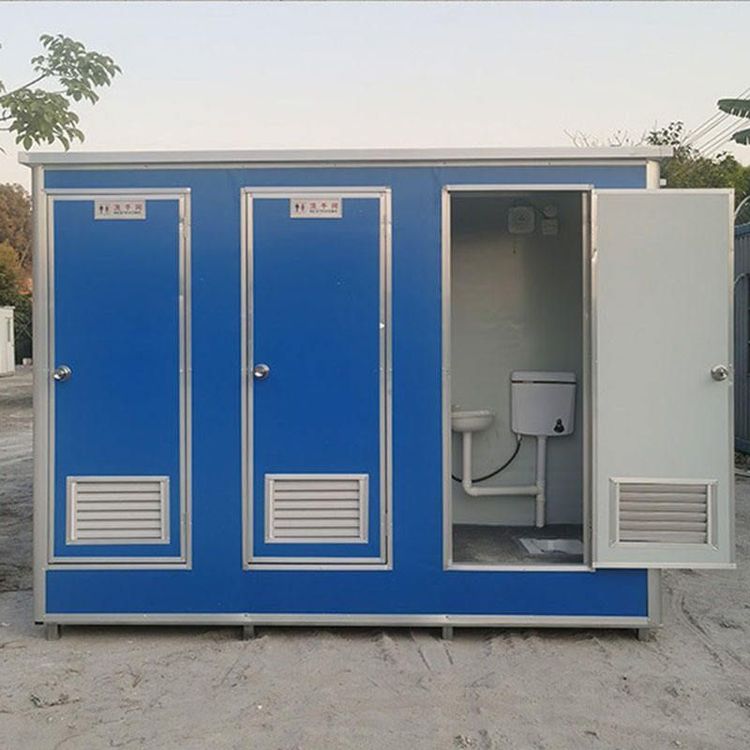
Top Portable Toilet House Manufacturers: How to Choose a Factory Partner
Read More
Portable Toilet Rental For Sale: Top Options & Considerations
Read More
How to Choose the Right Portable Toilet Movable Eco-Friendly
Read More