
Chinese Container Houses
Chinese container houses have diverse application scenarios, covering蜗居 (cramped living), event accommodation, export trade, and professional evaluations, among others.
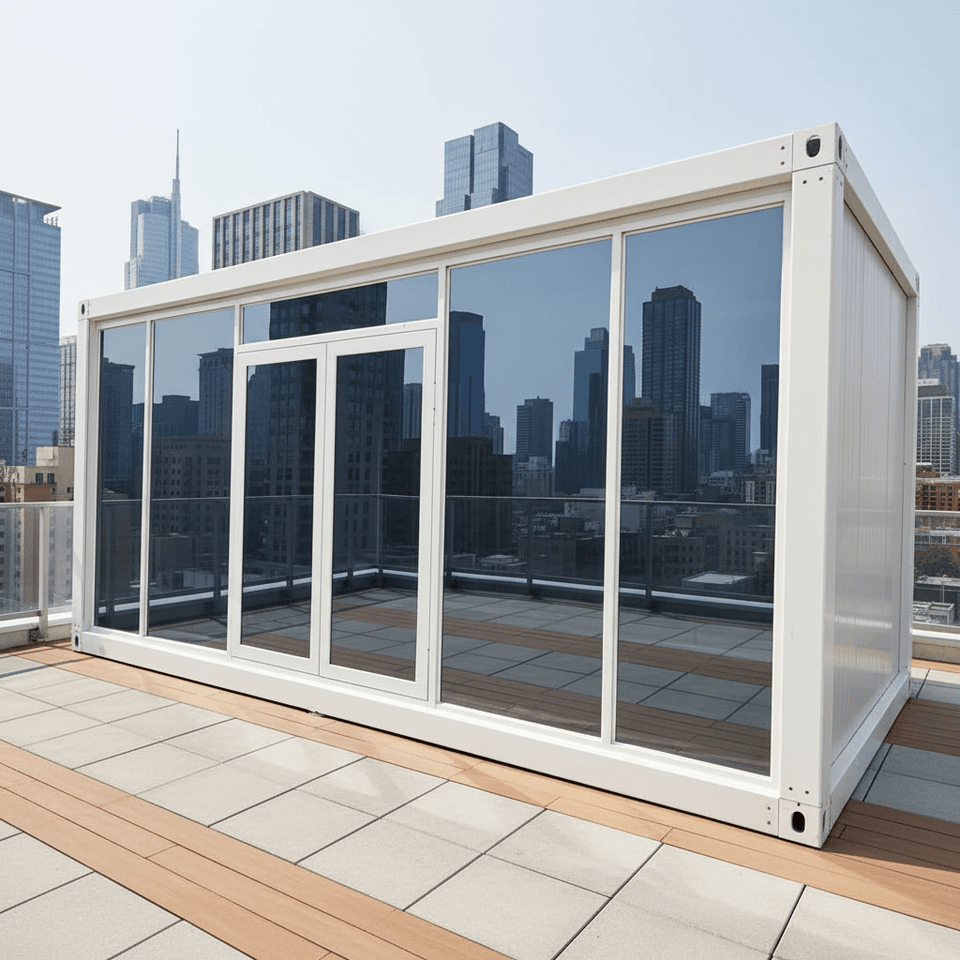
1. Container-style蜗居 (Cramped Living): A Temporary Transition Solution for Low-Income Groups
Around 2010, the concept of residential containers was introduced to China, giving rise to the phenomenon of the "container蜗居族 (container-dwelling group)". These houses, covering an area of about 18 square meters, are equipped with basic lighting and ventilation facilities, with a daily rental cost of approximately 6 yuan. They primarily cater to low-income groups such as construction site workers, lower-class citizens, and impoverished college students. Their characteristics include low cost and rapid construction, but they often lack government approval and are considered illegal structures, mostly distributed in remote suburbs or beside construction sites. Such phenomena have emerged in cities like Shenzhen, Fuzhou, and Suzhou, reflecting the urgent need for economical temporary housing among certain groups.
2. Application in the Asian Games: Functional Compromise under Budget Constraints
Due to budget overruns, the 2026 Aichi-Nagoya Asian Games adopted container houses as accommodation for athletes. The container dormitories near the dock where the Chinese women's basketball team stayed were cramped, with poor sound insulation and rudimentary hardware facilities. For example, the standard single bed was only 1.95 meters long and 0.9 meters wide, with narrow aisles, forcing tall athletes to add bed stools to stretch their legs fully. While such applications met basic accommodation needs, they were severely lacking in comfort, highlighting the conflict between event budgets and athlete experiences.
3. Prefabricated House Exports: High-Quality Supply in the Global Market
In the first half of 2026, China's prefabricated building exports reached $2.79 billion, a year-on-year increase of 45%, with activity houses exported through the Shenzhen port accounting for 2.45 billion yuan, covering more than 160 countries and regions worldwide. Chinese-exported prefabricated houses are characterized by fine decoration and comfort as their core advantages, distinguishing them from the temporary nature of traditional movable plank houses and becoming the preferred option for long-term residence overseas. This trend reflects the technological upgrading and market competitiveness of China's manufacturing industry in the field of modular construction.
4. Professional Evaluations: Technical Optimization Directions for Multiple Scenarios
In response to demands for emergency rescue, commercial pop-ups, overseas engineering camps, and other scenarios, container mobile house products from four representative Chinese companies (such as Suzhou Zhongnan Steel Structure and CIMC Modular Building Systems) underwent evaluations. The core dimensions included portability, structural stability, scenario adaptability, one-stop service capabilities, compliance qualifications, and cost accounting. For example, foldable container mobile houses demonstrated rapid deployment advantages in emergency scenarios, while engineering camp houses required enhanced structural durability. Such evaluations promote technical standardization and scenario-based innovation in the industry.



