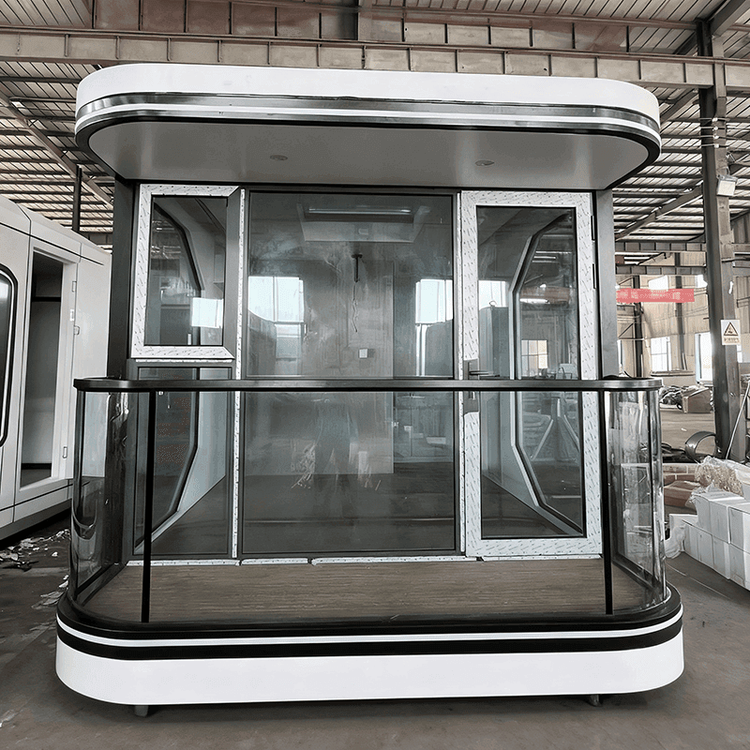
China Container Houses
China's container-house industry, built on deep container manufacturing experience and technology, has developed innovative forms such as modular buildings and made clear progress in applications, technology, markets, and industry strengths.

1. Broad application fields Container houses use shipping containers as basic structural modules, modified for living or office use. They are common on construction sites as worker dormitories and can also serve as rental housing. Use cases now extend to temporary housing, creative spaces, and post-disaster emergency buildings. For example, the 2026 Asian Games in Nagoya, Japan, used container housing to form the Athletes' Village and cut costs; Shanting District in Zaozhuang, Shandong, China, built a distinctive guesthouse destination with container houses. In emergency medical facilities, container houses play a key role thanks to fast deployment—temporary hospitals, isolation wards, and more. Commercial uses have also grown creative, such as 24-hour self-service fitness cabins and mobile cafés.
2. Ongoing technical upgrades The industry keeps advancing insulation performance, energy-supply systems, and smart management. Insulation improves efficiency with new thermal materials or composite structures; energy systems integrate solar, wind, and other renewables for off-grid or hybrid power; smart management uses IoT for remote monitoring, climate control, and safety alerts, raising comfort and operating efficiency.
3. Strong market performance China's prefabricated building exports (including modular buildings) have grown sharply, with first-quarter 2026 export growth at 45%; in the first four months, "mobile houses" exported through Shenzhen ports reached $233,333,333, up 19.6% year over year, shipped to more than 150 countries and regions. CIMC, a leader in modular construction, has delivered more than 200 projects worldwide—covering senior apartments, upscale hotels, data centers, and more—underscoring its international competitiveness.
4. Clear industry advantages Modular buildings cut construction cycles sharply through factory prefabrication and can move by container liner for ocean transport, lowering logistics costs. Recyclability saves resources; on-site schedules are short, less tied to local labor, quality is standardized, and overall cost is relatively low. These strengths make the sector highly competitive for rapid demand response, scaled deployment, and sustainable development.