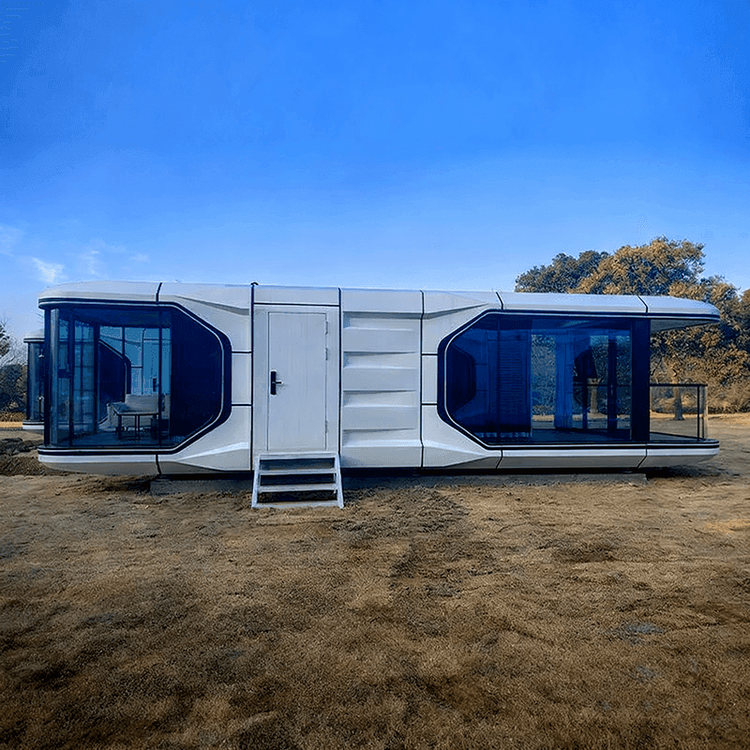
Chifeng Mobile Outdoor Toilet
The Chifeng mobile outdoor toilet is a portable sanitation facility centered around modular design and incorporating environmental adaptability technology to meet the needs of multiple scenarios. Its characteristics can be analyzed from four aspects: production, rental and supply models, application scenarios, and technical advantages and limitations.

Production Characteristics: Balancing Modularity and Environmental Adaptation
The Chifeng mobile outdoor toilet uses a metal frame (such as steel) and composite material wall panels (such as fiberglass and aluminum-plastic panels) to construct its main structure, balancing strength and lightweight requirements. However, surface coatings or anti-corrosion treatments are needed to mitigate metal oxidation caused by long-term outdoor use. Modular design is a core advantage, with each functional unit (such as toilet compartments, treatment chambers, and waste storage tanks) being prefabricated and then quickly assembled, significantly reducing the complexity of on-site construction. However, this places high demands on the sealing and waterproofing of module interfaces. In response to Chifeng's harsh winters and windy springs and autumns, production emphasizes insulation and wind-sand protection designs, such as filling with high-efficiency insulation materials like polyurethane and using double-sealed doors and windows. For off-grid scenarios, biological degradation or chemical treatment-based fecal treatment technologies are configured to reduce reliance on municipal sewage systems.
Rental and Supply Models: Flexibly Covering Diverse Needs
Suppliers offer both rental and sales models: Rental services are primarily aimed at short-term events like marathons, concerts, and music festivals, as well as medium-term projects like construction sites, supporting flexible rental periods from a single day to several months, reducing the initial investment costs for users. Sales focus on customized products, covering types such as mobile eco-toilets, waterless eco-toilets, and microbial degradation toilets, with prices ranging from several hundred yuan (for simple mobile toilet cabins) to several thousand yuan (for customized municipal toilets for docks). These can be adapted to scenarios such as rural homes, scenic spots, and construction sites. Suppliers like Cangzhou Hengtai Sanitation Equipment Co., Ltd. provide full-chain services from design and production to after-sales maintenance, with some enterprises supporting on-site factory inspections and functional customization.
Application Scenarios and Functional Adaptation: Differentiated Design to Meet Specific Needs
- Large-scale events: Multi-connected designs are used to expand capacity, equipped with mechanical ventilation and artificial lighting systems to ensure hygiene and comfort in high-traffic scenarios.
- Construction sites: Preference is given to waterless packaging or microbial degradation treatment technologies to reduce reliance on municipal sewage networks, while structural durability is enhanced to withstand frequent transportation and harsh environments.
- Rural areas and scenic spots: The appearance is customized with color-steel or eco-mimicking materials to blend into the environment, equipped with barrier-free facilities and optimized male-to-female toilet ratios to enhance the user experience.
Technical Advantages and Limitations: Balancing Efficiency and Maintenance Costs
The advantages lie in standardized production processes that control costs, modular designs that enhance deployment flexibility, and the ability to be quickly put into use without complex infrastructure. Limitations include material aging (such as metal oxidation and composite material weathering), stress damage to structural connection points caused by repeated transportation, and the need for regular maintenance due to treatment technology capacity limitations (such as the need to regularly add microbial strains to microbial degradation toilets).