
Changzhou Olympic Sports Center Portable Toilets
The configuration and operation of portable toilets at the Changzhou Olympic Sports Center exhibit notable characteristics, primarily serving the high-frequency demands during major sporting events, with an active rental market and advanced equipment technology.
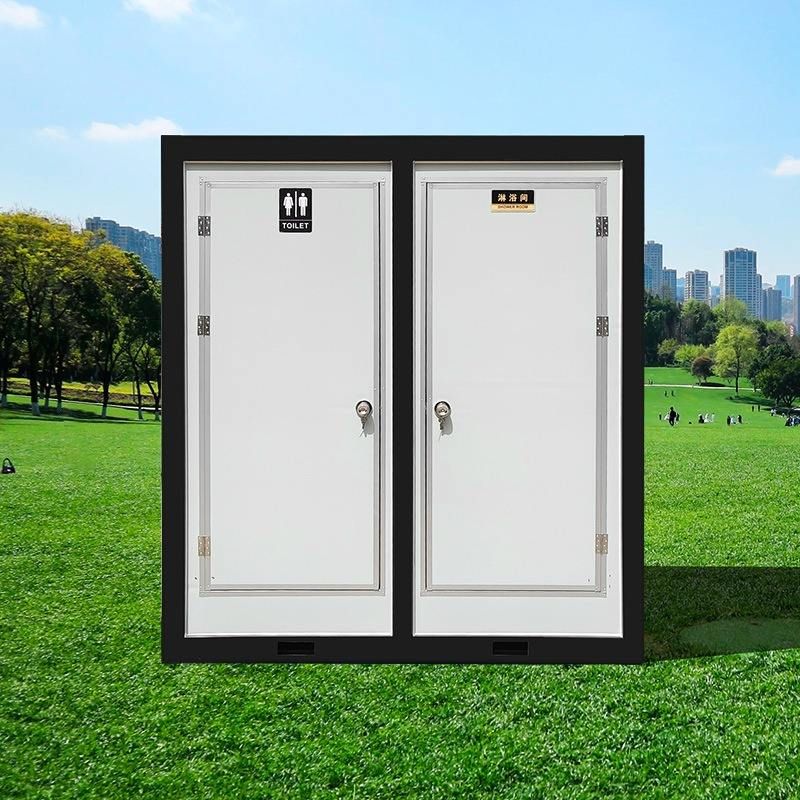
1. High Demand and Turnover Rate Driven by Events
As a core venue for large-scale sporting events (such as marathons and football leagues), the Changzhou Olympic Sports Center experiences a surge in demand for portable toilets during events. The average daily turnover rate exceeds 80%, with some popular venues requiring reservations up to one month in advance due to resource constraints, reflecting their irreplaceable role as temporary sanitation facilities. On average, 50-100 units are rented for a single event, with larger-scale events requiring even more equipment. For instance, marathons, with concentrated participants and spectators, necessitate a high density and quantity of portable toilets to meet short-term, high-frequency usage demands.
2. Diverse Equipment Offerings in the Rental Market
Rental companies provide a wide range of portable toilet types, including standard portable toilets, luxury portable toilets, and trailer-mounted portable toilets, to cater to different scenarios. Standard models are suitable for basic needs, while luxury models are equipped with more comprehensive facilities (such as air conditioning and independent sinks). Trailer-mounted models offer easy and rapid deployment and mobility. In terms of materials, stainless steel frames, non-slip floors, and automatic flushing systems have become standard features. Some high-end models incorporate anti-stick interiors and automatic disinfection technologies, reducing cleaning frequency and enhancing hygiene standards. For example, anti-stick interiors minimize waste adhesion, and automatic disinfection systems enable unmanned maintenance through UV light or spraying, suitable for high-intensity usage scenarios.
3. IoT Technology Enabling Intelligent Management
Some new-generation portable toilets incorporate IoT technology, enabling remote monitoring through built-in sensors and mobile apps. Operators can obtain real-time equipment status (such as water levels, battery levels, and usage frequency) to optimize scheduling and resupply plans. For example, when toilet usage in a certain area spikes, the system can automatically prompt the deployment of nearby units; low battery levels or overflow conditions trigger timely notifications to maintenance personnel, preventing service disruptions. This technology significantly enhances management efficiency, particularly addressing the challenges of widespread equipment distribution and uneven usage during large events.
4. Optimization of Equipment Design and User Experience
The design of portable toilets emphasizes practicality and durability. Stainless steel materials offer strong corrosion resistance, suitable for long-term outdoor use; non-slip floors reduce safety hazards in wet or humid conditions; automatic flushing systems minimize manual intervention, ensuring continuous availability. Some units are also equipped with barrier-free facilities (such as handrails and low-position sinks) to meet the needs of special populations, reflecting a human-centered design philosophy.
In summary, portable toilets at the Changzhou Olympic Sports Center effectively support the sanitation needs of major events through high turnover rates, diverse equipment offerings, intelligent management, and design optimizations, serving as a typical case of urban temporary public facility configuration.



