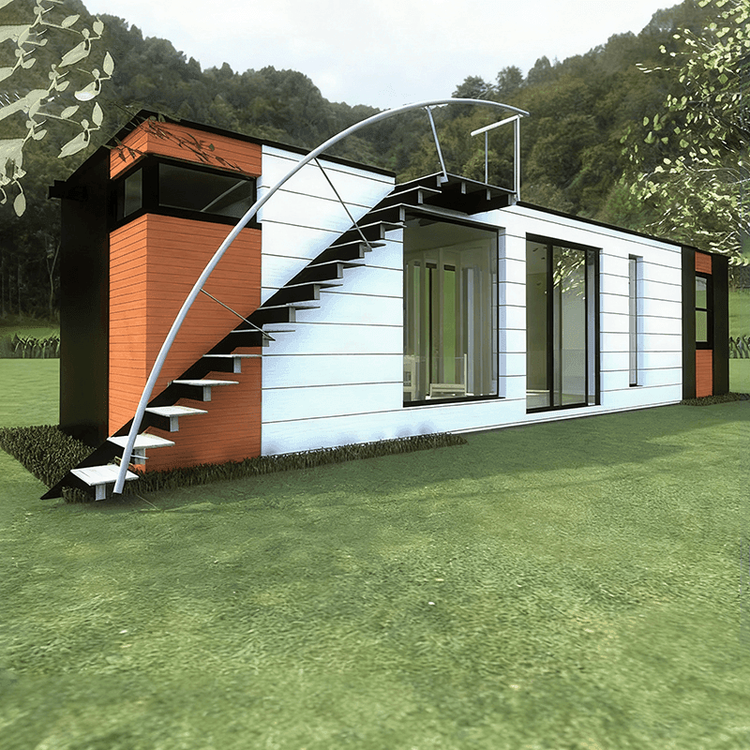
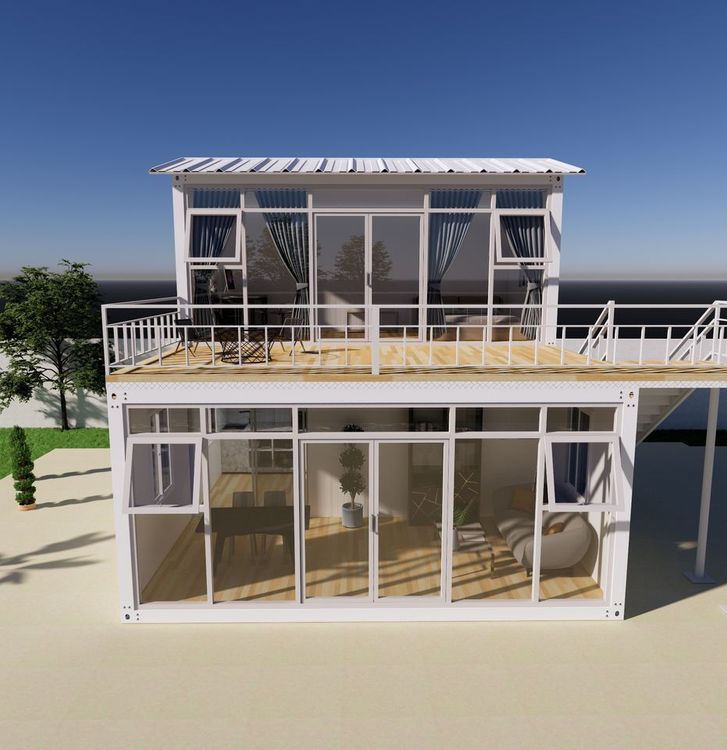
Changzhou Container House Construction
In Changzhou, the construction of container houses requires focusing on four core aspects: design, materials, construction, and compliance. The following provides an overview of the construction process, technical considerations, and key points to note:

1. Design Phase: Modularization and Functional Adaptation
The core advantage of container houses lies in modular design, which requires determining the combination method based on the intended use (e.g., construction site dormitories, commercial exhibition halls, cultural tourism homestays). For example, Jiangsu Xingxu Integrated Housing Technology Co., Ltd. offers single-story, double-story, and commercial street custom designs, enabling multi-functional spaces for office, living, and leisure through container stacking. Key considerations during design include:
- Structural Stability: Adopt a triangular load-bearing system and node bolt connections to ensure wind resistance of over 12 levels (e.g., Changzhou Dongyao Construction Engineering standards).
- Spatial Layout: Adapt to different terrains through horizontal or vertical stacking, with rooftop leisure spaces possible (e.g., the reception center at the Jiangsu Green Building Expo Park).
- Aesthetics: Create personalized appearances by combining sandwich panel colors with container arrangement angles (e.g., the "Colorful Building Blocks" container architecture by Mingren Cultural Technology Co., Ltd.).
2. Material Selection: Fire Resistance, Thermal Insulation, and Environmental Protection
Materials directly impact the safety and lifespan of the house and must be rigorously selected:
- Steel: The main frame should have a wall thickness of ≥1.5mm, using Q235B or higher national standard carbon steel (e.g., Changzhou Mengren Container Co., Ltd. standards), avoiding false wall thickness claims.
- Sandwich Panels: Prioritize fire-resistant materials such as rock wool and polyurethane, with a fire rating of Class A non-combustible (oxygen index ≥32), and provide fire safety certificates.
- Corrosion Protection: The steel frame should be coated with epoxy zinc-rich primer, with nodes reinforced using high-strength bolts or full welding to withstand coastal high-humidity environments.
3. Construction Process: Standardization and Environmental Requirements
Construction should follow industrial manufacturing logic to ensure rapid formation and environmental compliance:
- Production Phase: Use CNC cutting, cold bending forming, and automatic color steel plate pressing to reduce human error.
- Installation Phase: Proceed in the order of "foundation positioning → container assembly → pre-embedding of water and electricity pipelines → waterproof sealing treatment" to achieve zero welding on-site.
- Environmental Control: Ensure no dust or noise emissions during construction, with controlled waste disposal, meeting green construction site management requirements.
4. Compliance: Qualifications and Standards
Verify supplier qualifications and product certifications:
- Enterprise Qualifications: Choose manufacturers certified by housing and construction departments (e.g., Changzhou Delaosi Container Co., Ltd., a member of the China Delaosi Alliance).
- Product Standards: Load performance and fire ratings must comply with national standards such as GB/T 8624-2012, with material recycling rates exceeding 85% (e.g., Changzhou Dongyao Construction Engineering standards).
- Application Scenario Adaptation: Select product types based on usage, such as Class A fire-resistant containers for crowded areas and standard containers for temporary warehouses.