
Changshou Intelligent Mobile Toilet
Currently, there is no clear information indicating the existence of the 'Changshou Intelligent Mobile Toilet', a direct combination of intelligence and mobile toilets, in Changshou District. However, Changshou District has achieved relevant results in both the intelligent transformation of public toilets and the mobile toilet industry.
Intelligent Transformation of Public Toilets in Changshou District
Since the pilot project of the Shui Mu Nian Hua smart public toilet in 2024, Changshou District has successively carried out intelligent transformations in 10 public toilets, including Changzhong Public Toilet, Qian Public Toilet, Xiaoqi Public Toilet, and Taoyuan Public Toilet. These public toilets have been equipped with various front-end sensing devices, covering aspects such as temperature and humidity, water and electricity monitoring, air quality, and usage flow statistics. Through these devices, key indicators such as temperature, ammonia, and hydrogen sulfide can be monitored in real-time. When the concentration of ammonia and other gases in the toilet is too high, the sensors will promptly emit an alarm sound to remind the public toilet cleaners to clean and disinfect. This intelligent transformation has significantly improved the management efficiency and hygiene level of public toilets, providing citizens with a more comfortable and convenient toilet environment.
Mobile Toilet Industry in Changshou District
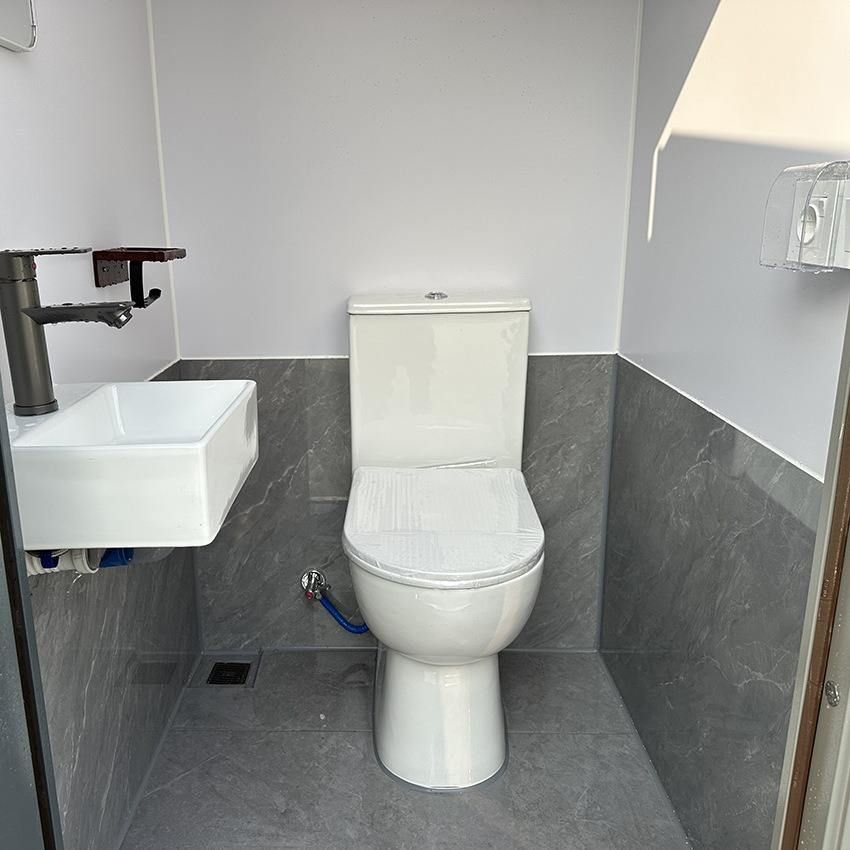
Changshou District has a mobile toilet-related industry. As a rapid-deployment and flexible sanitation solution, mobile toilets have unique advantages. Their production involves multiple core technological processes, including the prefabricated encapsulation of spatial functional units, such as the decomposition and definition of functional modules, system integration within the factory, and the formation of encapsulated units. At the same time, it also involves the coupled design of material science and environmental adaptability. For example, structural materials need to consider mechanical and anti-corrosion properties, enclosure materials should achieve composite functions, and internal materials should balance hygiene and durability. These technologies and designs ensure that mobile toilets can operate stably in different environments and scenarios, meeting diverse usage needs.
Although there is currently no specific information about the 'Changshou Intelligent Mobile Toilet', the development of Changshou District in the intelligent transformation of public toilets and the mobile toilet industry provides possibilities and a foundation for the future combination of the two.
You may also like

Portable Toilet Eco-Friendly: MOQ, Samples & Quotation Guide
Read More
Top Portable Toilet Color Steel Manufacturers: How to Choose a Factory Partner
Read MorePortable Toilet Picture: Types, Features & Buying Tips
Read More