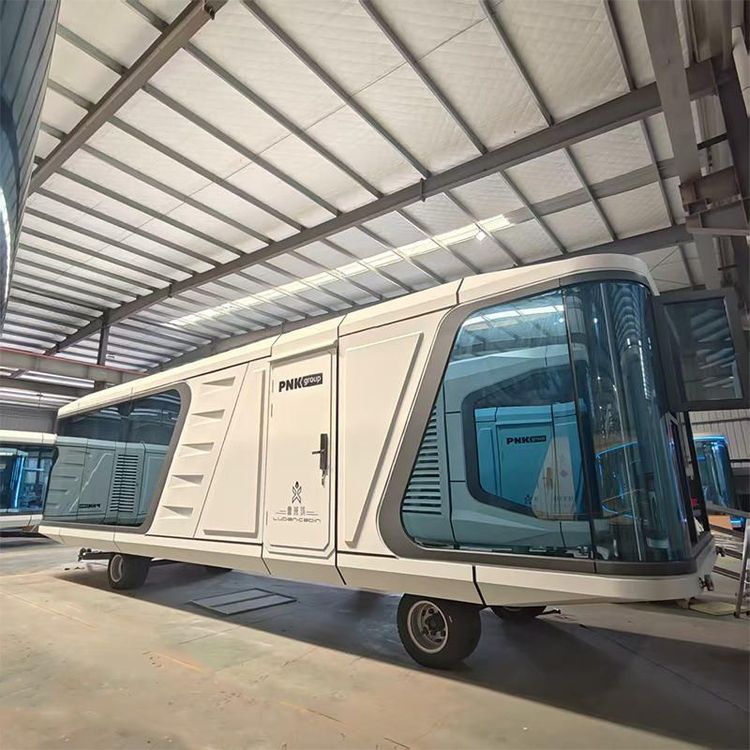
Changshan Prefabricated Houses
There is no exact information on "Changshan Prefabricated Houses". The following provides an introduction to the relevant buildings in the Changshan Archipelago and prefabricated houses respectively.

The architectural type of the Yibao Zhenpin community in the Changshan Archipelago is a slab building, completed in 2013 and developed by Dalian Jindong Construction Group Co., Ltd. However, it is not mentioned whether the houses in this community are prefabricated.
Prefabricated houses are buildings constructed primarily with prefabricated panels. Prefabricated panels are cement components prefabricated in factories, available in both solid and hollow types. They originated in the early 20th century, and in China, most residential buildings constructed before 1985 adopted this type of structure.
There are numerous issues with existing prefabricated panel houses:
- Weak earthquake resistance: Due to the structural characteristics of prefabricated panel houses, their overall integrity and stability are relatively poor. In the event of natural disasters such as earthquakes, they are prone to damage or even collapse, posing a threat to the safety of occupants.
- Poor sound and thermal insulation: There may be gaps between the prefabricated panels, allowing sound and heat to easily pass through, resulting in poor sound and thermal insulation performance of the houses and affecting living comfort.
- Limited service life: Generally, the service life of prefabricated panel houses is about 30 - 50 years. Over time, the structure and components of the houses will gradually age, leading to various quality issues.
Inspection and grading of prefabricated panel houses: At the beginning of 2026, the housing and urban-rural development department completed the inspection and archiving of prefabricated panel houses across the country. According to the "Standards for the Appraisal of Dangerous Houses", prefabricated panel houses are classified into four grades: A, B, C, and D. Among them, Grade A and Grade B account for 72%. These houses generally meet the requirements for safe use and can be maintained and managed normally. Grade C accounts for 25%. In these houses, the load-bearing capacity of some structural components cannot meet the requirements for normal use, and local hazards exist, constituting partially dangerous houses that require reinforcement and other treatments. Grade D accounts for less than 4%. In these houses, the load-bearing capacity of the structural components can no longer meet the requirements for normal use, and the entire building is in danger, constituting a completely dangerous house that should be demolished as a whole.