
Cement Prefabricated Panel Assembled Housing
Cement prefabricated panel assembled housing is a type of house built mainly with prefabricated panels. It has characteristics such as fast assembly and low cost, but also has drawbacks like weak earthquake resistance. Currently, it still has a certain demand in the global market.
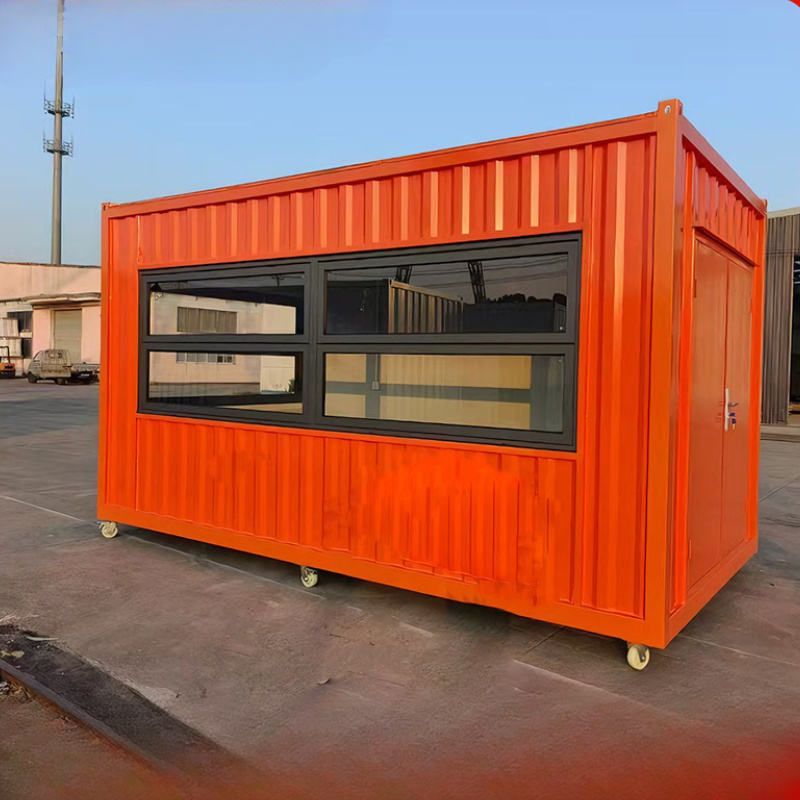
I. Basic Concepts and Assembly Features Cement prefabricated panel assembled housing takes factory-prefabricated concrete components as its core. Wooden boards are used to make molds, steel bars are arranged, and cement is poured to form prefabricated panels, which are divided into solid and hollow types. Its assembly efficiency is significantly higher than that of traditional buildings. For example, the hoisting of a whole house only takes about 4 hours, the construction process is simplified, and labor costs are reduced.
II. Price and Market Situation Prices vary greatly depending on the region and brand. In the domestic market, there are different price ranges such as 300 yuan/㎡ and 220 - 1100 yuan/㎡, and there are also cases of sales by the set (e.g., 7500 yuan/set in Jining, Shandong). Although China is gradually implementing policies for old community renovations, mainly focusing on repairs and renovations and only demolishing dangerous buildings, the global market still shows a growth trend. In the first four months of 2026, enterprises in the customs area under the Guangzhou Customs exported movable houses worth 1.4 billion yuan, a year-on-year increase of 38.1%; the export volume at Shenzhen ports reached 1.68 billion yuan, a year-on-year increase of 19.6%, indicating a continuous expansion of international demand.
III. Advantages and Disadvantages Analysis Advantages:
- Low cost: It uses a small amount of steel bars, has a simple construction process, and low labor costs, resulting in high overall cost-effectiveness.
- High market acceptance: The concrete material is close to the traditional living experience, and it has a relatively high acceptance among domestic users.
Disadvantages:
- Performance limitations: It has weak earthquake resistance and poor sound insulation and heat insulation (the prefabricated panels are about 10 centimeters thick with long circular holes in the middle, making it easy for sound to penetrate and be amplified); leakage problems are common (the gaps between the panels are prone to water seepage, which can corrode the steel bars).
- Uneven quality: The service life of existing houses is about 30 - 50 years, and inferior products may have an even shorter lifespan, posing safety hazards. Even a minor earthquake may cause collapse.
IV. Development Trends With the progress of construction technology, cast-in-place concrete and prefabricated buildings are gradually replacing traditional prefabricated panel houses. Domestic policies mainly focus on repairs and renovations and only demolish dangerous buildings, but the international market still maintains a growth trend due to cost advantages and the demand for rapid deployment.



